
1. Welcome Hearth.com Guests and Visitors - Please enjoy our forums!
    Hearth.com GOLD Sponsors who help bring the site content to you:
    Jotul Cast Iron Stoves
    Woodstock Soapstone Stoves
    Hearth and Home (QuadraFire and Harman Stoves)
  1. GAMMA RAY Minister of Fire

    joined: Jan 16, 2011
    1,980 posts
    PA.
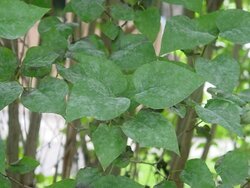
    Looks like a type of fungus....I would like to spray it with something....but I am not sure what...before I purchase a fungus spray I thought I would ask the experts......any and all suggestions are greatly appreciated.... :)

    Attached Files:

    #1

    Helpful Sponsor Ads!


  2. lukem Minister of Fire

    joined: Jan 12, 2010
    3,133 posts
    Indiana
    I don't know what it is, but it seems to be pretty common on lilacs...i have it on mine. Doesn't seem to hurt them any, but might just be result of a single observation.
  3. GAMMA RAY Minister of Fire

    joined: Jan 16, 2011
    1,980 posts
    PA.
    There are some shriveled up leaves on the bush as well as on the ground....it was like that end of the summer last year and I did spray a "Fungus" spray on it....Ortho I believe....I just don't wanna loose it because it is pretty large...my others have just a "touch" of it on them but not as bad and no shriveled up leaves....
  4. midwestcoast Minister of Fire

    joined: Oct 9, 2009
    1,389 posts
    NW Indiana
    Looks like Powdery Mildew. Lilacs are very susceptible, but it hits many other plants too. My lilacs had it bad last year, this year no sign of it at all. I didn't do anything to them. http://gardening.about.com/od/gardenproblems/a/PowderyMildew.htm Or just google it. Not a dire problem, you lilacs will likely be just fine.
  5. Adios Pantalones Minister of Fire

    I would have guessed powdery mildew as well. I have had it on mine before, but they are normally very healthy anyway
  6. woodsman23 Minister of Fire

    Get a spray bottle and put in a couple drops of dawn dishwashing soap and coat everything and see if this helps... it's been a wet year and mildew is common this year
  7. laynes69 Minister of Fire

    joined: Oct 2, 2006
    1,655 posts
    Ashland OH
    We have powdery mildew starting on our plants in the garden. I found a recipe for 1 quart water, 1 tsp baking soda, a few drops of hand soap and a tsp of vegetable oil. I've sprayed and the plants are looking better. It says to spray 2 times a week if rain, and once a week if it's dry. It will raise the ph to help prevent mildew. Some plants the mildew won't hurt.
  8. madrone Minister of Fire

    Mine get this sometimes too, as do the magnolias. They don't seem to be harmed much. Fungicides are one of the possible causes of the decline in honey bees, so I'm not a big fan of that route.
  9. firefighterjake Minister of Fire

    joined: Jul 22, 2008
    13,472 posts
    Unity/Bangor, Maine
    I see that on my lilacs as well . . . no harm, no foul in leaving it be.
  10. smokinj Minister of Fire

    joined: Aug 11, 2008
    15,416 posts
    Anderson, Indiana
    +1
  11. Czech Minister of Fire

    joined: Jan 20, 2006
    1,056 posts
    Twin Cities, MN
    Yep, PM or downy mildew for sure. Anti-fungals, some of the friut tree sprays work well, otherwise look for anti-fungals. I respectfully disagree with 'no harm', as a competition pumpkin grower, PM is to be avoided but is often unavoidable. It taxes the plant and will eventually kill it, with Lilacs they typically go dormant before they end up dying so the cycle starts up again the next year. If you want to go non-chemical, a dilute mix of milk (yes, milk!) around 10-20% sprayed once a week throughout the season tends to delay infection but not cure. When treating, make sure all leaf surfaces are treated, sprays often are hit and miss unless you take some care. Funny story pumpkin wise, my neigbors have Lilacs on the edge of our yard, and I monitor these plants throughout the year as my PM indicators. When they get infected (they always do eventually, PM is typically late season), I up my treatment on of the pumpkins. Last year they had one plant that was always covered with PM and was my test bed, the others right next to it did not get it as bad at all, never did figure out why. That plant is now a gap in the hedge as it did not make it this year, PM is very tough to treat thus the 'delay' treatments such as milk tend to be the best route. You can buy PM resistant plants too.
  12. Adios Pantalones Minister of Fire

    Czech- it's definitely more of an effect on punkins/squash etc.

Share This Page