

Hello
I have been shopping for a low limit switch to fix a wood pellet stove. The prices are crazy!! $43 or $55 yikes
Many switches are the same for different stoves so to replace it cheap you just have to understand their function. They usually mount to the exhaust fan or exhaust plenum.
Why are they called Snap Discs is because they are round like a disc and have a Bi-Metal Strip that Snaps when heated to a certain temperature!
Most switches are SPST single pole single throw. This means one wire in and one wire out. So when the temp rises the wires are connected which means the switch is closed.
This will keep the fans running and the auger turning when the exhaust temperature rises after the initial start-up cycle.
It will also keep the fans running after the stove has been manually or automatically turned off until the exhaust temperature cools down. Unless it is like the Pelpro which has another identical switch just like it to keep the fans running. Sometimes they have a part number with a designation F for Fan or L for Low Limit but don't be fooled they are the same type of switch! After all you can test it with a continuity checker or ohm meter. When the switch is cold the meter should read open or infinity on the ohms scale and when heated above 140 Degrees F the switch will close and read a short or no ohms
Usually a bad low limit switch means the stove stops running after the 15-20 min stove start-up cycle.
This means the switch must be a "close on rise" of course there may be exceptions so check your manual. The other type is "open on rise" which is used in a Pelpro because there is a seperate "close on rise" Fan limit switch!
Also the part numbers for each stove manufacturer may differ.
Since most open when the exhaust temp drops below 120 degrees f the part number may be called L120
Also they close when the exhaust temp rises above 140 degrees f or 150 degrees f so they may be called F140 or F150
Let's get real here folks these switches are not fully digital with precise accuracy!! So 140 or 150 may be within the specs of the bi-metal strip inside meaning there are the same switch!!
That said if you see one cheap that states the cut out is 130 degrees f bingo probably the exact same switch and certainly can be used in place of the L120 or F140 or F150 !!
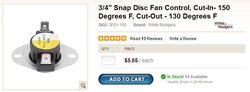
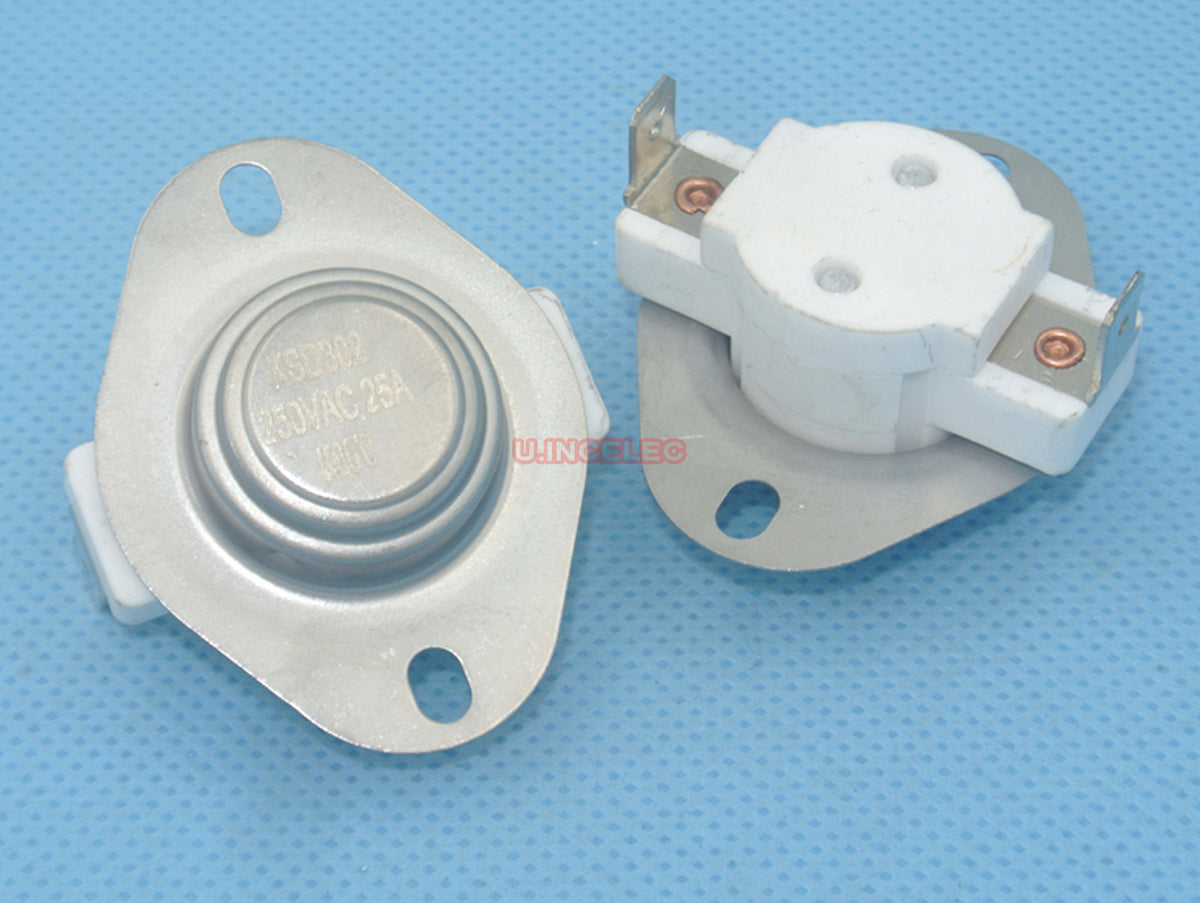
So in the pic here below is one that I found cheap. Note the physical mounting is usually the same with the mounting holes 2 inches apart. Most stoves have a male quick disconnect terminal but some stoves like Travis Ind who make their own switch have screw terminals. However the screws can be removed and a clip can go on it but they do charge more for the extra unnecessary hardware!!
See link and pic below of a compatible low limit or another term "Proof of Fire" Switch POF
$5.65 These plastic ones are made by White Rogers
http://www.pexsupply.com/White-Rodg...50-Degrees-F-Cut-Out-130-Degrees-F-14695000-p
Grainger Part $7.18 on Sale from $8.50
http://www.grainger.com/Grainger/WHITERODGERS-Snap-Disc-Fan-Control-Switch-2E245?Pid=search
Just remember a 3/4 inch diameter Low Limit switch that is "Close on Rise" and 2 inches apart mounting holes and you will be all set if you did your homework!
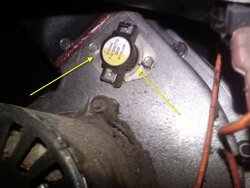
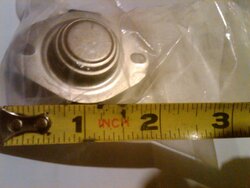
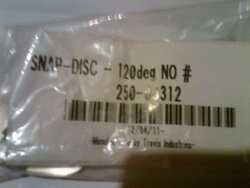
In the second pic is one in a Magnum Baby Countryside. The 3rd and forth pics are the Travis All Metal equivilant for $14
It is not ceramic but just like the one in the link above.
They seem to be available in Ceramic, Plastic housings.
Some people like Smokey prefers the ceramic housing for better durability!
Paying a little more for Ceramic may be worthwhile but $55 may be a little steep!!
I have been shopping for a low limit switch to fix a wood pellet stove. The prices are crazy!! $43 or $55 yikes
Many switches are the same for different stoves so to replace it cheap you just have to understand their function. They usually mount to the exhaust fan or exhaust plenum.
Why are they called Snap Discs is because they are round like a disc and have a Bi-Metal Strip that Snaps when heated to a certain temperature!
Most switches are SPST single pole single throw. This means one wire in and one wire out. So when the temp rises the wires are connected which means the switch is closed.
This will keep the fans running and the auger turning when the exhaust temperature rises after the initial start-up cycle.
It will also keep the fans running after the stove has been manually or automatically turned off until the exhaust temperature cools down. Unless it is like the Pelpro which has another identical switch just like it to keep the fans running. Sometimes they have a part number with a designation F for Fan or L for Low Limit but don't be fooled they are the same type of switch! After all you can test it with a continuity checker or ohm meter. When the switch is cold the meter should read open or infinity on the ohms scale and when heated above 140 Degrees F the switch will close and read a short or no ohms
Usually a bad low limit switch means the stove stops running after the 15-20 min stove start-up cycle.
This means the switch must be a "close on rise" of course there may be exceptions so check your manual. The other type is "open on rise" which is used in a Pelpro because there is a seperate "close on rise" Fan limit switch!
Also the part numbers for each stove manufacturer may differ.
Since most open when the exhaust temp drops below 120 degrees f the part number may be called L120
Also they close when the exhaust temp rises above 140 degrees f or 150 degrees f so they may be called F140 or F150
Let's get real here folks these switches are not fully digital with precise accuracy!! So 140 or 150 may be within the specs of the bi-metal strip inside meaning there are the same switch!!
That said if you see one cheap that states the cut out is 130 degrees f bingo probably the exact same switch and certainly can be used in place of the L120 or F140 or F150 !!
So in the pic here below is one that I found cheap. Note the physical mounting is usually the same with the mounting holes 2 inches apart. Most stoves have a male quick disconnect terminal but some stoves like Travis Ind who make their own switch have screw terminals. However the screws can be removed and a clip can go on it but they do charge more for the extra unnecessary hardware!!
See link and pic below of a compatible low limit or another term "Proof of Fire" Switch POF
$5.65 These plastic ones are made by White Rogers
http://www.pexsupply.com/White-Rodg...50-Degrees-F-Cut-Out-130-Degrees-F-14695000-p
Grainger Part $7.18 on Sale from $8.50
http://www.grainger.com/Grainger/WHITERODGERS-Snap-Disc-Fan-Control-Switch-2E245?Pid=search
Just remember a 3/4 inch diameter Low Limit switch that is "Close on Rise" and 2 inches apart mounting holes and you will be all set if you did your homework!
In the second pic is one in a Magnum Baby Countryside. The 3rd and forth pics are the Travis All Metal equivilant for $14
It is not ceramic but just like the one in the link above.
They seem to be available in Ceramic, Plastic housings.
Some people like Smokey prefers the ceramic housing for better durability!
Paying a little more for Ceramic may be worthwhile but $55 may be a little steep!!