


Right away, I want to say a warm and Hearthy thank you to all of you in this community. I would have struggled to figure out a lot of the nuances of wood burning this summer without this incredible resource. I am a union pipefitter out of St. Paul, MN. I live on 20 acres of heavily wooded hills, full of Oak, Maple and Hickory. When I built my homestead, I always planned on installing an outdoor wood gasifier boiler with plenty of hydronic storage. Well, this past year I went on sabbatical and had the opportunity to build one myself.
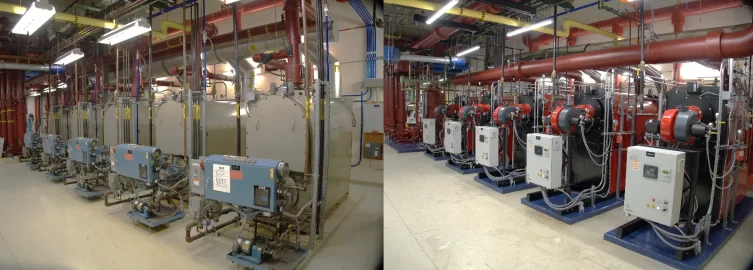
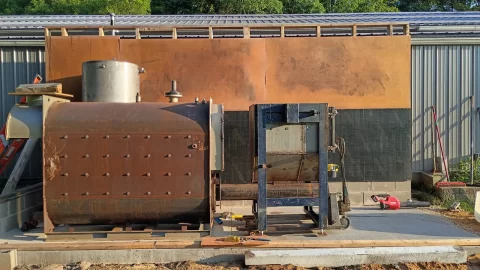
My last project before sabbatical was to foreman a large commercial boiler replacement job. I was able to snag one of the boiler shells for potential use as a wood burner. Below is a picture of the old boilers and also a shot of the new boilers I installed. The old boilers are 3-pass firetube boilers that fired on natural gas and also #2 fuel oil.
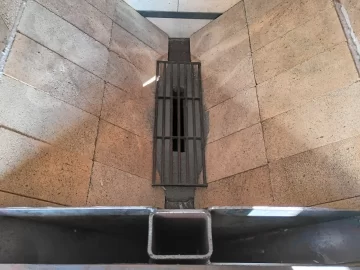
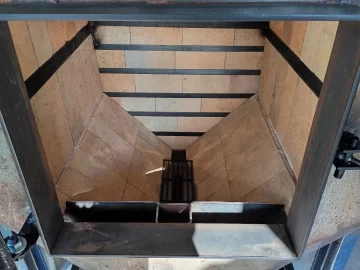
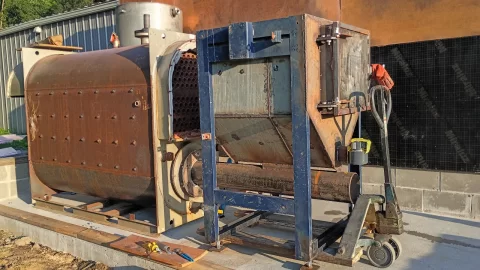
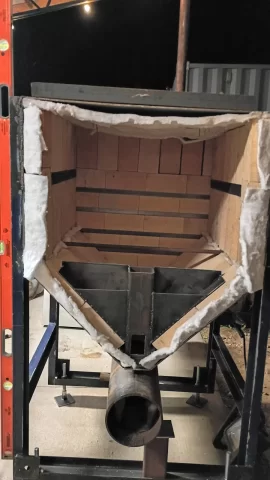
The initial idea was to replace the dual-fuel burner at the front of the boiler and build a down-draft wood-fueled firebox that could inject the heat from the secondary burn chamber into the boiler. In my naive mind, I thought this was pretty straight forward. I did not consider the physics of flue condensation at all to begin with… I should have. That being said, if I knew from the start this old boiler wasn’t ideal, I probably would have rode my mountain bike all summer instead of this project. Ignorance may not be bliss in this scenario, but productivity surely.
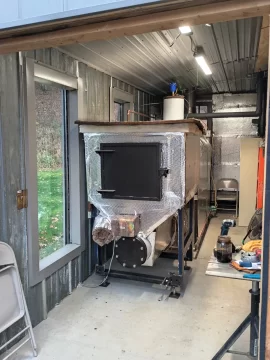
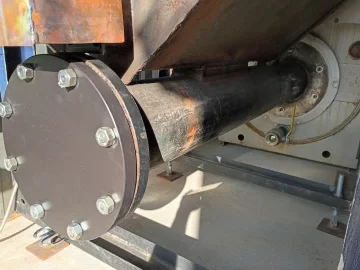
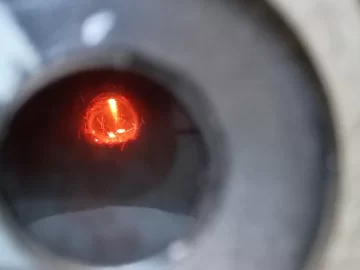
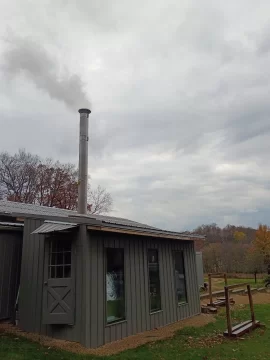
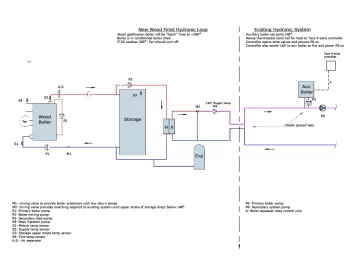
It’s November now and I’ve been firing this boiler every day for the last week with good results. It’s been warm for western Wisconsin, but now that I’ve got the boiler water warmed up, I plan to keep firing daily until next spring. For what this system is, I would say it has been mainly successful. The piping system including storage works great and the firebox build works as well. However, the main problem I have is the size of the heat exchanging surface area of the old boiler is way too large. Also since it is a 3-pass design, very low flue temps result and condensation finds itself leaking through the access door gaskets/seals if the water temperature is below about 120F when I begin a burn. The highly insulated boiler room I built around it is not a very pleasant place to hang out as I’m sure carbon monoxide poisoning would result. But with the front and rear doors open, I can check temps of the flue, boiler water, and visually inspect what the gasifier nozzle is doing without problems.
As is, I believe I can make it through this winter without using my propane boiler at all, however I would like to come up with a better designed waterjacket and heat exchanger system that I can swap into this modular firebox. But that is for another post in the future. Right now here are a bunch of pictures of the build and system design for you to check out. I’m curious to hear from all the gasifier experts here on design pitfalls or ideas for me moving forward. Thanks again and god speed on your own wood burning this winter!
Attachments
-
 Boiler Room Remodel.webp241.1 KB · Views: 5
-
 IMG_20260717_193220571_HDR.webp366.2 KB · Views: 6
-
 IMG_20261027_090249370_HDR.webp373.7 KB · Views: 6
-
 IMG_20260912_164853754_HDR.webp430.9 KB · Views: 6
-
 IMG_20260912_164900969_HDR.webp447 KB · Views: 6
-
 IMG_20260912_164923328_HDR.webp289.2 KB · Views: 6
-
 IMG_20260717_193231031_HDR.webp381.4 KB · Views: 6
-
 IMG_20261029_101332506.webp59.6 KB · Views: 6
-
 IMG_20260608_214922092_HDR.webp143.7 KB · Views: 6
-
 IMG_20261027_090117604.webp245.9 KB · Views: 5
-
 Design Schematic.webp36.3 KB · Views: 5


