
Pellet QC

  • Active since 1995, Hearth.com is THE place on the internet for free information and advice about wood stoves, pellet stoves and other energy saving equipment.

    We strive to provide opinions, articles, discussions and history related to Hearth Products and in a more general sense, energy issues.

    We promote the EFFICIENT, RESPONSIBLE, CLEAN and SAFE use of all fuels, whether renewable or fossil.

mellow

Resident Stove Connoisseur
Hearth Supporter
Jan 19, 2008
6,057
Salisbury, MD
How do you go about measuring the quality of your pellets?

I did the drop in a glass of water and see if it floats test and not sure that is accurate. The next thing on my plate is to put the pellets in a measured amount into the oven and weight them afterwards to get a %.

I swear this latest ton of pellets I got from a new source has a considerable amount of BTU loss but I am trying to quantify this, not just base it on a cooler room temperature.

It's not as easy as stick wood where I can just get my moisture meter out and test a fresh split piece.
 
How do you go about measuring the quality of your pellets?

I did the drop in a glass of water and see if it floats test and not sure that is accurate. The next thing on my plate is to put the pellets in a measured amount into the oven and weight them afterwards to get a %.

I swear this latest ton of pellets I got from a new source has a considerable amount of BTU loss but I am trying to quantify this, not just base it on a cooler room temperature.

It's not as easy as stick wood where I can just get my moisture meter out and test a fresh split piece.
I don't think you can check as well at the manufacturer can. They are supposed to test samples during a production run. Mine are made by Shaw in Nova Scotia and I trust them. I think some people get stuck with improperly stored pellets. I was watching my Home Depot inventory in the fall waiting for the fresh loads, and went there to make sure that the crappy pallets were blocked in. I could see some pallets were damaged and likely been outside from last season. I was bummed though when one of my two pallets they delivered had been damaged but I got some house wrap tape and resealed the holes.
 
Not the most scientific method. But I use my stove as a guide. How much heat do I feel? How does the stove burn the pellets? How much ash or clinkers?

My stove performs best on high quality pellets. Little ash is produced, no clinkers, and high heat.

The dealer I use tests the pellets in a stove located on site. I have learned I can trust their recommendations.

There are sites that try and test pellets. I have found these sites to be useful. But a bad pellet one year can be great the following year. As well as a great pellet one year can be terrible the next.
 
  • Like
Reactions: johneh
How much ash is to much? Is there a formula like: 1 ounce of ash per hour of burning is acceptable?

I have attached a picture of how my glass looks after 10 hours, and this is after adjusting the air.

I don't want to start a ruckus with the pellet producer till I have some solid data but this is the first year I have purchased from them and they are producing it locally so I don't want to discount them from a gut feeling.
 

Attachments

  • [Hearth.com] Pellet QC
    20251202_214549252_iOS.webp
    101.2 KB · Views: 8
  • Wow
Reactions: Whitenuckler
How much ash is to much? Is there a formula like: 1 ounce of ash per hour of burning is acceptable?

I have attached a picture of how my glass looks after 10 hours, and this is after adjusting the air.

I don't want to start a ruckus with the pellet producer till I have some solid data but this is the first year I have purchased from them and they are producing it locally so I don't want to discount them from a gut feeling.
Here is my spec: What does your say?
  1. Guaranteed Analysis Grade Premium Material 100% wood Ash less than 0.6% Fines less than 0.5% Sodium less than 300 ppm Eastern Embers is 100% wood and uses no glues or binders.
That glass looks like its not burning right, or zero airwash, or both. You can only control the stove, not the pellets. I'd clean it and go get some other pellets that someone else is using. That looks like it has not been cleaned in a week or more. I can clean mine once a day with one half piece of damp paper towel.
 
The picture of your stove after burning for ten hours. Was that on a low setting? Many stoves produce more ash and dirt on the window than on a medium or high setting.

To me, and I don’t know your stove, that window is too dirty. Maybe turn the air up.
 
The picture of your stove after burning for ten hours. Was that on a low setting? Many stoves produce more ash and dirt on the window than on a medium or high setting.

To me, and I don’t know your stove, that window is too dirty. Maybe turn the air up.

I agree, it wasn't nearly as bad burning another brand of pellets so I know it's the pellet and want to go back to the manufacture and tell them they have issues but I need to know what they will be looking for as to data.
 
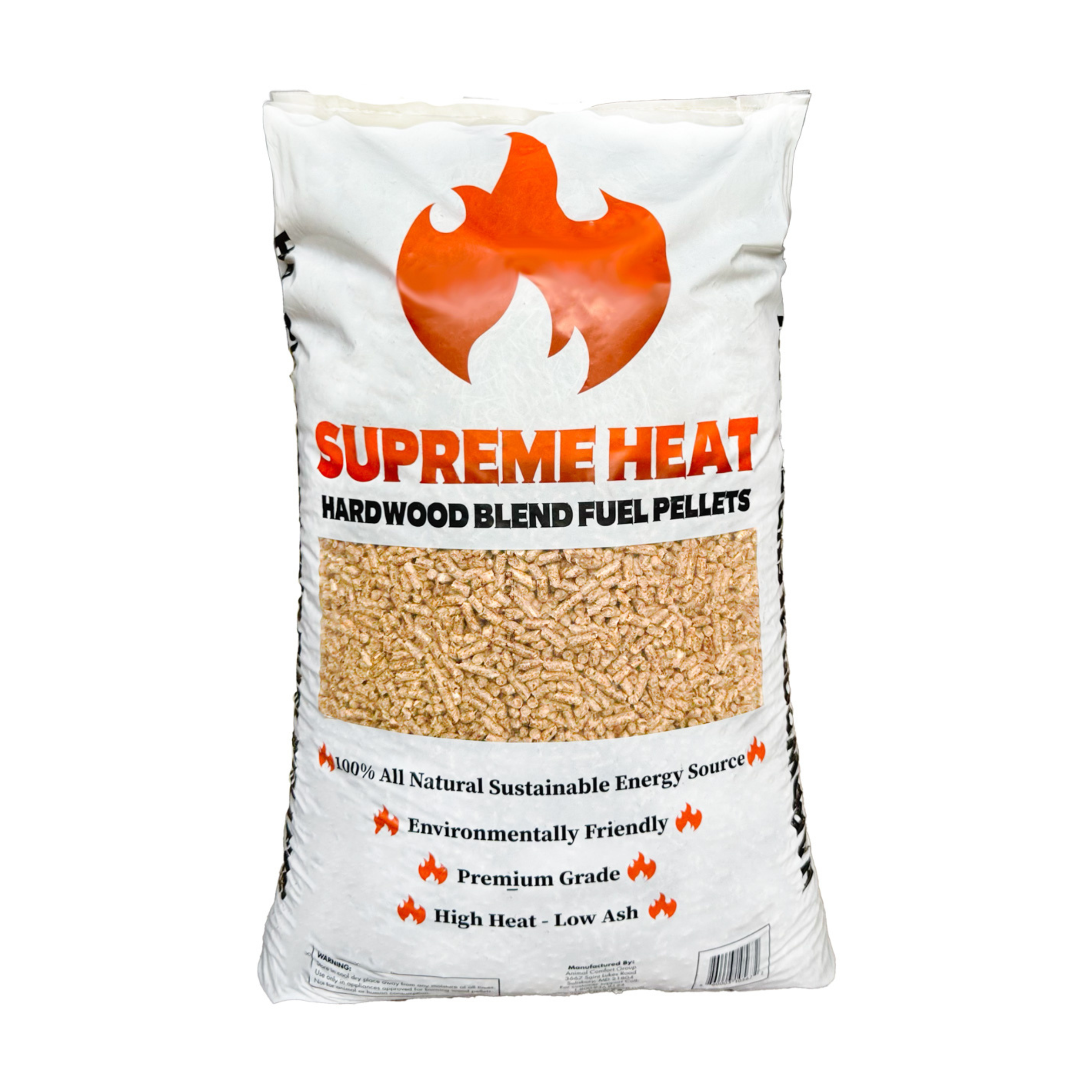
This is the local one I am trying out and having issues with.
I checked them out. I was not able to see the specs ie ash content. Being 100% hardwood, I am not a fan of them.
If they say it premium, it should meet certain specs. Is there any info on the back of the bag?
 
Have a look at this thread, this is very close to what I’ve done and tracked with each pellet brand I’ve used…only difference is I use a FLIR temp gun for better accuracy

 
The “problem” is that supreme, premium, and the like don’t have any regulations or definitions behind the word. So any pellet manufacturer can use words like that to push their product, but there is no regulation the manufacturer has to meet.
 
The “problem” is that supreme, premium, and the like don’t have any regulations or definitions behind the word. So any pellet manufacturer can use words like that to push their product, but there is no regulation the manufacturer has to meet.
Premium wood pellet specifications, guided by organizations like the Pellet Fuel Institute (PFI), focus on low ash (<1%), low moisture (<8%), high durability (>97%), and low fines (<0.5%), indicating a cleaner, hotter, and more efficient burn, typically using softwood with no additives for consistent performance. Key metrics include heating value (BTU/lb), moisture content, ash content, durability index, fines, and dimensions.

Key Specifications for Premium Pellets (PFI Standard)
  • Ash Content: ≤ 1.0% (lower is better, some are <0.5%).
  • Moisture Content: ≤ 8.0% (lower means more heat).
  • Durability Index: ≥ 97.5% (resists crumbling during transport).
  • Fines: ≤ 0.50% (material that's not a full pellet).
  • Bulk Density: 40-48 lbs/ft³ (consistent density for good feeding).
  • Diameter: 0.230 - 0.305 inches (uniform size).
  • Length: <1% over 1.5 inches (consistent length).
  • Heating Value: Around 8,500+ BTU/lb (high BTU = more heat).
  • Additives: Often 100% wood, no glues/binders (check label).

Why These Matter
  • Low Ash & Fines: Means less cleaning, better stove performance, and more heat from your fuel.
  • Low Moisture: Higher heat output and cleaner burn.
  • High Durability: Ensures pellets reach the stove intact, providing consistent feeding.

Certifications
Look for labels like PFI Premium or ENplus-A1 for guaranteed quality, as these standards ensure pellets meet the demanding requirements for efficient home heating.
 
I never go off what is printed on the bag…that’s why I’ll clean my stove then put new/different pellets in, set my stove at 4 and 4 then use my FLIR after an hour of running to measure the heat temp on the exact same spot on my heat exchangers(middle) at the front of my P61A…the record results…each new/different pellet gets the same treatment
 
I never go off what is printed on the bag…that’s why I’ll clean my stove then put new/different pellets in, set my stove at 4 and 4 then use my FLIR after an hour of running to measure the heat temp on the exact same spot on my heat exchangers(middle) at the front of my P61A…the record results…each new/different pellet gets the same treatment
You never know when a supplier will mix up a batch with a bunch of last years unused mulch as there is no one checking, except the plant manager, and an operator who is told what to do.
 
And by that statement…this is what I’ve tracked what pellet does what heat range…I’ve yet to run into a “bad batch” but if I did notice less heat I would check it against my records
 
I did do a test and ran 4 bags through the same setup from a different manufacturer already and got more heat and less ash on the glass so I know its the pellets, just need to figure out how to best quantify it.

What exactly are those different pellets? Are they HW, SW or a blend?

Some stoves don't like HW pellets. Some stoves do. Some stoves don't care at all. Also, not all HW pellets are the same. My stoves love Cubex HW pellets and some others. But GS Midwestern HW pellets are very ashy and burn a lot colder.

I do measure heat output when I get a different pellet, but it isn't scientific. I don't get too uptight about amount of ash, but do take note if there are funky things going on. I use only my P43 for testing.

Unlike some, unless the P43 is very dirty (or due for a good cleaning), I don't clean it before testing. I want real world application, not best case scenario. The "test" is to run the stove for 20 minutes, at a feed rate of 3 and with an oven thermometer placed in the air stream, braced against the top of the door and the overhanging lip of the top of the stove. I then take pictures of the thermometer every 5 minutes for another 20 minutes. By that time, the stove is usually ready to shut down because the thermostat tells it to.

This is what Cubex runs:

[Hearth.com] Pellet QC


GS Alleghany Mountain HW pellets

[Hearth.com] Pellet QC


GW Midwestern HW are obviously colder

[Hearth.com] Pellet QC


And here are the notes I keep - this is just for HW. (the note about how the Fusion HW ran is because the Fusion Blend had hard, gritty ash).

[Hearth.com] Pellet QC
 
I knew I couldn’t be the only one doing something similar…good stuff Bob!
 
What exactly are those different pellets? Are they HW, SW or a blend?

This is the other pellets that I ran last year and tested 4 bags of this year to see if they burned differently, they are HW. They are $320/ton this year at my local farm supply so I was trying a different supplier. I still have something like 40 bags left on credit as a backup.
 

Attachments

  • [Hearth.com] Pellet QC
    20240121_161142375_iOS (2).webp
    131.6 KB · Views: 2
So does that mean out of a 40lb bag you could have up to 2-4lbs of ash to be acceptable?
I know that I have been out of School for about 60 years, but I was taught that 1% of 40 is 0.4 Lbs
and .5 % is 0.2 Lbs.
Please correct me if I am wrong!