
Historic chimney liner

  • Active since 1995, Hearth.com is THE place on the internet for free information and advice about wood stoves, pellet stoves and other energy saving equipment.

    We strive to provide opinions, articles, discussions and history related to Hearth Products and in a more general sense, energy issues.

    We promote the EFFICIENT, RESPONSIBLE, CLEAN and SAFE use of all fuels, whether renewable or fossil.

StevieRnR

New Member
Oct 7, 2026
5
CT
Hey all! Long time lurker here,

Lots of info, always been able to find what I need, but after learning a ton about my house over the last few years.. I’m finally as a place where I can speak a little more intelligently about what I’m trying to achieve.

We have a house built around 1750, center chimney cape style, and we are looking at putting in a wood stove in one of the fireplaces.

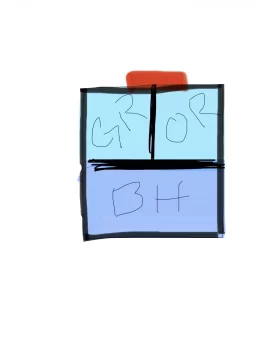
The chimney is shared by 3 fireplaces. The South (Green Room), East (Parlor/cooking hearth with Beehive), and North (Oak Room).

Inside the chimney, it is divided with stone. The beehive gets 50% (facing east), and the the other 2 are further divided, 25% and 25%.

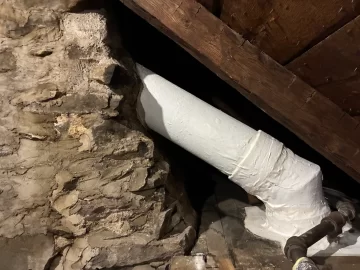
The catch, is that sometime in the past, someone mortared in the flue m(which runs parallel to the chimney through floors) for the boiler into the chimney in the attic. This is plumbed in on the N/S side, ABOVE the 25/25 division, but BELOW, the 50% split for the beehive oven.

Therefore, the chimney shot is straight up, unobstructed for the East Facing hearth/beehive, without any interference from the boiler flue.

We would like to put a wood stove in the East fireplace, with a liner, but also ideally retain the usage of the beehive oven., Which is its seperate mini flue that runs into the East Flue.

Most companies won’t advise or help.. they say abandon the boiler and run liners, capped and insulated. The historical mason that repointed the cooking hearth, said the sweeps are idiots and the fireplace works great and to use it… don’t destroy it by caping and blocking it like we did in the other chimney when the sweep installed the liner for the other wood stove. Side note.. we’ve successfully cooked pizza in it abd it was awesome!! 😃

we had one guy who installed our Blaze King with class A on the other side of the house come in, and say just run an insulated liner and let it sit there. No cap, as we have a slate cap up there… and it won’t interfere with the boiler as there in separate flues.. just clean it yourself cause no one will touch it..

—-

Has anyone ever encounter anything like this? Any insight or input?

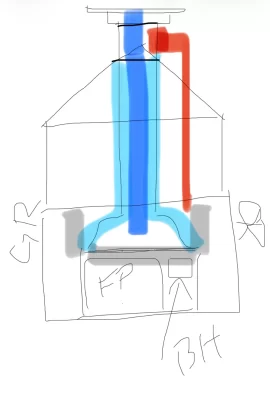
Attached are some drawing.

Dark Blue - East / Parlor / Beehive flue
Light Blue - N/S flue
Red - Boiler Flue
 

Attachments
  • [Hearth.com] Historic chimney liner
    IMG_1509.webp
    19.1 KB · Views: 38
  • [Hearth.com] Historic chimney liner
    IMG_1510.webp
    29.6 KB · Views: 40
Last edited:
Hey all! Long time lurker here,

Lots of info, always been able to find what I need, but after learning a ton about my house over the last few years.. I’m finally as a place where I can speak a little more intelligently about what I’m trying to achieve.

We have a house built around 1750, center chimney cape style, and we are looking at putting in a wood stove in one of the fireplaces.

The chimney is shared by 3 fireplaces. The South (Green Room), East (Parlor/cooking hearth with Beehive), and North (Oak Room).

Inside the chimney, it is divided with stone. The beehive gets 50% (facing east), and the the other 2 are further divided, 25% and 25%.

The catch, is that sometime in the past, someone mortared in the flue m(which runs parallel to the chimney through floors) for the boiler into the chimney in the attic. This is plumbed in on the N/S side, ABOVE the 25/25 division, but BELOW, the 50% split for the beehive oven.

Therefore, the chimney shot is straight up, unobstructed for the East Facing hearth/beehive, without any interference from the boiler flue.

We would like to put a wood stove in the East fireplace, with a liner, but also ideally retain the usage of the beehive oven., Which is its seperate mini flue that runs into the East Flue.

Most companies won’t advise or help.. they say abandon the boiler and run liners, capped and insulated. The historical mason that repointed the cooking hearth, said the sweeps are idiots and the fireplace works great and to use it… don’t destroy it by caping and blocking it like we did in the other chimney when the sweep installed the liner for the other wood stove. Side note.. we’ve successfully cooked pizza in it abd it was awesome!! 😃

we had one guy who installed our Blaze King with class A on the other side of the house come in, and say just run an insulated liner and let it sit there. No cap, as we have a slate cap up there… and it won’t interfere with the boiler as there in separate flues.. just clean it yourself cause no one will touch it..

—-

Has anyone ever encounter anything like this? Any insight or input?

Attached are some drawing.

Dark Blue - East / Parlor / Beehive flue
Light Blue - N/S flue
Red - Boiler Flue
Without being on site there is no way to give you any real advice other than never trust a historic mason when it comes to chimney safety. Every one i have talked to seems to think old worn out chimneys will work just fine.
 
Without being on site there is no way to give you any real advice other than never trust a historic mason when it comes to chimney safety. Every one i have talked to seems to think old worn out chimneys will work just fine.
Appreciate that!!

Yea.. it’s a tricky thing to navigate. Seems not many will give me straight, trustworthy answer on this one
 
I appreciate you thinking of me, and I've definitely had to navitage the "very old chimney" thing. But the description of what the OP has is pretty darn complicated, and I'm no more an expert than a homeowner who had to learn just enough to solve my own (simpler) problems.

What @bholler said is mostly true, a lot of these historic stonework guys are of the "it's probably fine" mentality. And they're even probably right, most of the time. The trouble is, insurance companies don't work on "probably". And when you're the one experiencing the unexpected failure, that historic stonework guy isn't going to be covering your losses.
 
Very far from an expert, but I do know someone with a problem from two adjacent flues in one chimney. If there is negative pressure on one flue while the other is exhausting, one will suck gas into the house from the other. It seems the slate cap could contribute to that if there is negative pressure. Have good CO monitors?
 
Very far from an expert, but I do know someone with a problem from two adjacent flues in one chimney. If there is negative pressure on one flue while the other is exhausting, one will suck gas into the house from the other. It seems the slate cap could contribute to that if there is negative pressure. Have good CO monitors?
Copy that!! Very interesting, and that is the type of thing I’m wondering.

Yes we have good C02 monitors everywhere.

We’ll have to assess the liner on the boiler further and see if there’s a better way to navigate that. Boiler flue is encapsulated transite.. so not many people want to touch it
 
CO=carbon monixide
CO2= carbon dioxide
 
A (12-18") height difference between the openings up top can help avoid back-suctioning exhaust into the other flue.
Indeed the slab cap on top makes that harder.
 
Hey all! Long time lurker here,

Lots of info, always been able to find what I need, but after learning a ton about my house over the last few years.. I’m finally as a place where I can speak a little more intelligently about what I’m trying to achieve.

We have a house built around 1750, center chimney cape style, and we are looking at putting in a wood stove in one of the fireplaces.

The chimney is shared by 3 fireplaces. The South (Green Room), East (Parlor/cooking hearth with Beehive), and North (Oak Room).

Inside the chimney, it is divided with stone. The beehive gets 50% (facing east), and the the other 2 are further divided, 25% and 25%.

The catch, is that sometime in the past, someone mortared in the flue m(which runs parallel to the chimney through floors) for the boiler into the chimney in the attic. This is plumbed in on the N/S side, ABOVE the 25/25 division, but BELOW, the 50% split for the beehive oven.

Therefore, the chimney shot is straight up, unobstructed for the East Facing hearth/beehive, without any interference from the boiler flue.

We would like to put a wood stove in the East fireplace, with a liner, but also ideally retain the usage of the beehive oven., Which is its seperate mini flue that runs into the East Flue.

Most companies won’t advise or help.. they say abandon the boiler and run liners, capped and insulated. The historical mason that repointed the cooking hearth, said the sweeps are idiots and the fireplace works great and to use it… don’t destroy it by caping and blocking it like we did in the other chimney when the sweep installed the liner for the other wood stove. Side note.. we’ve successfully cooked pizza in it abd it was awesome!! 😃

we had one guy who installed our Blaze King with class A on the other side of the house come in, and say just run an insulated liner and let it sit there. No cap, as we have a slate cap up there… and it won’t interfere with the boiler as there in separate flues.. just clean it yourself cause no one will touch it..

—-

Has anyone ever encounter anything like this? Any insight or input?

Attached are some drawing.

Dark Blue - East / Parlor / Beehive flue
Light Blue - N/S flue
Red - Boiler Flue

I have read this a few times, but Im not sure I understand this properly yet.
- So i get that you have one chimney stack with three seperate brick flues to three fireplaces that originally divided 50:25:25.
- I also understand that at some point a boiler was added and that a metal flue was added into one on the existing flues.
- I don't understand how this boiler flue can join "above the 25/25 division, but below the 50% split for the beehive oven"?

I think I agree with your stove installer. Stoves work best with a continuous metal liner from stove to sky, rather than a "slammer" where the stove has a short section of pipe that exists into an existing brick flue. Furthermore if I understand it correctly having such a stove send smoke into a chimney which half way up has another metal boiler flue joining it, is just asking for trouble. Furthermore such a chimney would be a nightmare to clean.
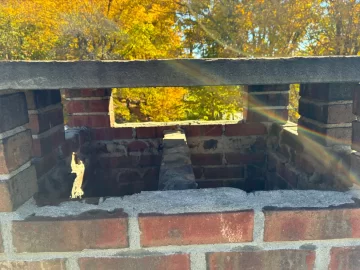
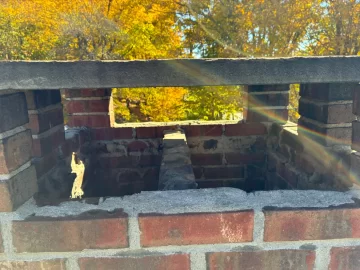
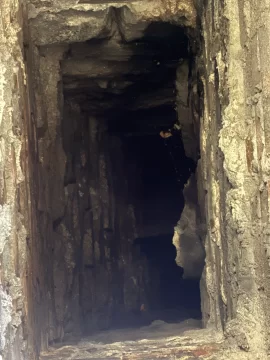
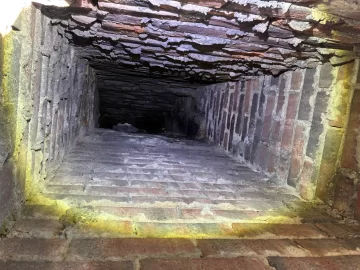
Yes. You are understanding this correctly for the most part. Attached are some pics of the top of the chimney. You can see the flue divider clearly. In this picture, the left half is a straight shot down to the cooking hearth/beehive. The right side have a 50/50(but really 25/25?) divider about 10’ down. And the boiler flue is masoned into the chimney above that divide. You can actually see it in pic number 2 where it enters the chimney. Pics 3 is of the transite(encapsulated) flue entering the chimney for COMPLETE clarity 🫣. Pic 4 is the split 25/25 flue and boiler flue, with a flashlight for better visual. You can see where the boiler glue terminates , which is above the brick flue divider if you zoom in.

So as you can see.. this boiler flue is ‘below the 50/50 split with the beehive on the other side, but it is above the 25/25 for the other fireplaces.

My initial question was geared at; could we theoretically run a liner from the beehive to the top of that 50% flue, insulated, and leave the side either boiler unadulterated. Or would that cause an issue with pressure, sucking CO back into the house. Jury is out.

Now that there’s pics, any information on what we’re actually dealing with with this boiler flue situation is totally welcome!(not just limited to wood stoves). Getting real educational and knowledgeable information about it is incredibly difficult.. all anyone says is when you get rid of it do it right and have remediation come in.

Cheers!
 

Attachments

  • [Hearth.com] Historic chimney liner
    IMG_1664.webp
    346.1 KB · Views: 16
  • [Hearth.com] Historic chimney liner
    IMG_1664.webp
    346.1 KB · Views: 17
  • [Hearth.com] Historic chimney liner
    IMG_1665.webp
    252.9 KB · Views: 12
  • [Hearth.com] Historic chimney liner
    IMG_1667.webp
    287.6 KB · Views: 15
  • [Hearth.com] Historic chimney liner
    IMG_1668.webp
    405 KB · Views: 19
Thanks. I stand by my statement. Personally I think your existing setup is unsafe and the works planned would make that worse.

You have two flues mixing halfway up the house, this 25:25 thing. That is a recipe for poor draft and smoke coming back down the other chimney. Similarly the boiler pipe joins another flue half way up the house.

If you add a single metal liner to one of these flues you will have smoke on the inside and outside of this metal liner. Metal liners are not designed for smoke, heat and moisture on the outside. This will rot the liner and it will be a nightmare to clean.

All flues should be reworked as a continuous single flue per fire/boiler from fireplace to sky.
 
  • Like
Reactions: BKVP