
Hi everyone!
I have an older European Jøtul F3 CB with an ash pan, and I've recently managed to remove the cast iron inner bottom plate (fire grate) from the stove.
I have two questions and would really appreciate some advice from anyone familiar with this model.
1. Different bottom grate designs – 18 holes vs 38 holes
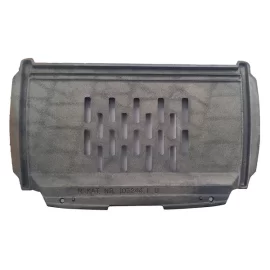
I've been searching online for a replacement inner bottom plate for my Jøtul F3 CB, but I've noticed something interesting. Almost every replacement grate I can find has a completely different design from mine! The commonly available version has only 18 ash holes, as shown in my attached Photo 1.
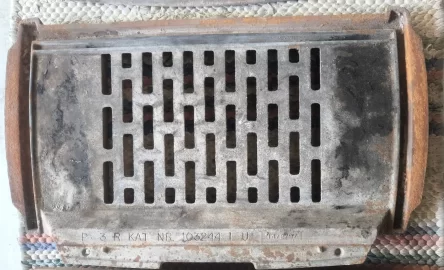
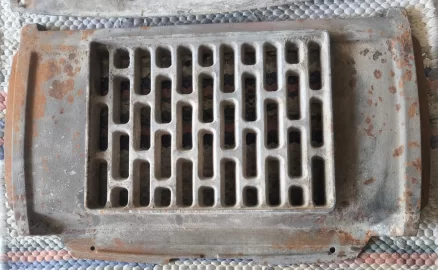
However, my original grate has 38 holes, and the overall design is noticeably different. The holes are not only more numerous, but they're also distributed much closer to the outer edges of the cast iron plate.
Please compare Photo 1 with Photos 2 and 3, which show my actual grate.
I've searched quite extensively online, and so far I've found only one other example of a grate identical to mine. It was from someone selling an older Jøtul F3 CB for parts.
So my questions are:
Did Jøtul change the design of the inner bottom plate at some point? Did the earliest F3 CB models have 38 holes, while later versions were redesigned with only 18?
More importantly, would the newer 18-hole grate fit my older F3 CB without any modifications?
I'm considering buying a replacement, but practically every available spare part seems to be the 18-hole version. I would really like to know whether these two designs are interchangeable.
2. Repairing cracks in the original cast iron grate
If you look closely at Photos 2 and 3, you'll notice that my original grate has several cracks in the cast iron.
Since I've already managed to remove it from the stove, I'm wondering whether it would be worth trying to repair it rather than replacing the entire plate.
Has anyone successfully repaired a cracked cast iron bottom grate on a Jøtul F3 CB or a similar wood stove?
Would welding be a reasonable option, considering that it's cast iron? The grate is now completely removed from the stove, so it could be taken to a professional welder if necessary.
I've also been looking into some high-temperature furnace cements, specifically:
- Vitcas BFC Black Fire Cement (1250°C)
https://shop.vitcas.com/bfc-black-fire-cement-310ml.html
- Vitcas Premium Black Fire Cement (1250°C)
https://www.vitcas.com/prd/premium-fire-cement-black
I was thinking about thoroughly cleaning the cracked areas and applying one of these products around the cracks, possibly building up a thicker layer to reinforce the damaged sections. Do you think either of these products could provide a reasonably durable repair, considering the heat and thermal expansion of the cast iron?
Or would welding be a much better option? Has anyone tried either method with good long-term results?
I'm aware that this part is exposed directly to burning wood and hot embers, so I'm particularly interested in actual repair experiences rather than just the temperature ratings of these products.
I'd really appreciate any advice, especially regarding the compatibility of the two different grate designs.
Thanks in advance for your help!
Photos:
- Photo 1 – Commonly available replacement grate with 18 holes
- Photo 2 – My original 38-hole grate
- Photo 3 – Another view of my original grate, showing the cracks