
Why electric cars?

  • Active since 1995, Hearth.com is THE place on the internet for free information and advice about wood stoves, pellet stoves and other energy saving equipment.

    We strive to provide opinions, articles, discussions and history related to Hearth Products and in a more general sense, energy issues.

    We promote the EFFICIENT, RESPONSIBLE, CLEAN and SAFE use of all fuels, whether renewable or fossil.
Range really is not as big an issue as people (including yours truly) thought. Most people charge at home and/or work. They do not need long range for the daily use of the car. For trips, the real issue is charging infrastructure, especially in the West where towns are farther apart. This is compounded by multiple charging plug styles and standards, poor locations, and copper theft. The good news is that we are moving toward one standard, NACS, for the charging port and Tesla opening up its chargers to other makes. More charging options makes charging more practical on a long trips and no one has matched Tesla for a well-done charging infrastructure.

Another wrinkle is that battery tech and cars are in a period of transition. That means charging infrastructure has to be updated to keep up with these changes. Many are slow as they try to amortize their investements but it is happening. In some areas, self-driving cars will eventually remove the need for some to worry about charging.
 
Agree 100%. Would add that in addition to DCFC plugs and standards, one issue is DC port location on the car. If it is driver's side rear or passenger side front, then it is compatible with most (i.e. Tesla) DCFCs. Several legacy makers (notably GM AND Ford) have gotten access to superchargers, but have a port location that makes using them awkward at best, or impossible at high traffic periods.

After 3 GM EVs in a row, port location is what got me to switch to another maker.
I believe that issue stems more from the design of the DCFC, not the car. Just a slightly longer cable (yes, more cost /engineering challenges I know) would eliminate the problem completely and make the charger inclusive to any EV. Gas fill location has never been standardized on ICE vehicles and people manage ok due to being able to pull through from either direction. Be nice if it were standardized, but I don't see it happening.

What if I'm pulling a trailer or cargo rack and my port is on the rear left? I'm either screwed, or have to drop the loaded trailer somewhere which is a major pain, or pull in sideways and block several chargers. A combination of longer cables and multiple approach options would be really helpful no matter the port location, and I'm glad that we're starting to see some of the newer DCFC sites designed with these things in mind.
Tesla has a few pull through chargers. Hooking and unhooking probably adds 8 minutes less if you have an electric jack or on you can operate with an electrIc drill. Working on the farm there would be days where we were hooking and unhooking every hour or less all day long. They were fun days but when you had to move stuff it’s just the only way.
 
I believe that issue stems more from the design of the DCFC, not the car. Just a slightly longer cable (yes, more cost /engineering challenges I know) would eliminate the problem completely and make the charger inclusive to any EV. Gas fill location has never been standardized on ICE vehicles and people manage ok due to being able to pull through from either direction. Be nice if it were standardized, but I don't see it happening.

What if I'm pulling a trailer or cargo rack and my port is on the rear left? I'm either screwed, or have to drop the loaded trailer somewhere which is a major pain, or pull in sideways and block several chargers. A combination of longer cables and multiple approach options would be really helpful no matter the port location, and I'm glad that we're starting to see some of the newer DCFC sites designed with these things in mind.

I hear you. But the hose on gas pump is MUCH cheaper per foot, and less of a maintenance and theft issue than a DCFC cable with huge conductors and a water cooled jacket. Pull through chargers are already a thing.

Most DCFCs I have seen out of service were due to a fault with the connector cable, usually the cooling loop.
 
Speaking of EVSE cable issues: I learned a few months back that it's common in Europe for EV owners to carry their own cables for Level 2 AC public charging. The charge pedestals are not generally equipped wth cables, only a port.
DC fast chargers have cables because of active cooling requirements stemming from the high energy transfer rates.
 
  • Like
Reactions: woodgeek
To view this content we will need your consent to set third party cookies.
For more detailed information, see our cookies page.


Amazing engineering
 
There's no doubt that the Chinese are kicking butt on car development. However, the info on longevity of the test car, etc. The engine alone probably has a few hundred parts, many of them moving and wearing. Contrast this to a complete electric vehicle with under 100 moving parts. Also, the 106mpg test car was a hybrid, using a battery to supplement the ICE.

FWIW, we've lived with electric vehicles (including hybrids) since 2006. They just keep getting better. The video avoids what is changing in battery tech and what is developing for EVs which are reducing rare metal requirements (including Geely's EVs). Meanwhile, the fossil fuel lobby is king here. They are paying off everyone from scotus to congress to keep America sucking on their teet.
 
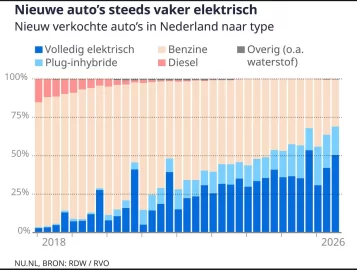
Third quarter Dutch new car data (rdw is the car registration office).
Half of new cars sold are pure EVs (dark blue). Another 22% or so plug in hybrid. Diesel is non-existent for personal vehicles.
 

Attachments

  • [Hearth.com] Why electric cars?
    Screenshot_20261023-035921_NU.nl~2.webp
    61.8 KB · Views: 15
  • Like
Reactions: woodgeek
Third quarter Dutch new car data (rdw is the car registration office).
Half of new cars sold are pure EVs (dark blue). Another 22% or so plug in hybrid. Diesel is non-existent for personal vehicles.
Diesel used to be very common in Europe for cars. I bet they are still driving the old mercedes and vw's. At the price of diesel these days no wonder they don't want new ones. I guess benzene is really what we would call gas. If the Chinese ev cars were allowed all over the world with no tariffs or limits, there would be a lot more on the road.
 
Diesel used to be very common in Europe for cars. I bet they are still driving the old mercedes and vw's. At the price of diesel these days no wonder they don't want new ones. I guess benzene is really what we would call gas. If the Chinese ev cars were allowed all over the world with no tariffs or limits, there would be a lot more on the road.
Yes, the liquid benzine is called gas here
:-)
 
Yes, the liquid benzine is called gas here
:-)
I found it interesting when I was in Romania several years ago and several other parts of Europe, what we would call gasoline is benzina, and they also had this other stuff called gazole (or gasoil) that was somewhere between gasoline and kerosene, I think? Not sure what vehicles used that.
 
I think gasoline you saw is just diesel.
(After.all the diesel we use for heating here is called oil too..)
 
A friend went to Norway last summer. His rental car was an ID.3. Over 95% of all new car sales there are EVs. It's gotten so that most of the cars on the road there EVs. This is a country is sitting on large oil reserves that intends to use them judiciously.
 
A friend went to Norway last summer. His rental car was an ID.3. Over 95% of all new car sales there are EVs. It's gotten so that most of the cars on the road there EVs. This is a country is sitting on large oil reserves that intends to use them judiciously.
Also because they have cheap electricity because of hydro power.
In NL, kWhs are expensive adding a drag to EV sales (and yet it's 50%).
 
Wonder why?;)
There are in fact bans on polluting vehicles entering into cities. Diesel vehicles are much affected by that.
probably selling as much oil as they can pump the rest of the world to fund a green transition at home?
Not sure. They have a boatload of hydropower so not much transition needed ...
 
There are in fact bans on polluting vehicles entering into cities. Diesel vehicles are much affected by that.

Diesel engines in passenger vehicles in Europe historically have had much more relaxed emission standards than in North America. They are catching up, but US emission limits are still about half of what the EU is. And diesel engines have historically been allowed more emissions, which is now no longer the case in both the EU and North America. Gasoline and Diesel engines now meet the same emissions standards.

Ford for instance is now putting a gasoline particulate filter on it's 3.5 ecoboost for the California Market, this is expected to be installed on all 3.5 ecoboosts in the near future.
 
  • Like
Reactions: stoveliker