
Falling further behind

  • Active since 1995, Hearth.com is THE place on the internet for free information and advice about wood stoves, pellet stoves and other energy saving equipment.

    We strive to provide opinions, articles, discussions and history related to Hearth Products and in a more general sense, energy issues.

    We promote the EFFICIENT, RESPONSIBLE, CLEAN and SAFE use of all fuels, whether renewable or fossil.

begreen

Mooderator
Staff member
Hearth Supporter
Nov 18, 2005
111,214
South Puget Sound, WA
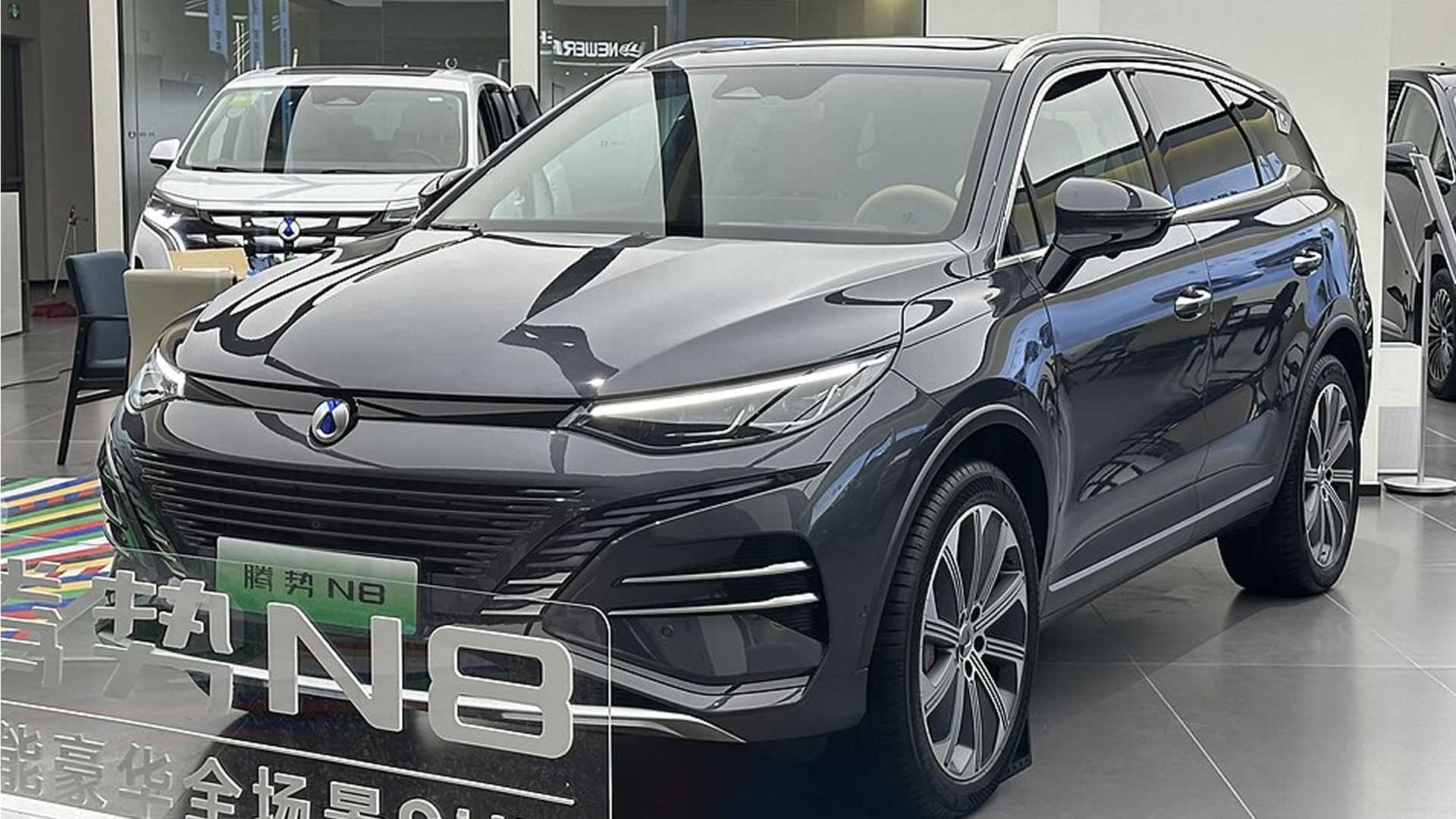
It' really sad to see the US falling further behind in EV development. On a global basis, it's reported that one in 4 new cars are now EVs. The NYT posed the question

“The American EV Has Been Crushed. Will it Take Down the US Auto Industry With it?”

The industry did a very costly about face in the past year and a half. It's questionable whether it will survive. Detroit produces no sedans, the staple of fleet and rental car sales. Locally, over half of the cars I see on the road are not US made. Meanwhile, the rest of the world is moving rapidly to EVs. With high fuel prices, this can't happen soon enough. But US car manufacturers pulled the plug on EVs in early 2025.
“The way I’d put it,” the auto journalist Martin Padgett told me recently, “is that we pulled a U-turn while the rest of the world was pushing forward.”

"According to the International Energy Agency, a Paris-based policy group, one of every four vehicles sold globally in 2025 was battery-powered. Analysts with Bloomberg have predicted that in the next decade, that number will more than double, putting gas-powered cars — for the first time ever — in the minority of overall new vehicle sales. Overseas, Asian and European manufacturers have spent years preparing for this eventuality, dumping billions into the development of battery technology. With predictable results: China now makes 75 percent of all E.V.s sold anywhere on earth. (The United States makes around 5 percent.) Many of those vehicles are produced by BYD, a Chinese company that recently became the largest manufacturer of battery-powered cars in the world.

“Already, the technological gap is getting dangerously wide,” says Stephen Ezell, a senior economist with the Information Technology and Innovation Foundation, or I.T.I.F., a Washington-based nonprofit. “Today, China can get a new E.V. from blueprint to launch about 33 percent faster than a U.S. company, give or take. But that will accelerate, right? The speed of innovation, the speed of the production cycles at these foreign companies, is just going to get faster and faster. And at some point, the gap will get pretty close to fully impossible for American automakers to close.”"

 
It is sad - but then again, hasn't that been the story of the US Auto Industry for more of our lives?

When I started driving (1969) there was still a certain sense of awe about American cars. My besties spoke about "442" like it was the Lord Himself. MPG was not even considered....although, I have to admit, putting 50 cents worth in my 1959 VW Convertible (my parents bought that rustbucket for my 16th B-Day)....and getting to the beach and back (120 miles total) was pretty neat!

Years later we got lucky and a neighbor who was a BigWig at Subaru (HQ is in SJ) sold us a demo....that was the first car of any newer vintage we ever owned (1978). By that time MPG was already a big deal.

For those who care about the History there is a really amazing book - well, there are dozens about Detroit and many about our Industry here in the States.


I have pivoted back and forth on many of these topics - because I started out thinking that mostly individual actions and outlooks is the way to solve things...then I changed to thinking that technical improvements would. Now I am back mostly to the first....of course, engineering solves problems, but in order to be "greener" (hey that is someones name!)...one has to pick the Hybrid Camry (52+ MPG) or a Bolt (4 MPKwh at times)...and not want the E-Hummer, etc. (using that as silly example).

To the point itself about EV's - yes, first is customer demand. In the US you cannot easily force consumers into making decisions. But this is so much bigger due to the whole question of where the Electric comes from.

I try to look at the "pain points" and determine why we do the things we do! Think about this - in the USA, it's possible you will pay $1 for the same gallon of gas that I pay $8 for. Of course, I am not talking gasoline, but rather Electricity......to me the first step would be to have both renewable and inexpensive (relatively) electric.

And yet, this hardly ever comes up in the discussions. It's weird. Gasonline, in general, can differ in price by 20-30%.
Electric? 800% or more. One person might pay 4 cents a KWH for nightime charging and another (me!) pays .33 cents.

Even very simple actions - by consumers - can at least head us in a direction. Folks with a light foot are getting 38 MPG in a Toyota Grand Highlander (a car for a family!).....many other cars in that size range get 22-24 if you are lucky. Not only do consumers save money and pollution, but they save a lot of money also. The Perfect is always the enemy of the Good. Even in that areana - why aren't American makers creating the top hybrid engines? (Greely in China is). It seems like we just gave up.

"Geely achieved a world record for mass-production engine thermal efficiency at 48.41% with its i-HEVintelligent hybrid system, delivering an exceptional fuel economy equivalent to roughly 106 mpg (2.22 L/100km)."
 
  • Like
Reactions: sloeffle and Giaman
The Perfect is always the enemy of the Good. Even in that areana - why aren't American makers creating the top hybrid engines? (Greely in China is). It seems like we just gave up.
the big auto makers were/are to slow to change. They thought they could count on sales in China as the car was adopted.

They have the Engineering experience to make a great product but are so risk adverse they would rather keep a traditional slow pace of product evolution because it has worked and it’s what their system is built around. Geely’s record breaking engine isn’t new technology. It’s a new way to ad range to their EVs. Ad a generator! The deep miller cycle engine is pushing 16:1 compression and would be nearly undrivabke if it had a mechanical link to the wheels. Instead they optimized everything to run as a generator for the EV. It probably has a couple charge rates and all that means it can always e run at peak efficiency.

I’m not saying anyone could have built it but the concept isn’t old. Diesel electric locomotives have been around a while. Not just a a battery. It didn’t fit any automakers currently roadmap.

The US ceded economic leadership to China buy embracing the outsourcing model. China leaned how to build everything and at the lowest cost. Take a lighter.
To view this content we will need your consent to set third party cookies.
For more detailed information, see our cookies page.


In a Global economy everyone must compete with this. We simply couldn’t partly because labor costs. We could have had a more protective economic policy but cheap goods drive growth and profit margins. It’s time to think about what we really want out of our government. A cheap lighter or a quality standard of living
 
The USA, is following the path that history would forecast for it, based on the Roman Empire, Great Britain ect. Rise and Fall. China is next to lead. Of course the USA and Japan helped them along.
 
An interesting book about the subject.....
"Apple in China: The Capture of the World's Greatest Company"

Since I was a Mac nut I remember every detail of Apple going over there. It wasn't (mostly) due to being evil. They had actually wanted to - in the worst way - build Macs here. They even had a factory in California where they said "Macs will make Macs" - they were ahead of their time on the "thought experiment" end of things.

Quality control and other problems steered them to China....they (and most all others) were getting a lot of components from that end of the world anyway, so they figured they would be able to assemble them there also. Let's not fool ourselves - they (Taiwan, China) had ambition that it can be tougher to find here. Contract manufacturers here built stuff for Apple, but they didn't have the same attitude and personal ambition as the Foxcon dude or the Chip foundry guy. A lot of it came down to single people - personalities - who shaped the whole thing. I think if an American came and sat down in Jobs office and said "I can make the macs and iPhones here and in close-by Mexico and Canada and do it right" - he would (at one time) have done it. But in the end, the product rules....
Interesting hearth relationship - one of my Heart Heros was the Avalon Design, John Desaultles. I stayed in touch with him because he did a lot of my patent drawings and ideas with the chimney extensions. He worked for a Metal Fab (computer driven) on the West Coast - and the last times I talked to him (this is 2006 or so), he was in China working for his employer setting up a factory.

Anyway, it went exactly how you all think it did - Apple engineers went to China and camped out in 1/2 built factories (until they finished them....and probably built products before the roof was on)......and every single detail of perfection was acheived and passed down.

You have probably notices (I have!) that a lot of products I get from China now look, even the packaging, like Apple designed them. That's not by accident. The standards were passed on.

Realistically there was prob no way around it. The USA exists as the USA due to our stealing of British tech and so on.

I guess it is what it is. The USA is headed toward the "brains only" end of things. Not to say there isn't a lot of value there, but we definitely went too far!
 
The USA is headed toward the "brains only" end of things.
we will can not compete with the economies of scale in Asia. We have lost a lot of ground in the last decade. India and China account for 35% of the world’s population and Africa will account for a lot of the economic growth in 30-50 years.

The rest of us need to figure out how to keep our economies strong. Hell we can barely figure out how to built more missle and rockets fast enough to replace what was consumed in a minor skirmish. It will take strong government action that i am skeptical current politicians are willing to take. Stock market is up. The rich are getting richer and funding the systems here and abroad that protect their interests. I don’t think they are the same as the average citizens.

We need to fund infrastructure. The green, black and grey kind. Cheap energy floats all boats. I drive 12.5k miles this summer. The interstates are in need of investing in. Idaho and Wyoming were terrible. Bridges need replacing. We know all this. Have for a long time. Wind and solar power are the cheapest forms of energy. Again we have know that. But we still keep making decisions that limit our financial abilities to invest in these improvements. Chip making is huge but so are TVs. We stopped making those in the US in the early to mid 90s.
 
"Geely achieved a world record for mass-production engine thermal efficiency at 48.41% with its i-HEVintelligent hybrid system, delivering an exceptional fuel economy equivalent to roughly 106 mpg (2.22 L/100km)."
And Geely (Polestar) just got shut out of the American market.
Wind and solar power are the cheapest forms of energy. Again we have know that. But we still keep making decisions that limit our financial abilities to invest in these improvements.
And yet we just gave $4 billion in our tax payer dollars in 5 separate payouts to companies to not build wind here while continuing to subsidize fossil fuels inspite of record profits this year. Imagine getting paid one thousand million to not make something. It's mind boggling.
 
Last edited:
The industry did a very costly about face in the past year and a half. It's questionable whether it will survive. Detroit produces no sedans, the staple of fleet and rental car sales. Locally, over half of the cars I see on the road are not US made.
This alone says a lot about US auto manufacturers. I had to look it up when a friend said Chevy does not make any cars except the Corvette, how is that possible? Go to a parking lot and look around and if it's a car it's a foreign brand. I remember the coming of the Japanese cars when the US kept making V8 gas guzzlers and trying to put smog equipment on them with carburetors. We're going there again!
 
  • Like
Reactions: Giaman
It seems like hybrids make much more economic (and even environmental) sense than full EVs, at least right now. That is Toyota’s conclusion too. American manufacturers probably cannot meaningfully compete with China on EVs anyway. Mining the metals that go into EV batteries comes with environmental and humanitarian catastrophes—China is not too concerned with either.

Things look quite grim for our country right now, but I would still never bet against it. We have demographics on our side, whereas China is heading for a demographic crisis. These are longer-term trends that may be more impactful than we can perceive. The USA also still has goodwill, for now… although we are deliberately squandering that. I find that the most disturbing trend.
 
  • Like
Reactions: sloeffle
This alone says a lot about US auto manufacturers. I had to look it up when a friend said Chevy does not make any cars except the Corvette, how is that possible? Go to a parking lot and look around and if it's a car it's a foreign brand. I remember the coming of the Japanese cars when the US kept making V8 gas guzzlers and trying to put smog equipment on them with carburetors. We're going there again!
Well, there still are sport cars, though that is a niche market. Ford still makes the Mustang too. There's the Buick Envista, but that is Korean made, and Cadillac still has some sedans. Dodge still sells the Charger.

I did a count yesterday of the cars queued up in a ferry line. Excluding trucks, only one in 7 was made by the US top 3 auto makers. Technically, that term no longer applies. It's more like US truck makers.
 
  • Like
Reactions: Giaman
It is sad - but then again, hasn't that been the story of the US Auto Industry for more of our lives?

When I started driving (1969) there was still a certain sense of awe about American cars. My besties spoke about "442" like it was the Lord Himself. MPG was not even considered....although, I have to admit, putting 50 cents worth in my 1959 VW Convertible (my parents bought that rustbucket for my 16th B-Day)....and getting to the beach and back (120 miles total) was pretty neat!

Years later we got lucky and a neighbor who was a BigWig at Subaru (HQ is in SJ) sold us a demo....that was the first car of any newer vintage we ever owned (1978). By that time MPG was already a big deal.

For those who care about the History there is a really amazing book - well, there are dozens about Detroit and many about our Industry here in the States.


I have pivoted back and forth on many of these topics - because I started out thinking that mostly individual actions and outlooks is the way to solve things...then I changed to thinking that technical improvements would. Now I am back mostly to the first....of course, engineering solves problems, but in order to be "greener" (hey that is someones name!)...one has to pick the Hybrid Camry (52+ MPG) or a Bolt (4 MPKwh at times)...and not want the E-Hummer, etc. (using that as silly example).

To the point itself about EV's - yes, first is customer demand. In the US you cannot easily force consumers into making decisions. But this is so much bigger due to the whole question of where the Electric comes from.

I try to look at the "pain points" and determine why we do the things we do! Think about this - in the USA, it's possible you will pay $1 for the same gallon of gas that I pay $8 for. Of course, I am not talking gasoline, but rather Electricity......to me the first step would be to have both renewable and inexpensive (relatively) electric.

And yet, this hardly ever comes up in the discussions. It's weird. Gasonline, in general, can differ in price by 20-30%.
Electric? 800% or more. One person might pay 4 cents a KWH for nightime charging and another (me!) pays .33 cents.

Even very simple actions - by consumers - can at least head us in a direction. Folks with a light foot are getting 38 MPG in a Toyota Grand Highlander (a car for a family!).....many other cars in that size range get 22-24 if you are lucky. Not only do consumers save money and pollution, but they save a lot of money also. The Perfect is always the enemy of the Good. Even in that areana - why aren't American makers creating the top hybrid engines? (Greely in China is). It seems like we just gave up.

"Geely achieved a world record for mass-production engine thermal efficiency at 48.41% with its i-HEVintelligent hybrid system, delivering an exceptional fuel economy equivalent to roughly 106 mpg (2.22 L/100km)."
All excellent points.
 
and even environmental)
I don’t think that the case. I had some numbers from a couple years ago. Chat GPT tells me even if I plug in my RAV4 and do 70% electric miles figuring 200k miles a Tesla model Y has a 20% smaller carbon footprint the RAV4. If you can charge on solar the difference gets larger in the Ys favor.

To me it’s all about use case. Can an EV do 98% of what you want to do?
 
  • Like
Reactions: Giaman
To me it’s all about use case. Can an EV do 98% of what you want to do?
On the other hand, some essential tools are not sufficient if it can't handle All that comes your way.

Can your roof handle 98% of rain storms?
Not good enough.
 
I don’t think that the case. I had some numbers from a couple years ago. Chat GPT tells me even if I plug in my RAV4 and do 70% electric miles figuring 200k miles a Tesla model Y has a 20% smaller carbon footprint the RAV4. If you can charge on solar the difference gets larger in the Ys favor.

To me it’s all about use case. Can an EV do 98% of what you want to do?
You’re probably right about carbon footprint for driving around, once the cars are made, but I’m talking more about mining for nickel, lithium, and other metals necessary for EV batteries—that is the source of environmental catastrophe. Hybrids get much of the benefit of lower co2 emissions without nearly as much damage from mining (for the relatively tiny hybrid batteries).
 
  • Like
Reactions: sloeffle
On the other hand, some essential tools are not sufficient if it can't handle All that comes your way.

Can your roof handle 98% of rain storms?
Not good enough.
i want my roof to handle a cat 3 or higher hurricane but it won’t. It’s easy to rent a vehicle or trailer for those 2%
 
  • Like
Reactions: begreen
I'm a bit more sanguine. :)

In a rapidly evolving technology, it is REALLY hard to keep up. When the technology is rapidly getting cheaper, you keep finding yourself with technology that is too expensive for the marketplace.

This has been happening to ALL the legacy makers for years. They build a battery plant... it takes two years to complete, and the day the first batteries roll off the line... they are too expensive to make a profit on!

If the US wants to have automakers, then they are too big to fail. The US will bail them out when the time comes.

And the bailed out companies will start with a blank slate, adopt the best manufacturing processes, and likely buy the batteries from BYD or equivalent.

And the current 'hiatus' (which is not really a hiatus... GM is making lots of EVs) is just limiting the losses during this period of innovation and market adjustment.

And I think the makers are VERY aware of what I am saying. They will happily jump back in when the time comes (and likely the fed grants/loans too). And equally happily sit on their hands when the market research says they would still lose their shirts.
 
Last edited:
  • Like
Reactions: begreen
You’re probably right about carbon footprint for driving around, once the cars are made, but I’m talking more about mining for nickel, lithium, and other metals necessary for EV batteries—that is the source of environmental catastrophe. Hybrids get much of the benefit of lower co2 emissions without nearly as much damage from mining (for the relatively tiny hybrid batteries).

There have been many lifecycle analyses done. BEVs have lower total CO2 emissions than ICE (or hybrid) cars by the time both have driven 15-20,000 miles. And after than they emit less than a third the CO2/mile using US average electricity.

And that electricity keeps getting lower emissions too, unlike gasoline and diesel.
 
These are some really good points. I appreciate the fresh POV.
 
  • Like
Reactions: woodgeek

Just came across this - amazing what is coming in the future. There will always be a cost though.
Thats' just a really big battery pack. We're getting 350 mile summer range in an AWD EV, with a battery about half that size. There is higher density battery tech on the horizon. Volume production and less rare chemistry will drive the price down.
 
  • Like
Reactions: Highbeam and EbS-P
And Geely (Polestar) just got shut out of the American market.

And yet we just gave $4 billion in our tax payer dollars in 5 separate payouts to companies to not build wind here while continuing to subsidize fossil fuels inspite of record profits this year. Imagine getting paid one thousand million to not make something. It's mind boggling.
I was unaware of this, do you have a source or link?
 
Wind and solar power are the cheapest forms of energy.

One can find articles that support this as well as articles that disprove it. Idk for sure either way. However, I live adjacent to several “wind farms”. It is by far more expensive electricity when compared to the local hydropower that is produced.
 
Well if you haven’t watched “smarter everyday’s” videos on making a grill scrubber in the USA you should. I highlights the obstacles facing manufacturing in the US.
To view this content we will need your consent to set third party cookies.
For more detailed information, see our cookies page.

To view this content we will need your consent to set third party cookies.
For more detailed information, see our cookies page.