


My Greenish Power Project and Updating a Few Grid Cords
- Thread starter Burnin Since 1991
- Start date
-
Active since 1995, Hearth.com is THE place on the internet for free information and advice about wood stoves, pellet stoves and other energy saving equipment.
We strive to provide opinions, articles, discussions and history related to Hearth Products and in a more general sense, energy issues.
We promote the EFFICIENT, RESPONSIBLE, CLEAN and SAFE use of all fuels, whether renewable or fossil.
You are using an out of date browser. It may not display this or other websites correctly.
You should upgrade or use an alternative browser.
You should upgrade or use an alternative browser.

That, I do not know. I gave my business to a smaller electrical outfit in upstate NY.Are those lower$ ones UL listed?


EbS-P
Minister of Fire
We’re going back and forth on how do this cheap. And it can be done or you can just spend money on a portable Ecoflow backup battery and generator.
With my super expensive solar + battery system I have instant backup. Worst case I only have 3 kWh. I get the alert I can turn everything off but the essentials and get 10 hours, if I don’t get the alert I have 3 hours. It’s seamless safe and requires no action on my part. I have had all the cables boxes in my possession to back feed my panel from a 240v generator for 12 years. (I never got the interlock device purchased. They are still sitting in the attic. Never once being used. The one time we lost power for a week we evacuated. That was a great decision. I had enough gas on hand for 3-4 days. But you could not buy fuel.
Is my system bomb proof no. I needs sun to operate for more than 12 hours.
It will sell with the house. I fully expect to recoup some of this investment if we were to sell.
At this point has the OP stated a budget? And whole of self sufficiency is their goal?
With my super expensive solar + battery system I have instant backup. Worst case I only have 3 kWh. I get the alert I can turn everything off but the essentials and get 10 hours, if I don’t get the alert I have 3 hours. It’s seamless safe and requires no action on my part. I have had all the cables boxes in my possession to back feed my panel from a 240v generator for 12 years. (I never got the interlock device purchased. They are still sitting in the attic. Never once being used. The one time we lost power for a week we evacuated. That was a great decision. I had enough gas on hand for 3-4 days. But you could not buy fuel.
Is my system bomb proof no. I needs sun to operate for more than 12 hours.
It will sell with the house. I fully expect to recoup some of this investment if we were to sell.
At this point has the OP stated a budget? And whole of self sufficiency is their goal?
I appreciate your input.We’re going back and forth on how do this cheap. And it can be done or you can just spend money on a portable Ecoflow backup battery and generator.
With my super expensive solar + battery system I have instant backup. Worst case I only have 3 kWh. I get the alert I can turn everything off but the essentials and get 10 hours, if I don’t get the alert I have 3 hours. It’s seamless safe and requires no action on my part. I have had all the cables boxes in my possession to back feed my panel from a 240v generator for 12 years. (I never got the interlock device purchased. They are still sitting in the attic. Never once being used. The one time we lost power for a week we evacuated. That was a great decision. I had enough gas on hand for 3-4 days. But you could not buy fuel.
Is my system bomb proof no. I needs sun to operate for more than 12 hours.
It will sell with the house. I fully expect to recoup some of this investment if we were to sell.
At this point has the OP stated a budget? And whole of self sufficiency is their goal?
I'm retired. I'm 67 years old and we'd like to find a home in New Hampshire to have a few acres and neighbors not so close. After I got out of the army we lived in a major city in Massachusetts and after a few years moved to the town we are in now. It's more suburban, but I've got the biggest lot on the street and it's barely 10K s/f. We have no basement and no garage.
I've set aside a certain amount for the projects that need to be done. I have numerous and several require the completion of others first. I know I'm being a bit vague as we just don't know what tomorrow will bring.
My goals have been set up into phases. For the first phase I trimmed a few bills to offset the cost of other needs.
Also in phase one is a starter battery backup and solar system. I have that in place, though I still need a few more panels and wire routing done.
I've had a generator for many years and ran extension cords during outages. Though National Grid has done a really good job of trimming the trees back from the wires, outages still occur as witnessed at our families vacation home on cape cod. The power was out there for 4 days after they got dumped on with a couple of feet of snow on February 23rd. As I am the caretaker, I went down with my 2048wh power station, my generator and 15 gallons of gas and got the house warmed up and ate the food in the fridge to keep it from going bad

We remotely monitor the home and with the power outage we lost that. A power station there would have been a good move. It is on my list and will be implemented before spring as will a generator inlet and lockout.
I saw what happened to you folks in NC. It was not a good time. The decision to stay or go is a tough one.
One of my main unstated till now goals is to not do something that as I upgrade, I will need to spend money buying a larger part, just to buy the expansion pieces. There are many directions one can go with a project of this nature.
I don't plan to install a whole house solution. To me and my situation it wouldn't make sense. If money was no option and ROI didn't matter then I'd just get a Generac auto standby connected to NG and be done with it.
The Aferiy P280 power station I bought is expandable from 2K wh output to 10k wh output and the batteries are only about $500 per 2kw wh. If my initial testing with this setup works for us, I will expand on that.
The generator issue is just another solution I've been putting off too long and I should have done 10 years ago. Once I get the interlock kit I will firm up my other plans. I do want to be able to expand upon that as I go so I am buying more of the supplies I need so I can continue upgrading to include connecting up an essential loads battery backup that can be supplied by solar and backed up by an inverter/ generator.
But... That depends on the testing I am doing with the P280 and one 200w solar panel. Right now the P280 is running the essentials in my family room. I unplugged it yesterday from 120 power and as it has been sunny. So far it's been 24 hours and I still have almost 50% battery. I plan to continue until 6pm tomorrow to see where we're at.
I guess you could say my goal is a moving target. My budget is as needed without buying something I won't need in 6 months because I bought too small. If I can repurpose something that's ok too. For example I have a 50w and a 200w solar panels that are too small to be practical. However, the 2 panels and the Afirey P10 512wh power station I bought will probably work well towards making my two sheds solar powered. Basically we're talking about 3- 13w LED T-6 bulbs and charging for my power tool batteries. And then there is the other home (not mine, my wife's family held in trust) that I want to do the same with. It gets much more frequent power outages and the cable/ internet goes on and off multiple times a week.
So that's the conundrum. Just trying to sort all of this out and to follow a logical path to bring this all together.

YouTuber JerryRigEverything has been doing some DIY Solar+Battery stuff at his home and with friends for years. He uses the EcoFlow ecosystem of stackable batteries, inverters, smart panels, gennies, etc.
I thought of this thread. This is his latest video on this... there are several others.
Sounds like EcoFlow provides a whole soup to nuts, plug and play system that you can configure to do off grid, isolated mini-grid, automatic backup, and is modular.
The ONE benefit of a big $$$ grid-tied battery system is that it provides revenue from the utility to (eventually) offset its cost. The benefit of these modular systems is that they require less permitting and handshaking with the utility to get set up (and can more easily move if you move). But that handshaking with the utility comes with a benefit: CASH.
I thought of this thread. This is his latest video on this... there are several others.
Sounds like EcoFlow provides a whole soup to nuts, plug and play system that you can configure to do off grid, isolated mini-grid, automatic backup, and is modular.
The ONE benefit of a big $$$ grid-tied battery system is that it provides revenue from the utility to (eventually) offset its cost. The benefit of these modular systems is that they require less permitting and handshaking with the utility to get set up (and can more easily move if you move). But that handshaking with the utility comes with a benefit: CASH.
And yeah. Its sounds like a 4 prong 240V genny plug on the outside of the house, and a separate, maybe 14-50 4 prong plug indoors near the box/battery stack is an easy way to go, unless you want a permanently online system with an automatic switch. Done right (the outside plug is interlocked per code, the indoor one is just a dumb socket, not interlocked) you could also CHARGE the batteries from the genny easily using that high power outlet.
Thank you for that. I have been watching some you tube videos but I've noticed a lot of guys that don't have a clue about what they are talking about or they sound like a salesman for the brand of power station they're reviewing.And yeah. Its sounds like a 4 prong 240V genny plug on the outside of the house, and a separate, maybe 14-50 4 prong plug indoors near the box/battery stack is an easy way to go, unless you want a permanently online system with an automatic switch. Done right (the outside plug is interlocked per code, the indoor one is just a dumb socket, not interlocked) you could also CHARGE the batteries from the genny easily using that high power outlet.
It seems like the DIY folks, homesteaders and off-grid'ers have the best handle on how to merge all of this stuff together. Although I watched a video the other day and the claimed "off-grid" guy said that the generator he bought put out 4000 horse power. It may have been a slip of the tongue, but the video was a couple weeks old. If it were me I would have yanked it, edited it and reposted it.
Anyway with that said, I check all info I get from everywhere.
I'm still working out the 30amp vs 50amp inlets and everything that goes with it.
Since any power station I use out there will need 120v to augment the solar (and vice versa) I also need to install an additional 120v receptacle
For a 50amp inlet I'd need 6/4 wire? Line 1, Line 2, Neutral and ground?
Also this is the switch I want to use so I don't have the power station and the generator hot at the same time.
Black- Line 1, Red- Line 2, Yellow- Neutral, Blue- ground. I believe this is showing a 3 phase circuit wiring. On split phase 240v the Neutral would be White and the ground would be green.
I appreciate all of the input. Not having a switch between 2 sources makes me nervous especially knowing me.
I see a lot of places have gone to an outside main breaker. Is there also an indoor main? Thinking about the generator interlocks.
I honestly get the appeal of a 'switch' that controls this without any possibility of creating an overload or short. I never found any mechanical switches that did that.
The only switches I use are the service breakers, main breaker, and of course plugs and receptacles.
It is good to think about operating this stuff (or misoperating it) in a stressful emergency or sleep deprived state. That is how errors occur.
In the case of your inverter, you are correct that if you tie to output to live grid (or genny power) something is gonna happen. Whether that is a popped breaker on the inverter with no damage to the inverter OR a broken inverter is a Q for the manufacturer. I have been **assuming** that I can (1) not exercise that fault by being careful (e.g. my main breaker lock) and (2) that the inverter manufacturer designed the unit to survive that fault with a popped breaker and no damage. But these are my personal assumptions.
I have also had to make assumptions (and do tests) to verify that my EV can handle inverter load without damage. I have now done this on 4 different makes/models without drama. As far as the internet knows, I am the only person to ever do V2L or V2H with a Volvo EV. The internet lists many reasons why it can't be done, isn't safe, and will cause irreparable $$$ damage to the vehicle. I pulled the schematics for the car, and determined it was set up like every other EV, and went ahead. No problems.
The only switches I use are the service breakers, main breaker, and of course plugs and receptacles.
It is good to think about operating this stuff (or misoperating it) in a stressful emergency or sleep deprived state. That is how errors occur.
In the case of your inverter, you are correct that if you tie to output to live grid (or genny power) something is gonna happen. Whether that is a popped breaker on the inverter with no damage to the inverter OR a broken inverter is a Q for the manufacturer. I have been **assuming** that I can (1) not exercise that fault by being careful (e.g. my main breaker lock) and (2) that the inverter manufacturer designed the unit to survive that fault with a popped breaker and no damage. But these are my personal assumptions.
I have also had to make assumptions (and do tests) to verify that my EV can handle inverter load without damage. I have now done this on 4 different makes/models without drama. As far as the internet knows, I am the only person to ever do V2L or V2H with a Volvo EV. The internet lists many reasons why it can't be done, isn't safe, and will cause irreparable $$$ damage to the vehicle. I pulled the schematics for the car, and determined it was set up like every other EV, and went ahead. No problems.
EbS-P
Minister of Fire
What is your self imposed load limit on the Volvo and what do you think the hardware limit it?I honestly get the appeal of a 'switch' that controls this without any possibility of creating an overload or short. I never found any mechanical switches that did that.
The only switches I use are the service breakers, main breaker, and of course plugs and receptacles.
It is good to think about operating this stuff (or misoperating it) in a stressful emergency or sleep deprived state. That is how errors occur.
In the case of your inverter, you are correct that if you tie to output to live grid (or genny power) something is gonna happen. Whether that is a popped breaker on the inverter with no damage to the inverter OR a broken inverter is a Q for the manufacturer. I have been **assuming** that I can (1) not exercise that fault by being careful (e.g. my main breaker lock) and (2) that the inverter manufacturer designed the unit to survive that fault with a popped breaker and no damage. But these are my personal assumptions.
I have also had to make assumptions (and do tests) to verify that my EV can handle inverter load without damage. I have now done this on 4 different makes/models without drama. As far as the internet knows, I am the only person to ever do V2L or V2H with a Volvo EV. The internet lists many reasons why it can't be done, isn't safe, and will cause irreparable $$$ damage to the vehicle. I pulled the schematics for the car, and determined it was set up like every other EV, and went ahead. No problems.
I be totally ok with a 30 amp dcdc converter to a 100-300 ahr LFP battery on anything.
Since you asked. The 12V systems are powered by a DC-DC converter that has an output of about 100A (or more) and about 14V. This is tied to a (usually half sized) 12V 'car' battery, that is often AGM nowadays.What is your self imposed load limit on the Volvo and what do you think the hardware limit it?
I be totally ok with a 30 amp dcdc converter to a 100-300 ahr LFP battery on anything.
So, this means that with the utilities on the car shut off (like the cabin HVAC), the car can produce 100A sustained, with brief current surges above that provided by the battery.
Assuming 80% eff, you get 100A*14V*0.8 = 1120W / 120VAC = 9.3 Amps AC sustained.
The Volvo has a 75 kWh battery, so it can deliver 60 kWh total energy at a max sustained rate of 1.1 kW.
The $200 sine inverter I use is 1.5kW sustained, 2 kW surge. My backfed house pulls 300-600W typically. If I make a coffee, I have a 90 second surge to more like 1.2-1.5 kW. This will pull less than an Ah from the 12V.
All these cars have a big safety fuse between the 12V battery and the DCDC system, which is placed on the negative (ground) side. This means that if a dead short develops on the 12V line, the fuse goes. I assume that it has a rating of a few hundred amps. I connect the inverter to the + terminal on the battery and chassis ground. I don't see why pulling 50-100A off the line will do anything to that fuse. I have my own 250A fuse in the connection to the inverter.
The 'worry' is that the car will shut off the DC-DC (it will time out) and then you are pulling off the 12V battery alone. If that happened, you would pull down the 12V in an hour or so (at 30-50A draw). The inverter would cut out for low voltage before the battery is damaged, but the car might be bricked if the 12V battery is fully discharged, and it would need to be recharged/jumped to get the car booted back up.
EbS-P
Minister of Fire
For basic emergency backup that is a great system. I do wonder how to keep the HV contacter closed for long periods in my Tesla. I’m sure someone has figured it out. I’m sure it has some logic to charge the 12v system while the car is “off”Since you asked. The 12V systems are powered by a DC-DC converter that has an output of about 100A (or more) and about 14V. This is tied to a (usually half sized) 12V 'car' battery, that is often AGM nowadays.
So, this means that with the utilities on the car shut off (like the cabin HVAC), the car can produce 100A sustained, with brief current surges above that provided by the battery.
Assuming 80% eff, you get 100A*14V*0.8 = 1120W / 120VAC = 9.3 Amps AC sustained.
The Volvo has a 75 kWh battery, so it can deliver 60 kWh total energy at a max sustained rate of 1.1 kW.
The $200 sine inverter I use is 1.5kW sustained, 2 kW surge. My backfed house pulls 300-600W typically. If I make a coffee, I have a 90 second surge to more like 1.2-1.5 kW. This will pull less than an Ah from the 12V.
All these cars have a big safety fuse between the 12V battery and the DCDC system, which is placed on the negative (ground) side. This means that if a dead short develops on the 12V line, the fuse goes. I assume that it has a rating of a few hundred amps. I connect the inverter to the + terminal on the battery and chassis ground. I don't see why pulling 50-100A off the line will do anything to that fuse. I have my own 250A fuse in the connection to the inverter.
The 'worry' is that the car will shut off the DC-DC (it will time out) and then you are pulling off the 12V battery alone. If that happened, you would pull down the 12V in an hour or so (at 30-50A draw). The inverter would cut out for low voltage before the battery is damaged, but the car might be bricked if the 12V battery is fully discharged, and it would need to be recharged/jumped to get the car booted back up.
On the Tesla it's simple: camping mode. On the Chevy its parking brake on, shifter in 'N'. On the Volvo, it times out when not in motion, so I have to set an alarm and periodically reset to 'N'.For basic emergency backup that is a great system. I do wonder how to keep the HV contacter closed for long periods in my Tesla. I’m sure someone has figured it out. I’m sure it has some logic to charge the 12v system while the car is “off”

YouTuber JerryRigEverything has been doing some DIY Solar+Battery stuff at his home and with friends for years. He uses the EcoFlow ecosystem of stackable batteries, inverters, smart panels, gennies, etc.
I thought of this thread. This is his latest video on this... there are several others.
Sounds like EcoFlow provides a whole soup to nuts, plug and play system that you can configure to do off grid, isolated mini-grid, automatic backup, and is modular.
The ONE benefit of a big $$$ grid-tied battery system is that it provides revenue from the utility to (eventually) offset its cost. The benefit of these modular systems is that they require less permitting and handshaking with the utility to get set up (and can more easily move if you move). But that handshaking with the utility comes with a benefit: CASH.
I just started watching the JerryRigEverything youtube videos. He does interesting work. I looked at the system he was doing on that video and for my house the cost is about 12k not including the install. It's similar to what I want to do, ultimately. I'm going to build my system modularly. At least that is the plan for now. I like the tri-fuel inverter generators, but the smallest with tri fuel is about 10k watts. It's also about where you start seeing 50amp 120/240 output.
That's the good thing about not jumping into things blindly. Research and pointers from those with experience is priceless.
I just started watching the JerryRigEverything youtube videos. He does interesting work. I looked at the system he was doing on that video and for my house the cost is about 12k not including the install. It's similar to what I want to do, ultimately. I'm going to build my system modularly. At least that is the plan for now. I like the tri-fuel inverter generators, but the smallest with tri fuel is about 10k watts. It's also about where you start seeing 50amp 120/240 output.
That's the good thing about not jumping into things blindly. Research and pointers from those with experience is priceless.
More research and some interesting news.
I was doing more research regarding plug in solar / balcony solar. Currently, the only state that allows grid tied plug in solar is Utah. Many states, including Massachusetts has legislation pending that would allow grid tied plug in solar.
I further found that there are a few companies that have developed modular plug in systems that can incorporate your home grid and prevent the backflow of electricity to your external grid so that it won't cause problems with the dumb meters that can't tell which direction the power is flowing and measure it in both directions. Also, if you grid tie, you have to have the automatic ability to prevent the flow of electricity to the grid, preventing additional issues, just like running a generator without your main breaker shut off.
I had researched the grid tied plug in solar and found it quite interesting. This was the first time I had seen the non grid tied plug in solar. Good stuff.
As I was reading and researching all of this, I recalled an email I had received from my electric company a few weeks ago about replacing our meter.
My power company; National Grid is in the process of installing new "Smart Meters". The meters allow the customers to view a dashboard that shows hour by hour breakdown of usage and other very useful information. The meter will also allow two way power flow, aka net metering without all the fancy BS previously required to grid tie a solar system.
The result is that grid tied, plug in solar may be legal in Massachusetts in the not so distant future. Also since the electric company only owns the power to my meter it is perfectly legal for me to use my internal home grid for non grid tied plug in solar, anyway I see fit as long as it isn't dangerous to do so. Running a non grid tied plug in solar setup is perfectly legal, right now in the entire US.

I know that Ecoflow has a balcony system but don't know about other companies.
Off-grid is legal as long as you adhere to your state/county/town permitting requirements (as required). Those who are attached to the grid can turn off their main breaker and run off-grid thru a transfer switch (or, there are other means to achieve that same separation). Plenty of people do that.
Off-grid is legal as long as you adhere to your state/county/town permitting requirements (as required). Those who are attached to the grid can turn off their main breaker and run off-grid thru a transfer switch (or, there are other means to achieve that same separation). Plenty of people do that.
The meter will also allow two way power flow, aka net metering without all the fancy BS previously required to grid tie a solar system.
The result is that grid tied, plug in solar may be legal in Massachusetts in the not so distant future.
You likely still need approval from the utility if you're going to back feed the grid. Smart meters are not new and having one does not give you an automatic license to hook up a generating plant. It is there so the utility can record peak demand and potentially introduce TOU billing if it becomes legalized in the future.
Most of the older analog meters would also be able spin backwards and record net usage but they were not guaranteed to be accurate since they were not designed for that.
not sure what "fancy BS" a grid tied solar system needs.
I surely have less equipment here (apart from the more solar panels) than you have, for my grid tied solar system.
One box of 10x10x3 inches is all.
I surely have less equipment here (apart from the more solar panels) than you have, for my grid tied solar system.
One box of 10x10x3 inches is all.
Sure, that's an option! Ecoflow has the stream system with the F3000 Power station. Their system is grid tied and needs approval from utility and is only currently legal in Utah. (unless you turn off the main breaker).I know that Ecoflow has a balcony system but don't know about other companies.
Off-grid is legal as long as you adhere to your state/county/town permitting requirements (as required). Those who are attached to the grid can turn off their main breaker and run off-grid thru a transfer switch (or, there are other means to achieve that same separation). Plenty of people do that.
This company overs a system that does not send power to the grid. It accepts grid power with priority to battery and solar, but if you have permission from the utility you can send power to the grid. It's completely programable.
Homepage
Explore how Plug and Play Solar Systems can simplify your energy solutions while reducing your electricity bills.
 craftstrom.com
and their partner site
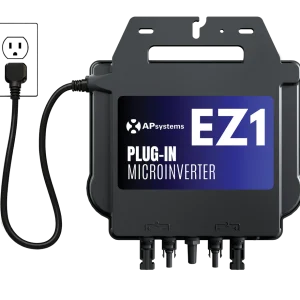
Individual Products - On Demand Instant Solar
Solar Panels and Solar Inverters Sale! Inverters – MicroInverters APsystems EZ1 Plug-in Microinverter $325.00 Original price was: $325.00.$305.00Current price is: $305.00. Add to cart Individual products Craftstrom Frameless Semi-Flexible Bifacial Solar Panels – 400 Watt Kit $249.00 Add to cart...
 ondemandinstantsolar.com
Anker Solix also offers the "Power Saving Kit" to use along with their E3000 Power Station

Anker SOLIX Power Saver Kit (Smart Meter + Bi-Directional Inlet Box, For F3000)
Real-Time AI Energy Monitoring: The smart meter keeps your energy usage checked every 15 seconds by AI to prioritize your solar electricity where it's need
 www.ankersolix.com
Interesting progress on this front!
You likely still need approval from the utility if you're going to back feed the grid. Smart meters are not new and having one does not give you an automatic license to hook up a generating plant. It is there so the utility can record peak demand and potentially introduce TOU billing if it becomes legalized in the future.
Most of the older analog meters would also be able spin backwards and record net usage but they were not guaranteed to be accurate since they were not designed for that.
Yes, after the new smart meter is installed, I log into my account and set it to net metering.

From the FAQ section under Solar Panels
What if I decide to add solar panels to my home after my smart meter is installed? Will I need a new meter or re-programming?
No. If you decide to install solar energy panels at your home after your smart meter is installed, you will not need a meter exchange or re-programming. However, we will need to update your account to net-metered billing instead of electric rate billing. This will be done as part of the connection process.
They do not specify what they mean by "connection process". I'm not sure they will allow a temporary array or not. More info is forthcoming.
I do know they will still require a means off shutting off the power to the system if their grid goes down, so that you're not back feeding the grid.
My old meter would not allow net metering. I'm not sure how they did this before with grid tied solar? There hasn't been any talk of TOU rates, but I'm sure it will come eventually.
The fancy BS I was referring too was the process involved here is Massachusetts for Grid Tied Solar before they implemented the smart meters.not sure what "fancy BS" a grid tied solar system needs.
I surely have less equipment here (apart from the more solar panels) than you have, for my grid tied solar system.
One box of 10x10x3 inches is all.
I only have 2 panels on my system with a third in temp storage and 2 power stations on. The other 512wh power stations and a 50 watt panel will be going out to my shed for three led tube lights (13 watts each) and charging the batteries for my cordless tools (5 chargers, 100 watts each, but I only run two), though I will likely need more than a 50 watt panel and the 512wh power station to keep it all running.
What is your 10x10x3 box?
Last edited:
Yes, after the new smart meter is installed, I log into my account and set it to net metering.
From the FAQ section under Solar Panels
What if I decide to add solar panels to my home after my smart meter is installed? Will I need a new meter or re-programming?
No. If you decide to install solar energy panels at your home after your smart meter is installed, you will not need a meter exchange or re-programming. However, we will need to update your account to net-metered billing instead of electric rate billing. This will be done as part of the connection process.
They do not specify what they mean by "connection process". I'm not sure they will allow a temporary array or not. More info is forthcoming.
I do know they will still require a means off shutting off the power to the system if their grid goes down, so that you're not back feeding the grid.
My old meter would not allow net metering. I'm not sure how they did this before with grid tied solar? There hasn't been any talk of TOU rates, but I'm sure it will come eventually.
The fancy BS I was referring too was the process involved here is Massachusetts for Grid Tied Solar before they implemented the smart meters.
I only have 2 panels on my system with a third in temp storage and 2 power stations on. The other 512wh power stations and a 50 watt panel will be going out to my shed for three led tube lights (13 watts each) and charging the batteries for my cordless tools (5 chargers, 100 watts each, but I only run two), though I will likely need more than a 50 watt panel and the 512wh power station to keep it all running.
What is your 10x10x3 box?
I cannot participate in TOU because I am net metered. It is one or the other, not both. Doesn't mean other states or providers can't do it differently.
Some states have really good TOU programs. In at least parts of Texas (or maybe just certain providers in TX), night rates are $0.00, so just installing batteries, filling them up at night and using them to run your house (or parts of the house) during the day is a huge money saver without even having any solar panels.
Smart meters were most likely installed for those that had solar, they just weren't installed as a matter of course. And, not all smart meters allow for solar. When my system was put in, they had to change the meter even though they had already installed a smart meter probably 5-8 years previously. The smart just means it reports directly back to the company - no meter readers (actually, by looking it up online, it was capable, it just wasn't set up for it and was older tech). 2nd pic is old meter and 3rd pic is the net metering meter
For the additional box, I would guess it is a disconnect / rapid shutdown like the smaller box in the 1st picture.
I was just reading your post and it reminded me that we have had a smart meter for more than a few years, though I don't recall exactly when it was installed. The plastic cover over the meter is so yellowed, it's hard to make out much about the meter but it's clearly a digital smart meter. The meter I have is the dumb smart meter? The company still has to have someone drive by to get he readings, though they don't have to physically read the meters.
With the new smart, smart meter the meter will be read via the power lines in certain time increments. Net metering can be implemented.
Does your system have batteries or is it straight grid tied?
Anyway, good stuff. I'm looking forward to getting my new meter and the possibilities. Today should be a good solar day in the northeast.
With the new smart, smart meter the meter will be read via the power lines in certain time increments. Net metering can be implemented.
Does your system have batteries or is it straight grid tied?
Anyway, good stuff. I'm looking forward to getting my new meter and the possibilities. Today should be a good solar day in the northeast.
The first gen of smart meters had short range wireless communications. A meter reader could drive down the street and get all the data wirelessly, rather than having to stop and read the meter manually. And that was a long time ago.I was just reading your post and it reminded me that we have had a smart meter for more than a few years, though I don't recall exactly when it was installed. The plastic cover over the meter is so yellowed, it's hard to make out much about the meter but it's clearly a digital smart meter. The meter I have is the dumb smart meter? The company still has to have someone drive by to get he readings, though they don't have to physically read the meters.
With the new smart, smart meter the meter will be read via the power lines in certain time increments. Net metering can be implemented.
Does your system have batteries or is it straight grid tied?
Anyway, good stuff. I'm looking forward to getting my new meter and the possibilities. Today should be a good solar day in the northeast.
I was just reading your post and it reminded me that we have had a smart meter for more than a few years, though I don't recall exactly when it was installed. The plastic cover over the meter is so yellowed, it's hard to make out much about the meter but it's clearly a digital smart meter. The meter I have is the dumb smart meter? The company still has to have someone drive by to get he readings, though they don't have to physically read the meters.
With the new smart, smart meter the meter will be read via the power lines in certain time increments. Net metering can be implemented.
Does your system have batteries or is it straight grid tied?
Anyway, good stuff. I'm looking forward to getting my new meter and the possibilities. Today should be a good solar day in the northeast.
My system is tied straight to the grid. I wanted to get a backup when the system was installed, but it would have cost more than the entire system and would have had to construct a fireproof room. So, htat was a non-starter.
Since then, battery prices have really come down, but I have collected power stations so I don't have to construct that fireproof room.
Figured I do an update with regards to my original post.
I have to remove a crud load of old cable tv wires. They are 10 wires going up through the utility room ceiling and follow the plumbing vent stack up into the attic. There are only 2 bedrooms upstairs, so I really have no clue where the rest of them are going. Once I get those removed (the stack runs up through my wife's walk in closet and all the errant cable wiring has worn out it's welcome. I offered to put it into some sort of conduit, but it was denied
Once those wires are out I can cover the walls and ceiling with some really inexpensive white painted beadboard. It is barely more than painted cardboard but will accomplish the job. Looking forward to getting it all buttoned up.
#2 is still in deliberations.
#3 I have 3 power stations, now. I bought 2 Aferiy P010 512wh power stations. One is connected to the main tv, the internet router, my laptop, phone charger etc. The second P010 is in the bedroom and is connected to the bedroom tv. I have an extension cord in the closet to plug in a power strip that also includes phone chargers. I also bought an Aferiy P280 power station that has 2048wh and an extra battery to give it about 4k of power. It is connected to a couple of small solar panel, about 650 watts total. I will add more panels and another battery in the near future. Initially I had this in our family room, but the solar charging kicks off the fan and the noise was a little too loud. I placed it and the batteries out in the shed and took my shed and also another storage shed off grid. They have both been running only on solar since about June. I have temporarily mounted the panels on my shed roof for testing purposes. I am in the process of updating my shed with new wiring and getting it un-junked. I will be installing L14-30 connections to get power to the manual transfer station so that I can run a few house circuits off the solar. (Baby steps) I will be installing a gen inlet and a lockout switch so that I can charge the power stations when we lose power.
#4 This was easy. We cancelled our cable and went with starlink. We get the mid tier which is $85 a month and we have one paid subscription plan that gets us everything I need. I installed Over the air digital antennas and we get about 40 local channels as well. We now pay 145 a month instead of 300 a month. We share a few subscriptions with my other family members as well, so it works out well. No regrets!
The 165 a month I am not spending on cable is being re-invested into battery power, solar and updated wiring to support everything.
#5-7 are basically completed.
I will go through the rest of the posts to see if anything else needs updating. I think for me the best part has been running the two sheds on solar for the last 4 months. I'm not running all that much only a few lights and all my chargers for my battery powered tools but it's an accomplishment for me!
I did also see that in one post I stated that I had a 100 amp main panel. That was incorrect. I have a 200 amp panel and a sub panel.
#1 The new water heater was already installed before I started this, but it isn't clear in the first post. The utility room has been on hold for a bit until I could catch up with installing some new electrical wiring which I pretty much finished today. I installed a Reliance 6 circuit manual transfer station. I still have some wiring between the switch and the panel, but should be done in a few days. I also installed the L14-30 inlet outside. Good to finally be getting this wrapped up.I have begun a project to lower my bills and still provide the services we need. Initial costs and ROI are to be considered. My wife and I are 67 years old.
The home is a slab (no basement), no chimney, no garages, (no forced hot air heat vents or hot water heating pipes, only electricity) 2 story open/ balconied cape style house of 1600+ s/f 3 bedrooms, one bath (yeah I know) built in 1978 and a family room addition built in 1988. We bought the house in 1989. For utilities, we have electricity, natural gas (NG) for the hot water heater, cable tv and 2 wireless cell phones. We have 2 LPG grills and 20 pound tanks. I have a 4400 watt portable gasoline generator that we connect with power cords where we need them to power essentials. I have 15 gallons of gasoline on hand and 2 vehicle in which I can siphon gasoline if needed. Both vehicles; 2006 Tacoma and 2015 Honda Accord are both paid for and in good condition.
The items to be modernized or updated:
The goals are simply spend some money and save money. ROI is important. Spending $30k for a new heating system would not break even for many, many years.
- New NG water heater, New water softener system (very hard water) and insulation of utility room. The interior walls are insulated with rockwool to prevent noises from the utility room from interfering with normal life. The ceiling was also insulated with rockwool and R13 and exterior walls were all caulked and sealed and insulated with R13 as well. All the above has been completed and I'm looking to cover the walls with either drywall or something along those lines, keeping in mind that it is a utility room (6' x 18') and there are electric breaker boxes and wires, gas pipes and a water heater direct vented, water service and cable wires that we may need access to. The room is "warmed" with a small electric baseboard heater to prevent pipes from freezing.
- Remove / Replace 9 Electric Baseboard heaters with something more efficient and less expensive. We currently only use 2 of them. One in the utility room and one in the living room. The heat from that baseboard rises and warms the bedrooms upstairs. The family room is heated with the woodstove and has a wall mounted electric heater with fan for backup.
- We have no UPS's in the house. Our electric backup is a 4400 watt starting/ 3300 watt generator that is not an inverter. Dirty power. We have more than a few critical appliances that wouldn't last long with dirty power. The generator runs great and in the 14 years I've owned it I've only done tune ups, oil changes, replaced the electric start battery and the carburetor. I don't have an hour meter but the generator has less than 150 hours on it.
- Our cable tv bill just hit $300- per month. Includes hard wired internet with wi-fi. I only watch sports and news mainly. The tv I watch is on less than 4 hours a week. My wife watches 4 channels. We do use the internet frequently. Me with a laptop and my wife has an iphone.
- Our electric bill ranges from $125 per month to about $600 per month during the winter. Average would be about $350 per month. We are on a payment budget so we pay the same amount every month.
- Our NG bill is $30 per month, average. Budget same as above.
- Cell phones with wi-fi connectivity. Our wireless bill was well over $200- a month. I switched my phone to a different carrier and my bill is now $20 per month and my wife's major wireless carrier bill is $125 a month.
My goals and how I achieve them will probably changes as this project moves along. I'm not looking for suggestions yet as I've already done a few things and I don't want anyone wasting their energy on something that has already been implemented or decided.
My next post will be about what further steps I've taken and why. I will post it later today or Monday morning.
Stay Tuned!
I have to remove a crud load of old cable tv wires. They are 10 wires going up through the utility room ceiling and follow the plumbing vent stack up into the attic. There are only 2 bedrooms upstairs, so I really have no clue where the rest of them are going. Once I get those removed (the stack runs up through my wife's walk in closet and all the errant cable wiring has worn out it's welcome. I offered to put it into some sort of conduit, but it was denied
Once those wires are out I can cover the walls and ceiling with some really inexpensive white painted beadboard. It is barely more than painted cardboard but will accomplish the job. Looking forward to getting it all buttoned up.
#2 is still in deliberations.
#3 I have 3 power stations, now. I bought 2 Aferiy P010 512wh power stations. One is connected to the main tv, the internet router, my laptop, phone charger etc. The second P010 is in the bedroom and is connected to the bedroom tv. I have an extension cord in the closet to plug in a power strip that also includes phone chargers. I also bought an Aferiy P280 power station that has 2048wh and an extra battery to give it about 4k of power. It is connected to a couple of small solar panel, about 650 watts total. I will add more panels and another battery in the near future. Initially I had this in our family room, but the solar charging kicks off the fan and the noise was a little too loud. I placed it and the batteries out in the shed and took my shed and also another storage shed off grid. They have both been running only on solar since about June. I have temporarily mounted the panels on my shed roof for testing purposes. I am in the process of updating my shed with new wiring and getting it un-junked. I will be installing L14-30 connections to get power to the manual transfer station so that I can run a few house circuits off the solar. (Baby steps) I will be installing a gen inlet and a lockout switch so that I can charge the power stations when we lose power.
#4 This was easy. We cancelled our cable and went with starlink. We get the mid tier which is $85 a month and we have one paid subscription plan that gets us everything I need. I installed Over the air digital antennas and we get about 40 local channels as well. We now pay 145 a month instead of 300 a month. We share a few subscriptions with my other family members as well, so it works out well. No regrets!
The 165 a month I am not spending on cable is being re-invested into battery power, solar and updated wiring to support everything.
#5-7 are basically completed.
I will go through the rest of the posts to see if anything else needs updating. I think for me the best part has been running the two sheds on solar for the last 4 months. I'm not running all that much only a few lights and all my chargers for my battery powered tools but it's an accomplishment for me!
I did also see that in one post I stated that I had a 100 amp main panel. That was incorrect. I have a 200 amp panel and a sub panel.

Whitenuckler
Minister of Fire
Good work. You are like me you want everything fixed up. Good to know all the trades. If you were to ask most 40ish guys now to do some electrical,plumbing or carpentry then wouldn't have a clue(not all of course). Like you say, just get a few things done each week, and it adds up. Today I fired up a diesel heater in my garage. I had it new in a box since last year, and finally got it in.Figured I do an update with regards to my original post.
#1 The new water heater was already installed before I started this, but it isn't clear in the first post. The utility room has been on hold for a bit until I could catch up with installing some new electrical wiring which I pretty much finished today. I installed a Reliance 6 circuit manual transfer station. I still have some wiring between the switch and the panel, but should be done in a few days. I also installed the L14-30 inlet outside. Good to finally be getting this wrapped up.
I have to remove a crud load of old cable tv wires. They are 10 wires going up through the utility room ceiling and follow the plumbing vent stack up into the attic. There are only 2 bedrooms upstairs, so I really have no clue where the rest of them are going. Once I get those removed (the stack runs up through my wife's walk in closet and all the errant cable wiring has worn out it's welcome. I offered to put it into some sort of conduit, but it was denied
Once those wires are out I can cover the walls and ceiling with some really inexpensive white painted beadboard. It is barely more than painted cardboard but will accomplish the job. Looking forward to getting it all buttoned up.
#2 is still in deliberations.
#3 I have 3 power stations, now. I bought 2 Aferiy P010 512wh power stations. One is connected to the main tv, the internet router, my laptop, phone charger etc. The second P010 is in the bedroom and is connected to the bedroom tv. I have an extension cord in the closet to plug in a power strip that also includes phone chargers. I also bought an Aferiy P280 power station that has 2048wh and an extra battery to give it about 4k of power. It is connected to a couple of small solar panel, about 650 watts total. I will add more panels and another battery in the near future. Initially I had this in our family room, but the solar charging kicks off the fan and the noise was a little too loud. I placed it and the batteries out in the shed and took my shed and also another storage shed off grid. They have both been running only on solar since about June. I have temporarily mounted the panels on my shed roof for testing purposes. I am in the process of updating my shed with new wiring and getting it un-junked. I will be installing L14-30 connections to get power to the manual transfer station so that I can run a few house circuits off the solar. (Baby steps) I will be installing a gen inlet and a lockout switch so that I can charge the power stations when we lose power.
#4 This was easy. We cancelled our cable and went with starlink. We get the mid tier which is $85 a month and we have one paid subscription plan that gets us everything I need. I installed Over the air digital antennas and we get about 40 local channels as well. We now pay 145 a month instead of 300 a month. We share a few subscriptions with my other family members as well, so it works out well. No regrets!
The 165 a month I am not spending on cable is being re-invested into battery power, solar and updated wiring to support everything.
#5-7 are basically completed.
I will go through the rest of the posts to see if anything else needs updating. I think for me the best part has been running the two sheds on solar for the last 4 months. I'm not running all that much only a few lights and all my chargers for my battery powered tools but it's an accomplishment for me!
I did also see that in one post I stated that I had a 100 amp main panel. That was incorrect. I have a 200 amp panel and a sub panel.
Similar threads

- Replies
- 33
- Views
- 5K

- Replies
- 28
- Views
- 2K


- Replies
- 3
- Views
- 5K

- Replies
- 149
- Views
- 16K
