
Sump Pump Installation question

  • Active since 1995, Hearth.com is THE place on the internet for free information and advice about wood stoves, pellet stoves and other energy saving equipment.

    We strive to provide opinions, articles, discussions and history related to Hearth Products and in a more general sense, energy issues.

    We promote the EFFICIENT, RESPONSIBLE, CLEAN and SAFE use of all fuels, whether renewable or fossil.

Ahoragi

Member
Jun 12, 2024
93
Western PA
Got this question for anyone familiar with these. We had a local foundation repair and waterproofing company install a sump pump. They came, dug out a 3 ft trench for a grate in front of the basement door and then started digging the hole for the sump pump next to it. The hole filled with water and we pumped it for a good 20 min with my little electric pump till their truck arrived with a bigger pump. They pumped for about 30 min and then gave up, saying a sump pump will not work as this is too much water. When they stopped they had the hole dug 12 inches deep and there was 3" of water in it. I actually expected this because we just had over a foot of snow melt a few weeks ago and nonstop on and off rains the past few weeks, including all day yesterday. The foreman was sure that a sump pump would just burn out and halted the project. They filled it back with gravel and went to get cement. I snapped some pictures of the gravel one hour after sitting. No water rising up to that level of gravel.

I honestly do not know much about sump pumps but I thought the purpose of them was to get rid of the water that is under the foundation. Is there a limit to what they can and cannot do? I remember growing up in my dad's house and he had water come in the corners of the basement but a sump pumped fixed his issues. We don't have water coming inside so I thought we weren't as bad. I could be wrong as I said I am no expert here. Just wanted to get a couple other opinions.
 

Attachments

  • [Hearth.com] Sump Pump Installation question
    20260312_110809.webp
    369.3 KB · Views: 46
  • [Hearth.com] Sump Pump Installation question
    20260312_112858.webp
    396.1 KB · Views: 47
Got this question for anyone familiar with these. We had a local foundation repair and waterproofing company install a sump pump. They came, dug out a 3 ft trench for a grate in front of the basement door and then started digging the hole for the sump pump next to it. The hole filled with water and we pumped it for a good 20 min with my little electric pump till their truck arrived with a bigger pump. They pumped for about 30 min and then gave up, saying a sump pump will not work as this is too much water. When they stopped they had the hole dug 12 inches deep and there was 3" of water in it. I actually expected this because we just had over a foot of snow melt a few weeks ago and nonstop on and off rains the past few weeks, including all day yesterday. The foreman was sure that a sump pump would just burn out and halted the project. They filled it back with gravel and went to get cement. I snapped some pictures of the gravel one hour after sitting. No water rising up to that level of gravel.

I honestly do not know much about sump pumps but I thought the purpose of them was to get rid of the water that is under the foundation. Is there a limit to what they can and cannot do? I remember growing up in my dad's house and he had water come in the corners of the basement but a sump pumped fixed his issues. We don't have water coming inside so I thought we weren't as bad. I could be wrong as I said I am no expert here. Just wanted to get a couple other opinions.
My last house which was built in 1947 in a city never had a sump pump. I never did figure out the drainage. When the plumbers blasted ot the floor near a wall we did see some clay tiles. I think there might have been some drainage to the street. However, they built an addition later on with a full basement. They didn't plan on a sump pump I don't think as it looks like they took a hammer and smashed a hole in one of the corners. That goes below the footing, about 3 feet deep, and looks like the perimeter drains feed in. If they put drainage pipe around your foundation on the outside, then that is what they are trying to intercept, and they would need to keep going . A sump pump 1/2HP with 1 1/2 pipe can pump water very fast, and you need a big hole. The people who built that foundation did not do a good job as it leaks even with a sump pump.
 
My last house which was built in 1947 in a city never had a sump pump. I never did figure out the drainage. When the plumbers blasted ot the floor near a wall we did see some clay tiles. I think there might have been some drainage to the street. However, they built an addition later on with a full basement. They didn't plan on a sump pump I don't think as it looks like they took a hammer and smashed a hole in one of the corners. That goes below the footing, about 3 feet deep, and looks like the perimeter drains feed in. If they put drainage pipe around your foundation on the outside, then that is what they are trying to intercept, and they would need to keep going . A sump pump 1/2HP with 1 1/2 pipe can pump water very fast, and you need a big hole. The people who built that foundation did not do a good job as it leaks even with a sump pump.
I apologize but I am confused a little bit.

I don't know if there are drainage pipes around the foundation. They simply were going to install a drain grate in front of the door and a sump pump next to it to eject water that rises up to the concrete slab. The drain grate in front of the door is just in case water comes in from outside which we explained that the run-off from the farm fields flooded the left side of the property and they were just being prepared in case there was major flooding that hit the house. It was also a secondary drain in case a pip bursts in the basement. The sump pit container was a 3 ft tub, about 24" in diameter, maybe a little bigger. It was just a simple sump pump to remove water under the slab.

Our house was built in 1973, dead center in the middle of farm fields.
 
If the big pump didn’t lower the level then a dump pump that isn’t rated for continuous duty won’t either. They don’t want to sell you something that will fail. Had you done this during a dry time the pump may have been able to keep it would be overwhelmed during snow melt or large rainfalls.

A single sump isn’t the correct solution to mitigate this much water. If it’s not an issue now and hasn’t been in the past are you making something out of nothing?
 
I apologize but I am confused a little bit.

I don't know if there are drainage pipes around the foundation. They simply were going to install a drain grate in front of the door and a sump pump next to it to eject water that rises up to the concrete slab. The drain grate in front of the door is just in case water comes in from outside which we explained that the run-off from the farm fields flooded the left side of the property and they were just being prepared in case there was major flooding that hit the house. It was also a secondary drain in case a pip bursts in the basement. The sump pit container was a 3 ft tub, about 24" in diameter, maybe a little bigger. It was just a simple sump pump to remove water under the slab.

Our house was built in 1973, dead center in the middle of farm fields.
I think it's code to have drainage around the footings (that fabric wrapped 4inch perforated plastic pipe. Then back fill with clear stone. But where the pipe goes is the question. If there is no slope to feed it too, then I would think it should go inside wall to a sump pump pit. You can tell when they have planned for a sump pump because it's not smashed out. They put it all in before they pour the floor. This house built in the 70's is like that. The chances of not have a crack in your wall is slim, so if the water level goes up it will come in a wall. A crack in the floor would do it too. I know when the water proofing people come they clear it all out, fix the crack, and then put that black waterproofing wrap on. If you never had an actual leak, then your floor and walls must be waterproof past the level of the water. It's when the ground is frozen and you get rain, that is the worse time. I'm not a builder, but I've had lots of house with sump pumps. If I had my way I'd have a house built on the side of a hill with a walk out basement. Then all that drainage pipe would just go downhill along with the gutters ect.
 
If the big pump didn’t lower the level then a dump pump that isn’t rated for continuous duty won’t either. They don’t want to sell you something that will fail. Had you done this during a dry time the pump may have been able to keep it would be overwhelmed during snow melt or large rainfalls.

A single sump isn’t the correct solution to mitigate this much water. If it’s not an issue now and hasn’t been in the past are you making something out of nothing?
We are not sure how much water they actually pumped out. They pumped approx 70 gallons from my little pump and then ran their slightly bigger pump for about 20 minutes and said they extracted 1000 gallons and that's why they gave up. It just didn't seem like 1000 gallons to me as they released it along the driveway. Water level was 3" from bottom of pit when they stopped. Again I am no expert but I actually expected alot of water to be needed pumped out to get the level down to the norms since we had all this rain.

The water level has been an issue since we moved here. When it rains it comes up and out of a drain in front of the basement door which we found out is compromised by roots at some point in the middle of the foundation so apparently the water seeps into this drain and it acts like a water level guide. So we have to be home when it rains to keep that water level down so it doesn't get too high and comes in the door. When it doesn't rain for long periods of time then that drain is almost dry.

We also had a vinyl tile floor put down in our basement that is slowly failing due to moisture vapors coming out of the slab causing issues to the adhesive.

Our goal is to get this whole foundation properly drained after the house is paid off in 7 years but we wanted a temporary solution to the rising water level when it rains just so we don't have to be home to run the makeshift pump (that is in that drain).
 
If there is a large area of somewhat high water table under your slab and the new low point is the pit they dug, it just may take a while for that water to work its way to the pit and lower the level to the bottom of the pit. If let run it may dry up and in the future find its way into the sump before such a large build up of water and then the pump may be able to keep up. I question the thought of filling in the hole and calling it quits. Seems like an amateur operation. I hope your not paying them anything!
 
If there is a large area of somewhat high water table under your slab and the new low point is the pit they dug, it just may take a while for that water to work its way to the pit and lower the level to the bottom of the pit. If let run it may dry up and in the future find its way into the sump before such a large build up of water and then the pump may be able to keep up. I question the thought of filling in the hole and calling it quits. Seems like an amateur operation. I hope your not paying them anything!
They did not charge and refunded the deposit.
 
We are not sure how much water they actually pumped out. They pumped approx 70 gallons from my little pump and then ran their slightly bigger pump for about 20 minutes and said they extracted 1000 gallons and that's why they gave up. It just didn't seem like 1000 gallons to me as they released it along the driveway. Water level was 3" from bottom of pit when they stopped. Again I am no expert but I actually expected alot of water to be needed pumped out to get the level down to the norms since we had all this rain.

The water level has been an issue since we moved here. When it rains it comes up and out of a drain in front of the basement door which we found out is compromised by roots at some point in the middle of the foundation so apparently the water seeps into this drain and it acts like a water level guide. So we have to be home when it rains to keep that water level down so it doesn't get too high and comes in the door. When it doesn't rain for long periods of time then that drain is almost dry.

We also had a vinyl tile floor put down in our basement that is slowly failing due to moisture vapors coming out of the slab causing issues to the adhesive.

Our goal is to get this whole foundation properly drained after the house is paid off in 7 years but we wanted a temporary solution to the rising water level when it rains just so we don't have to be home to run the makeshift pump (that is in that drain).
If they were looking at the box or nameplate for the pump in GPM, then they may have calculated in. All depends on the lift and size of hose. If the ground is saturated and draining to that spot, then you can expect the pump to run for a long time until the area is de-watered. If you have a basement door, is it a walkout? If it is just a big hole next to the foundation then that is bad news. One house I had someone did that to make a separate entrance to the basement. Worse thing they ever did. Note that the sump pump must the water a long way, and you would need battery backup. Some people in the city have the sump pump fed into the sewer but you are not allowed.
 
If they were looking at the box or nameplate for the pump in GPM, then they may have calculated in. All depends on the lift and size of hose. If the ground is saturated and draining to that spot, then you can expect the pump to run for a long time until the area is de-watered. If you have a basement door, is it a walkout? If it is just a big hole next to the foundation then that is bad news. One house I had someone did that to make a separate entrance to the basement. Worse thing they ever did. Note that the sump pump must the water a long way, and you would need battery backup. Some people in the city have the sump pump fed into the sewer but you are not allowed.
The picture I attached shows the steps down to the basement door and it is the only entrance to that space besides going down the steps in the house. The basement door is to the right and below the front door of the house meaning both and only doors are on the front of the house. I took that picture standing on the concrete porch which that wall below me supports.
 
The picture I attached shows the steps down to the basement door and it is the only entrance to that space besides going down the steps in the house. The basement door is to the right and below the front door of the house meaning both and only doors are on the front of the house. I took that picture standing on the concrete porch which that wall below me supports.
The pic didn't show up. There are multiple factors that come into play. First would be the grade your house was built on. Was it all the same grade, or what I'd like a slope. I had one house that was built like that. Then, it would be the grade around you. Are you in a low spot? Then the soil type, bedroock ect. Another big factor is the freezing of the soil. Then it can't absorb the water, and any rain can be bad news. My last house just got water in the basement again, as it rained and there is some crack in the wall. It has a sump pump, but did not help. We should have waterproofed that addition before doing all the other landscaping we did.
 
personally, I’d open up the hole and gravel and watch the water.

My basement sits in clay. It’s like a bucket. I think, in the 80 or so years my house has been around, the gravel was filled in with silt. Eventually the water makes it to the sump pump, but I don’t think it’s particularly fast. I’ve wondered if I broke open the floor and installed some clear gravel and drain line if I’d keep more water out of the basement. Not enough to do it, but I’ve thought about it!
 
I agree with keeping the sump open and running a pump for 3-4 weeks. You don’t have to keep the sump empty, set the float to keep the ground water level below the floor level.

Any chance of talking to neighbours who have a sump pump installed? That would give you an idea how the water table reacts to snow melt/rain storms and how often the pump runs vs time for the water level to rise.

Pumps don’t last forever, I have a spare sump pump in the shop.

Was the contractor local and speaking from experience when he suggested abandon the project?
 
  • Like
Reactions: bigealta
I agree with keeping the sump open and running a pump for 3-4 weeks. You don’t have to keep the sump empty, set the float to keep the ground water level below the floor level.

Any chance of talking to neighbours who have a sump pump installed? That would give you an idea how the water table reacts to snow melt/rain storms and how often the pump runs vs time for the water level to rise.

Pumps don’t last forever, I have a spare sump pump in the shop.

Was the contractor local and speaking from experience when he suggested abandon the project?
I have no neighbors. We are the only residence in the middle of farmland. This house was used by farmhands back in the day.

Contractor was a local well-known reputable company that's been in business for 35 years. We had some options like Groundworks (formerly Baker's Waterproofing) and Keystone (bought out by Groundworks) but we went local-ish. The foreman said he has done this for many years and only saw this twice before. He seemed pretty young though, mid 30's. It was a little strange because he would not budge once he stopped the project. We contacted the salesman and he called the project manager who was trying to get ahold of this foreman but he would not answer the phone. He just went ahead and started concreting it back up and was out of there rather quickly without even acknowledging me. His helper/worker had to inform me what is to happen before they left. I thought maybe it was something I said but all I did was ask if they could pump a little more to get the water table down since it has rained all week but he wasn't having it. Maybe me asking that pushed him too far?

Everything was good up till he called it. I provided food, drinks, lent them my small pump till their truck arrived with a bigger pump (they jammed my pump with debris without letting me know), let them use the bathroom, etc. It was just odd seeing him walk away after finishing the concrete job without a word.
 
Check out the beginning of this video, there’s some similarities that may be helpful.

To view this content we will need your consent to set third party cookies.
For more detailed information, see our cookies page.
 
I have no neighbors. We are the only residence in the middle of farmland. This house was used by farmhands back in the day.

Contractor was a local well-known reputable company that's been in business for 35 years. We had some options like Groundworks (formerly Baker's Waterproofing) and Keystone (bought out by Groundworks) but we went local-ish. The foreman said he has done this for many years and only saw this twice before. He seemed pretty young though, mid 30's. It was a little strange because he would not budge once he stopped the project. We contacted the salesman and he called the project manager who was trying to get ahold of this foreman but he would not answer the phone. He just went ahead and started concreting it back up and was out of there rather quickly without even acknowledging me. His helper/worker had to inform me what is to happen before they left. I thought maybe it was something I said but all I did was ask if they could pump a little more to get the water table down since it has rained all week but he wasn't having it. Maybe me asking that pushed him too far?

Everything was good up till he called it. I provided food, drinks, lent them my small pump till their truck arrived with a bigger pump (they jammed my pump with debris without letting me know), let them use the bathroom, etc. It was just odd seeing him walk away after finishing the concrete job without a word.
That does seem strange. I would have thought they would have explained why it wouldn’t work. A local company with 35 years experience should have an idea why it wouldn’t work and should have explained it to you, the one paying the bill. I’ve been involved in mining dewatering projects and one can empty most holes with big enough pumps.

If you haven’t done so yet ensure eave’s trough are free of debris and downspouts are pointed well away from the house, fill in any low spots near the house, basically do what you can to keep as much surface water away from the foundation.
 
I have no neighbors. We are the only residence in the middle of farmland. This house was used by farmhands back in the day.

Contractor was a local well-known reputable company that's been in business for 35 years. We had some options like Groundworks (formerly Baker's Waterproofing) and Keystone (bought out by Groundworks) but we went local-ish. The foreman said he has done this for many years and only saw this twice before. He seemed pretty young though, mid 30's. It was a little strange because he would not budge once he stopped the project. We contacted the salesman and he called the project manager who was trying to get ahold of this foreman but he would not answer the phone. He just went ahead and started concreting it back up and was out of there rather quickly without even acknowledging me. His helper/worker had to inform me what is to happen before they left. I thought maybe it was something I said but all I did was ask if they could pump a little more to get the water table down since it has rained all week but he wasn't having it. Maybe me asking that pushed him too far?

Everything was good up till he called it. I provided food, drinks, lent them my small pump till their truck arrived with a bigger pump (they jammed my pump with debris without letting me know), let them use the bathroom, etc. It was just odd seeing him walk away after finishing the concrete job without a word.
Man you are having some chitty luck, if luck is what you want to call it. I hate house problems. Leaky roof, leaky basement, sump pumps that get clogged and fail because people don't clean the hole and make a platform for the pump, adding a basement door where there was a window ect. When we put a pool in, the location turns into a little lake in the spring. I had the contractor put two runs of drainage pipe in, and drainage on the lots line, all draining into a sump location with a pump fed from the house. Make sure that repair job does not start leaking. I think they are nuts. If they had done it a month from now it could have been fine. This is spring.
 
  • Like
Reactions: bigealta
If there is a large area of somewhat high water table under your slab and the new low point is the pit they dug, it just may take a while for that water to work its way to the pit and lower the level to the bottom of the pit. If let run it may dry up and in the future find its way into the sump before such a large build up of water and then the pump may be able to keep up. I question the thought of filling in the hole and calling it quits. Seems like an amateur operation. I hope your not paying them anything!
Totally agree...they just didn't wait long enough! Sounds to me like the crew gets paid by the job (no matter how long it takes) and the foreman just decided that they had invested all the time into it that he had planned on giving you.
Call them back to finish the job you hired them to do! Or maybe someone else would be better at this point...just tell them to plan on setting up a pump with a float to pump the ground water level down, then leave it for a day or two! I wonder if that foreman knows how water wells work?!
IMO, if they had left that pump down for a day or two, then came back the next day, everything could have been installed exactly as planned...if the planned pump is deemed to be too small or light duty to do the job, get one that will do the job...no big deal at all! They make all kinds of type/sizes of sump pumps!
It's really common for construction when digging deep basements/foundations in areas with a high water table, to need to have a dewatering company come in and drill a bunch of shallow-ish wells in the area, and it can take day/weeks, or even the duration of the project to dewater the site as needed.

My sisters house has that same kind of outside basement entrance...it has a bulkhead door that keeps most of the rainwater out of there, but since the drain gravity flows to daylight by a creek on the neighbors cow pasture, when there is bad flooding that drain line just acts like a conduit for water to backflow up in the basement entrance, and then in under the door, and across the basement floor to her foundation sump pump.
I think your plan has a lot more merit than how her setup is...
 
That does seem strange. I would have thought they would have explained why it wouldn’t work. A local company with 35 years experience should have an idea why it wouldn’t work and should have explained it to you, the one paying the bill. I’ve been involved in mining dewatering projects and one can empty most holes with big enough pumps.

If you haven’t done so yet ensure eave’s trough are free of debris and downspouts are pointed well away from the house, fill in any low spots near the house, basically do what you can to keep as much surface water away from the foundation.
Gutters are clear and downspouts are lengthened 12 feet away from the house flowing downhill into the woods. Our gutters do need some work though as the PO sort of glued them together where they meet in the middle instead of overlapping. It just drips and I need to take care of that but waiting for a dry couple weeks as I work all the time. We had a metal roof put on by the Amish (the only folks who seem to do good work around here lol) and the drip edge doesn't meet the gutter because the gutter is too far down so all that will be fixed real soon. It will help a little but there is not much you can do with the sideways rain that we always get here due to the wind coming off the farm fields. It hits the side of the house to the point we need windshield wipers on our windows.
Man you are having some chitty luck, if luck is what you want to call it. I hate house problems. Leaky roof, leaky basement, sump pumps that get clogged and fail because people don't clean the hole and make a platform for the pump, adding a basement door where there was a window ect. When we put a pool in, the location turns into a little lake in the spring. I had the contractor put two runs of drainage pipe in, and drainage on the lots line, all draining into a sump location with a pump fed from the house. Make sure that repair job does not start leaking. I think they are nuts. If they had done it a month from now it could have been fine. This is spring.
I agree. My wife was so upset about this recent situation that she wants nothing to do with the basement now. It's been a crazy stressful year. Baker's concreted in posts to support the main beam (I posted it here, pun intended) and did alright but the posts don't line up straight and they used blocks of wood on the upper part and left a dust storm which coated everything in the basement. Then Empire installs floor and it warps and backs out on warranty. Now this company tears up the floor for this and doesn't complete project.
Totally agree...they just didn't wait long enough! Sounds to me like the crew gets paid by the job (no matter how long it takes) and the foreman just decided that they had invested all the time into it that he had planned on giving you.
Call them back to finish the job you hired them to do! Or maybe someone else would be better at this point...just tell them to plan on setting up a pump with a float to pump the ground water level down, then leave it for a day or two! I wonder if that foreman knows how water wells work?!
IMO, if they had left that pump down for a day or two, then came back the next day, everything could have been installed exactly as planned...if the planned pump is deemed to be too small or light duty to do the job, get one that will do the job...no big deal at all! They make all kinds of type/sizes of sump pumps!
It's really common for construction when digging deep basements/foundations in areas with a high water table, to need to have a dewatering company come in and drill a bunch of shallow-ish wells in the area, and it can take day/weeks, or even the duration of the project to dewater the site as needed.

My sisters house has that same kind of outside basement entrance...it has a bulkhead door that keeps most of the rainwater out of there, but since the drain gravity flows to daylight by a creek on the neighbors cow pasture, when there is bad flooding that drain line just acts like a conduit for water to backflow up in the basement entrance, and then in under the door, and across the basement floor to her foundation sump pump.
I think your plan has a lot more merit than how her setup is...
We are still waiting for the manager to return our call to get to the bottom of this and figure out a plan.
 
  • Sad
Reactions: Whitenuckler
I really wanna know what that company saw down there to spook them so bad. Water coming into a hole should not scare away a drainage company like that. I would reopen the hole, stick a 1/2 horse pump in it and let it run for a few weeks and then see what the situation looks like.
 
I really wanna know what that company saw down there to spook them so bad. Water coming into a hole should not scare away a drainage company like that. I would reopen the hole, stick a 1/2 horse pump in it and let it run for a few weeks and then see what the situation looks like.
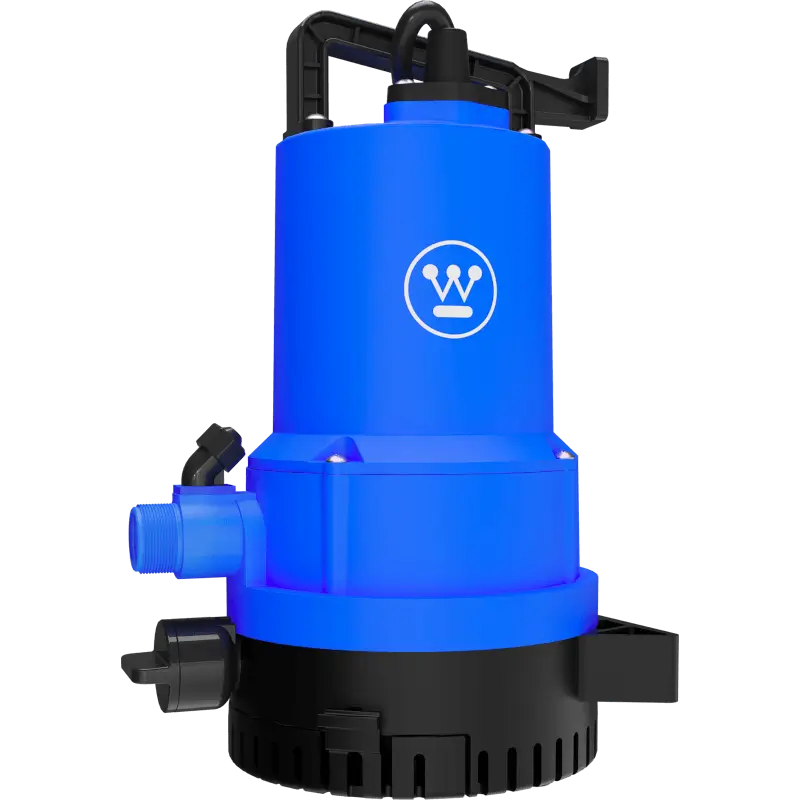
I was standing there and saw they dug down about 12 inches and had a pump like this:


There was like 3-4" of water and it was pumping it out. They said they pumped for an hour and it kept pouring in but it was hardly half of that time they really did pump. The hose was like a shop vac hose leading up and out onto the driveway. It had a taped section that was spilling out water down the steps into the drain, which does not drain, so that section in front of my door was flooding with water. They mentioned we must have a natural spring or something for that amount of water. That was it. They backed poured it with the gravel taken out earlier and it was like that for almost an hour until they could get concrete on site. Water never rose over that gravel. Picture in the original post was one hour after.
[Hearth.com] Sump Pump Installation question
[Hearth.com] Sump Pump Installation question
 
I was standing there and saw they dug down about 12 inches and had a pump like this:


There was like 3-4" of water and it was pumping it out. They said they pumped for an hour and it kept pouring in but it was hardly half of that time they really did pump. The hose was like a shop vac hose leading up and out onto the driveway. It had a taped section that was spilling out water down the steps into the drain, which does not drain, so that section in front of my door was flooding with water. They mentioned we must have a natural spring or something for that amount of water. That was it. They backed poured it with the gravel taken out earlier and it was like that for almost an hour until they could get concrete on site. Water never rose over that gravel. Picture in the original post was one hour after.View attachment 347023View attachment 347024
They are full of crap! I'm here to tell you that is 100% typical/normal for water to flow in like that at first! It honestly doesn't sound like what you had coming in was even close to excessive! If they had pumped for a couple days and it didn't go down, then I'd agree that they needed a bigger pump possibly...certainly not abandon the project though!
And that is not a big pump...1/4hp is common, but so is 1/2hp, even 3/4hp is not rare, especially for people that live in wet spots!
My coworker lives in a split level ranch that was built on the edge of a flat cornfield in the middle of nowhere...clay soil too, so not the best drainage! His bottom basement is somewhere in the 12' down/deep range...and the sump would be another 3' deep...he said in the spring during heavy rainy times his sump pump will run for hours and hours on end...then cycle on/off for days or even weeks after that....but then when its dry in the summer, he said it may not run once in months! He said that is the original pump and its over 20 years old now...the replacement is at the ready though.
 
  • Like
Reactions: Whitenuckler
I was standing there and saw they dug down about 12 inches and had a pump like this:


There was like 3-4" of water and it was pumping it out. They said they pumped for an hour and it kept pouring in but it was hardly half of that time they really did pump. The hose was like a shop vac hose leading up and out onto the driveway. It had a taped section that was spilling out water down the steps into the drain, which does not drain, so that section in front of my door was flooding with water. They mentioned we must have a natural spring or something for that amount of water. That was it. They backed poured it with the gravel taken out earlier and it was like that for almost an hour until they could get concrete on site. Water never rose over that gravel. Picture in the original post was one hour after.View attachment 347023View attachment 347024
I agree, the company is acting weird. They must not have much experience.
The water pouring into the hole is coming from the surrounding earth/gravel under your house. There is a lot of water and it will take a long time to remove. They may be right that your pump would run nonstop at first. That's not a reason to give up and fill in the hole!
 
  • Like
Reactions: Whitenuckler
Only 12" deep? The pump is barely below the slab level. I'd expect that sump pit to be 2-3 feet deep at least which will allow your pump to have longer cycles when flows are low and also to dewater to a lower elevation so the water is farther from your slab.

We dewater for utility trenches all the time. It takes awhile at the beginning to dry them out and then much less water is pumped to keep the water level down.

Maybe the digging was too hard? Did they hit another old concrete slab maybe?