Thermocouples, Cat and Pipe Monitoring, Progress Hybrid

  • Active since 1995, Hearth.com is THE place on the internet for free information and advice about wood stoves, pellet stoves and other energy saving equipment.

    We strive to provide opinions, articles, discussions and history related to Hearth Products and in a more general sense, energy issues.

    We promote the EFFICIENT, RESPONSIBLE, CLEAN and SAFE use of all fuels, whether renewable or fossil.
I’ve had that runaway cat temp in previous stoves all with ceramic cats. I think this may happen if you cut the air too much too soon. Firebox goes black and the cat gorges itself on smoke. This can also cause back puffing with on and off flame explosions. I think it’s a good idea to run the stove with a higher air setting after engaging for 15-30 minutes before shutting off the air.
 
  • Like
Reactions: stoveliker
Also, I think with these hybrid stoves, the thing to do when the cat is going China Syndrome would be to open the air and let flames in the firebox burn smoke instead of the cat.
Tried that. Doesn't change the cat temperatures but the firebox and flue temps go nuclear. Just makes the situation worse.

The problem is that there doesn't seem to be anything good to do once the stove goes China Syndrome. All the advice from forums just makes the problem worse. Maybe the advice worked on older stoves but on modern, hybrid stoves it doesn't.
 
  • Like
Reactions: Todd
I’ve had that runaway cat temp in previous stoves all with ceramic cats. I think this may happen if you cut the air too much too soon. Firebox goes black and the cat gorges itself on smoke. This can also cause back puffing with on and off flame explosions. I think it’s a good idea to run the stove with a higher air setting after engaging for 15-30 minutes before shutting off the air.
It could be that this approach, or cutting the air in gradual steps, slows down the burn and gets less wood gassing so that when you finally do cut the air to your cruise setting, the cat won't go ballistic.
Tried that. Doesn't change the cat temperatures but the firebox and flue temps go nuclear. Just makes the situation worse.
The problem is that there doesn't seem to be anything good to do once the stove goes China Syndrome. All the advice from forums just makes the problem worse. Maybe the advice worked on older stoves but on modern, hybrid stoves it doesn't.
How big are your splits? If you load larger splits, they should gas in a more controlled manner, but less so if they are lighter woods like soft Maple. But I assume that in OH you're burning hard Maple or Oak which are pretty dense. As a rule, smaller splits tend to get burning/gassing all at once, or at least more quickly.
 
  • Like
Reactions: Todd
Or maybe your wood was drier than in previous years..
 
  • Like
Reactions: stoveliker and Todd
OK, first fire with it! It was a moderate/high load for a cold stove on a not so cold day. About 25 pounds of wood, with two of the splits some nice dry pine.

I closed the bypass a bit early, pipe reading actually under 300 on the external probe (so something under 600 internal?) and a pretty good flame. I figured what the heck, I can see what’s happening. Cat shot right up to about 750 right away. Stayed snug up to the 800 line for most of the flaming burn and then started dropping as the fire got near the end of flames. Still going on, probe reading 720, lazy flames.

I tried to black box it to see what would happen, but it was going into a cycle of wooshing into flame, which I’d rather avoid, so I opened up the air. The cat got a little hotter there but not much.

So I’m pleased with the auber setup, pleased with the stove, nice fire on a cool rainy day.
 
  • Like
Reactions: Todd
You may see different temps with different wood. I’ve been burning mostly Aspen and White Birch this shoulder season so I was getting pretty familiar with cat and flue temps then last night I loaded up a full load of Oak and the cat temps were higher and lasted longer which is probably to be expected. I did get a nice 16 hour burn out of her with the Oak.
 
Fire number 2, warm stove, on coals, cat had been out at the end of last coaling cycle. Mostly ash with a small pine split.

A good flame in the firebox definitely lowers the cat temps, while getting near black box definitely raises it. The firebox is doing the work of burning the smoke. With more hardwood, I’ve got lower cat temps than I had with the half pine of last load. Not surprising — the pine would be smokier. This load so far the cat is running under 750 with flames in firebox.
 
  • Like
Reactions: Todd
. Cat shot right up to about 750 right away. Stayed snug up to the 800 line for most of the flaming burn and then started dropping as the fire got near the end of flames. Still going on, probe reading 720, lazy flames.
How many burning seasons do you have on that cat?
 
Stove was installed just after Christmas ‘25. I can’t/don’t keep track of wood in cords, but I weigh everything that goes in. By weight, last winter about 1.5 cords of hardwood went through it.
 
  • Like
Reactions: Todd
Tried that. Doesn't change the cat temperatures but the firebox and flue temps go nuclear. Just makes the situation worse.

The problem is that there doesn't seem to be anything good to do once the stove goes China Syndrome. All the advice from forums just makes the problem worse. Maybe the advice worked on older stoves but on modern, hybrid stoves it doesn't.
Did the stove exhibit signs of being waaaay hotter than normal when your electronic instrumentation was indicating China Syndrome?

Any chance the electronic instrumentation was developing a problem? Did you have standard gauges reflecting similar overheating data for confirmation?

Just something that my ciphering mind dreamt up after reading the story/description! Dunno.
 
  • Like
Reactions: Todd
I have not yet encountered the situation where the bed of coals is super hot and kind of deep, the load of wood is really big, and it’s hard to hit the point between some flame and black box. That’s what I’ve been most concerned about.

This year’s wood is drier than what I was using at the end of last year (started out with super dry wood but burned through it). This stove performs MUCH better with 15-17% wood than it does with 20-25%!
 
Put a medium load in a hot stove (cat was 600 ish) on a thick bed of still coaling chunks that were easily broken apart but still burst into flame when I opened the door. A hot stove, but bedtime coming) did the cat-care open the bypass for a while before and crack the door To get some room air in so less of a shock to the cat.

I closed the bypass pretty soon after loading, since it was so hot, after giving it a few minutes open. But the result was that after a few more minutes I didn’t have very active flames. Definitely flames, but kind of vague rather than the kind of rolling secondaries I’d like. Air was shut down to the first big notch or so, not all the way. Tried opening it a bit more

The result was the cat temp steadily climbed. At 1100 I abandoned this approach and opened the air to establish vigorous flames and then gradually shut that down and got very good secondaries at the top. The cat temp steadily dropped with more flame and then settled down at about 750F with the good secondaries.

This is some of the information I was looking for! With this stove, I shouldn’t go to bed without secondaries going. Loading after an evening fire is a common bedtime situation.

I should add that this seems to be the situation when loading in a hot stove on top of hot coals. Loading a cold stove, new fire, it seems to be OK to even black-box it — the cat stays 800ish it seems.

It seems a good way to run this stove is to go through a full cycle through coaling and stove cooling before the next fire, probably the best way to run most cat stoves. But the evening fire is nice, and then the overnight fire is important.
 
Last edited:
  • Like
Reactions: Todd
I have a different cat stove so this may not be relevant or useful here.
But what you describe seems to me like you dialed down too soon and or too sudden after reloading.
 
  • Like
Reactions: Todd
Absolutely what happened. I think the instrumentation encouraged me to do it: “Well, the cat is already 600 even though it’s bypassed. Hot enough to do it.”

I had this stove for most of last winter, but I’m still getting used to it. The guy who installed it also has a Woodstock stove, a hybrid, and he said, “It took me two years to figure out the hybrid stove.” I will admit I was smug, and thought, “I’ve been burning wood for 40 years. I’ll figure it all out in short order.” Naah. I did not.
 
Greetings, found this thread as I wondered how I might add a probe thermometer to my PH. Good info. I'm starting the third year burning with mine. Top vent, straight up 7-8' , with a 45 over to get through the roof in the right place, then up 10' or so.

My second year of burning was better than the first. Maybe wood was a bit better, but I think mostly learning curve. My biggest issue has been the back-puffing. Maybe my installation is more sensitive than most for some reason, not sure. The first year, I had more trouble with that, but would tend to burn black. I'd turn down the air before bedtime and it would often go black, and then periodically puff, and fill the house with the combustion chamber smell.

Second year, I learned that after loading the stove in the evening, I need to let it get going to say at least 300F on the stove top thermometer before engaging catalyst. And leave the air full open. Let the fire get going good, with secondaries going. Let the wood really get burning on all surfaces. Start to slowly turn down air, every 5-10 minutes. Goal is to keep the secondaries rolling. Over a 30 minute period I can get the air turned to about position 1, which I guess is 20% open. Stove top temperature is in the 400-450F range at that point. The secondaries keep going, and will continue that way for hours. But if the secondaries go out, I'll tend to get that puff a minute or so later. It is a fine balance.

Overall I really like the stove, fantastic heat and quite efficient on wood (I use around 6-8 face cords in a season, it's our main heat). It does take planning ahead; if I am leaving the house or going to bed, I have to have around an hour to get it into a good burning situation so I can let it go. And it is tough to run it cool, especially overnight since you really have to get the fire going before shutting it down.
 
  • Like
Reactions: John Lehet and Todd
Hope the info in the thread has helped you figure out about the probe. Just ask if any questions about it if I can help share. I’m really enjoying having a clear sense of what’s going on with the cat.
 
  • Like
Reactions: Todd
Greetings, found this thread as I wondered how I might add a probe thermometer to my PH. Good info. I'm starting the third year burning with mine. Top vent, straight up 7-8' , with a 45 over to get through the roof in the right place, then up 10' or so.

My second year of burning was better than the first. Maybe wood was a bit better, but I think mostly learning curve. My biggest issue has been the back-puffing. Maybe my installation is more sensitive than most for some reason, not sure. The first year, I had more trouble with that, but would tend to burn black. I'd turn down the air before bedtime and it would often go black, and then periodically puff, and fill the house with the combustion chamber smell.

Second year, I learned that after loading the stove in the evening, I need to let it get going to say at least 300F on the stove top thermometer before engaging catalyst. And leave the air full open. Let the fire get going good, with secondaries going. Let the wood really get burning on all surfaces. Start to slowly turn down air, every 5-10 minutes. Goal is to keep the secondaries rolling. Over a 30 minute period I can get the air turned to about position 1, which I guess is 20% open. Stove top temperature is in the 400-450F range at that point. The secondaries keep going, and will continue that way for hours. But if the secondaries go out, I'll tend to get that puff a minute or so later. It is a fine balance.

Overall I really like the stove, fantastic heat and quite efficient on wood (I use around 6-8 face cords in a season, it's our main heat). It does take planning ahead; if I am leaving the house or going to bed, I have to have around an hour to get it into a good burning situation so I can let it go. And it is tough to run it cool, especially overnight since you really have to get the fire going before shutting it down.
Shouldn’t take an hour to get your stove settled in. Maybe you have too much draft at times and that extra pull is causing a backpuff when running slow? I wonder if a pipe damper would help?
 
Sometimes it does take a while for these PH to get stable, sometimes not. There are so many variables. Once it gets stable it stays stable for a long time, it seems including the cat temp. But black box does not make these stable.

The backpuffing I’ve had a small amount of, but I’ve gotten to really steer clear of too little air too early — which is part of the “might take an hour” on those times I really want to shut it down.

Very hot coals, hot stove, large load of wood, strong draft, no flame — that seems to be the setup.
 
  • Like
Reactions: Todd
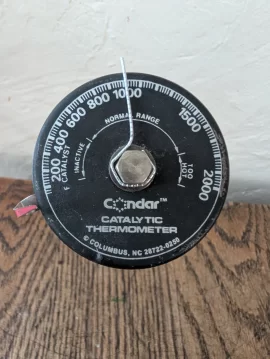
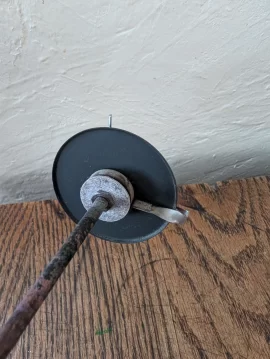
This is what Condar made for me. It was an 8.5” probe with a 90 bend and 1.5” dial. It gets me about 3/4” away from the cat. It cost me $46 with shipping....They made me a 10” cat probe with a 90 degree bend.
Did you mis-type the length here, or do you have two bent probes?

I don’t think it’s reading “substantially “ lower than it would if it were closer but if you’d like to send me a 8” straight Condar probe feel free, we will test your theory. Don’t worry about the Auber, I never liked the looks of the wire and couldn’t hide it very well in this install.
Glad that you finally received the 8" Condar, after the post office confusion. 😏
I'm curious; When you were using the Auber (that you eventually gave me) in your Keystone and Fireview, do you recall what cat temps you were seeing?

At 1100 I abandoned this approach
I'm curious as to why you "abandoned this approach"? I don't mind if my cat runs hotter than that, as long as it stays under 1400 or so.

This is some of the information I was looking for! With this stove, I shouldn’t go to bed without secondaries going. Loading after an evening fire is a common bedtime situation.
I should add that this seems to be the situation when loading in a hot stove on top of hot coals. Loading a cold stove, new fire, it seems to be OK to even black-box it — the cat stays 800ish it seems.
It seems a good way to run this stove is to go through a full cycle through coaling and stove cooling before the next fire, probably the best way to run most cat stoves. But the evening fire is nice, and then the overnight fire is important.

My biggest issue has been the back-puffing. Maybe my installation is more sensitive than most for some reason, not sure. The first year, I had more trouble with that, but would tend to burn black. I'd turn down the air before bedtime and it would often go black, and then periodically puff,
Second year, I learned that after loading the stove in the evening, I need to let it get going to say at least 300F on the stove top thermometer before engaging catalyst. And leave the air full open. Let the fire get going good, with secondaries going. Let the wood really get burning on all surfaces. Start to slowly turn down air, every 5-10 minutes. Goal is to keep the secondaries rolling. Over a 30 minute period I can get the air turned to about position 1, which I guess is 20% open. Stove top temperature is in the 400-450F range at that point. The secondaries keep going, and will continue that way for hours. But if the secondaries go out, I'll tend to get that puff a minute or so later. It is a fine balance.j

Overall I really like the stove, fantastic heat and quite efficient on wood (I use around 6-8 face cords in a season, it's our main heat). It does take planning ahead; if I am leaving the house or going to bed, I have to have around an hour to get it into a good burning situation so I can let it go. And it is tough to run it cool, especially overnight since you really have to get the fire going before shutting it down.
If I was you guys, I might try a different approach instead of aiming for the secondary burn to stabilize the stove. But it kind of depends on, when you get to the coaling stage, if you can open up the air a bit and get the coals radiating on the sides of the stove enough to keep the room/house up to where you need it. If you do get enough heat from burning the coals hot for a couple hours, I'd try burning the coals down before reloading and shoving the remaining coals to the back. Then, instead of the entire new load being on top of coals, only a few splits in the back would have coals under them, and you could load the front on ashes and do a top-down start on that section. The top-down start would then be eating most of the oxygen from the air wash, and the coals under the back section would slow down.
The goal here would be to get less wood burning and be able to go black-box under control, and with no back-puffing, as John describes in my quote of him above. If you wanted the "evening fire is nice" effect, you could throw in a couple of small splits every once in a while for some flames, while not contributing to the coal bed too much.
If the top-down starts seem like a lot more work than just throwing the entire load in on a hot coal bed, it's actually pretty easy if you have a few small splits mixed into your stacks. I've been reloading this way for a few weeks now; It's quick and easy once you hone your technique a bit.

Here's some "AI slop," FWIW. 😏 It sounds pretty much in line with what I'm seeing in relation to what the Auber and the Condar cat meters show.

Can a condar dial catalytic combustor probe accurately transmit tip temperature over an 8" length? If not, how much lower will it read than a type k thermocouple?
No, an 8-inch Condar dial probe cannot transmit a true, isolated "tip" temperature, and in real-world stove conditions, it will typically read 100°F to 300°F lower than a Type K thermocouple placed at the exact same spot.
Because the Condar relies on physical heat conduction down a metal rod rather than an electrical signal, the variance between the two sensors shifts depending on what the stove is doing:

Why the Readings Differ
  • Stem Heat Loss (Heat Sinking): As heat travels from the tip down the 8-inch copper-clad stem, the surrounding environment bleeds off thermal energy. Any portion of the shaft passing through cooler firebox air, double-wall insulation, or sticking out into the room acts as a radiator, cooling the metal before the heat ever reaches the dial's bi-metal coil.
  • Stem Averaging: A Type K thermocouple only generates voltage at the tiny welded bead at its very tip. A mechanical probe reacts to heat along the entire length of its stem. If the tip is sitting in a 1,400°F hotspot right behind the combustor, but the middle of the stem is passing through a cooler 600°F zone, the dial reports an average of the two.
  • Thermal Mass Lag: Heating up 8 inches of solid metal takes time. During rapid temperature climbs (right after closing the bypass damper) or quick drops (turning down the primary air), the Condar dial will lag behind a fast-acting exposed-tip or thin-sheath thermocouple by several minutes.

Expected Temperature Variance by Stove Phase

Stove PhaseType K Thermocouple (Tip)8" Condar Dial ProbeTypical Difference
Cold Start / Pre-Light-Off500°F – 600°F350°F – 450°F100°F – 150°F lower (due to thermal lag)
Peak Catalytic Burn1,300°F – 1,500°F1,050°F – 1,250°F150°F – 300°F lower (due to stem heat loss)
Steady Cruise / Coaling800°F – 1,000°F700°F – 850°F100°F – 150°F lower (stem reaches equilibrium)
(Note: While Condar calibrates its dials within ±25°F to ±50°F in a controlled test environment, the open air gap between the rear of the combustor and the exterior stove wall on deeper stoves causes the wider real-world drop.)

 
Last edited:
  • Like
Reactions: Todd
Interesting idea to do a top-down light off with somewhat minimal coals. I hadn’t thought of that. My old Jotul was much harder to light off and get going, and I had to do it every morning. So there’s a part of me that is very inclined to make sure coals are there to start a new fire, and plenty of coals. The stove definitely behaves differently if it is cool vs if it is hot with coals. Hot with coals is definitely a lot easier to get secondaries going, which has sort of been a guiding principle for me.

I always have a lot of sticks around, an inch or inch and a half in diameter around, just because I cut up tree tops and keep them. What I’ve been doing with the stove is first putting a bunch of sticks on the coals, get them good and hot and flaming, and then put real splits on. But maybe getting that real heat going at the bottom of the fire is a source of pushing too much smoke into the cat. Maybe better to put the big splits on the coals, put some sticks and kindling on top of that. In the hot stove they’ll probably fire right up.

Cold spell coming, will have time to experiment. I think this year I’ll try starting a fire journal and see if I can figure things out.
 
  • Like
Reactions: Todd
maybe getting that real heat going at the bottom of the fire is a source of pushing too much smoke into the cat. Maybe better to put the big splits on the coals, put some sticks and kindling on top of that. In the hot stove they’ll probably fire right up.

Cold spell coming, will have time to experiment. I think this year I’ll try starting a fire journal and see if I can figure things out.
Right. Try to get less wood burning and gassing by sweeping the coals to the back, where they can't get as much air to light any wood you load back there. With the top-down, you're keeping the initial fire on top of the load which gets less wood gassing. Plus the flame in the front/top of the box heats up the cat sooner, enabling a quicker light-off and air shutdown, gettin even less wood involved.
Yep, a bit of a cold snap for the next week or so, at least compared to the warm temps so far this fall. The stove won't be going out for a while, but maybe next week by the looks of the forecast here.. 🔥
 
  • Like
Reactions: Todd
I don't worry very much about mildly "shocking" a steel cat. When I'm home, I'll often open the bypass for a minute when the cat is 600 or 700, then open the door and add one, maybe two splits to the coal bed and any actual wood that's left. I don't burn in the new split, I just close the door and leave the air where it was, on low. Gradually the new split starts to smolder and bumps cat temp back up to 1000 or more. No muss, no fuss. >>
Of course, if you need more heat you'll have to add more air to get the cat a little hotter, or even get some flame going in the box. But that method works in this fall weather.
 
Last edited:
  • Like
Reactions: Todd
Did you mis-type the length here, or do you have two bent probes?


Glad that you finally received the 8" Condar, after the post office confusion. 😏
I'm curious; When you were using the Auber (that you eventually gave me) in your Keystone and Fireview, do you recall what cat temps you were seeing?


I'm curious as to why you "abandoned this approach"? I don't mind if my cat runs hotter than that, as long as it stays under 1400 or so.


If I was you guys, I might try a different approach instead of aiming for the secondary burn to stabilize the stove. But it kind of depends on, when you get to the coaling stage, if you can open up the air a bit and get the coals radiating on the sides of the stove enough to keep the room/house up to where you need it. If you do get enough heat from burning the coals hot for a couple hours, I'd try burning the coals down before reloading and shoving the remaining coals to the back. Then, instead of the entire new load being on top of coals, only a few splits in the back would have coals under them, and you could load the front on ashes and do a top-down start on that section. The top-down start would then be eating most of the oxygen from the air wash, and the coals under the back section would slow down.
The goal here would be to get less wood burning and be able to go black-box under control, and with no back-puffing, as John describes in my quote of him above. If you wanted the "evening fire is nice" effect, you could throw in a couple of small splits every once in a while for some flames, while not contributing to the coal bed too much.
If the top-down starts seem like a lot more work than just throwing the entire load in on a hot coal bed, it's actually pretty easy if you have a few small splits mixed into your stacks. I've been reloading this way for a few weeks now; It's quick and easy once you hone your technique a bit.

Here's some "AI slop," FWIW. 😏 It sounds pretty much in line with what I'm seeing in relation to what the Auber and the Condar cat meters show.

Can a condar dial catalytic combustor probe accurately transmit tip temperature over an 8" length? If not, how much lower will it read than a type k thermocouple?
No, an 8-inch Condar dial probe cannot transmit a true, isolated "tip" temperature, and in real-world stove conditions, it will typically read 100°F to 300°F lower than a Type K thermocouple placed at the exact same spot.
Because the Condar relies on physical heat conduction down a metal rod rather than an electrical signal, the variance between the two sensors shifts depending on what the stove is doing:

Why the Readings Differ
  • Stem Heat Loss (Heat Sinking): As heat travels from the tip down the 8-inch copper-clad stem, the surrounding environment bleeds off thermal energy. Any portion of the shaft passing through cooler firebox air, double-wall insulation, or sticking out into the room acts as a radiator, cooling the metal before the heat ever reaches the dial's bi-metal coil.
  • Stem Averaging: A Type K thermocouple only generates voltage at the tiny welded bead at its very tip. A mechanical probe reacts to heat along the entire length of its stem. If the tip is sitting in a 1,400°F hotspot right behind the combustor, but the middle of the stem is passing through a cooler 600°F zone, the dial reports an average of the two.
  • Thermal Mass Lag: Heating up 8 inches of solid metal takes time. During rapid temperature climbs (right after closing the bypass damper) or quick drops (turning down the primary air), the Condar dial will lag behind a fast-acting exposed-tip or thin-sheath thermocouple by several minutes.

Expected Temperature Variance by Stove Phase

Stove PhaseType K Thermocouple (Tip)8" Condar Dial ProbeTypical Difference
Cold Start / Pre-Light-Off500°F – 600°F350°F – 450°F100°F – 150°F lower (due to thermal lag)
Peak Catalytic Burn1,300°F – 1,500°F1,050°F – 1,250°F150°F – 300°F lower (due to stem heat loss)
Steady Cruise / Coaling800°F – 1,000°F700°F – 850°F100°F – 150°F lower (stem reaches equilibrium)
(Note: While Condar calibrates its dials within ±25°F to ±50°F in a controlled test environment, the open air gap between the rear of the combustor and the exterior stove wall on deeper stoves causes the wider real-world drop.)

It’s an 8.5” probe total and the 90 bend makes it about an inch shorter.

I don’t remember the old Keystone temps. I remember you, Fox and I had a long DM on the Keystone many years ago and I logged a lot of data on temps and burn times. I also bent a Condar probe and drilled through the flue collar to get closer to the cat.

That’s good info on the difference between a thermocouple and metal probe but I wonder if Condar already knows this and builds that difference into there probes?
 
It’s an 8.5” probe total and the 90 bend makes it about an inch shorter.

I don’t remember the old Keystone temps. I remember you, Fox and I had a long DM on the Keystone many years ago and I logged a lot of data on temps and burn times. I also bent a Condar probe and drilled through the flue collar to get closer to the cat.
That might be why you're seeing slightly lower temps on your bent probe than on the 8" straight probe; More of the shaft is outside the stove on the bent one, so a bit more of the heat doesn't make it to the dial. And the heat has less distance to travel, 8" vs. 8.5". And the tip of the 8" reaches over the face of the cat a little bit, whereas the bent 8.5" falls short of the cat about an inch or so.
I don't recall that DM, but looking back through the old ones, I don't remember the vast majority of them. 😆We mighta discussed that in a thread at some point as well, I'll look around and see if I can find anything..
 
I attached a paper clip to the 8" Condar so that I could see where 1000* was, with the dial facing away from the front of the stove, in case the probe rotated in the hole. You just have to make sure that the probe dial needle can clear the paper clip. I also sometimes used a mirror.
A better way would be to mark 200* increments on the back of the dial with white paint or nail polish.

[Hearth.com] Thermocouples, Cat and Pipe Monitoring, Progress Hybrid [Hearth.com] Thermocouples, Cat and Pipe Monitoring, Progress Hybrid