
Woodstove for interior Alaska cabin

  • Active since 1995, Hearth.com is THE place on the internet for free information and advice about wood stoves, pellet stoves and other energy saving equipment.

    We strive to provide opinions, articles, discussions and history related to Hearth Products and in a more general sense, energy issues.

    We promote the EFFICIENT, RESPONSIBLE, CLEAN and SAFE use of all fuels, whether renewable or fossil.
I'm no expert on AK living but I have a very close aquaintance that built an off-grid home in southern AK (Haines) of about the same sq. ftg. He started out with wind as a primary energy source. It was a huge maintenance headache and parts don't come quickly, so sometimes he had to fly to Juneau to get parts (he had his own helicopter). He discovered that living off grid is a lot of work. He eventually set up a local utility district powered by a distant creek/waterfall so that they had continuous power. Eventually though, the social separation and other complications including long darkness, sent them southward. It's one thing to dream of a new life in the wild. It's another thing to live it.

Second case in point, is the experience of Pointdexter in Fairbanks. He made some great posts about the trials and challenges of dealing with extreme cold in a conventionally constructed home with power. Dealing with extreme cold is not trivial.

This isn't to say that there aren't folks that find all these issues acceptable and worth it. But it is a challenge that one must be up to. The climate in Fairbanks is not forgiving. Neither are the mosquitoes. ;)
 
If solar is not an option for winter months in interior Alaska, what are the options to power kitchen appliances and a well pump during winter months off grid? Run everything off a diesel generator? If so, how much will have to be spent on diesel fuel and the size of the diesel fuel tank ? I'm open to all suggestions.
 
Not that I'm aware of...looks like they ship in 1 ton pallets from Idaho. Given that Anchorage is 2300 miles from Idaho by road and everything would have to be shipped by a freight forwarder, I imagine the price is $1000+ per pallet. I'd rather just buy 6 cords of spruce here in a dump truck and process it myself for that price. But everyone likes to do things a bit differently
Ya I just checked they have them in Bethel Alaska but they are expensive.A half pallet 120 logs go for $ 1100.00.Whew !
 
Not that I'm aware of...looks like they ship in 1 ton pallets from Idaho. Given that Anchorage is 2300 miles from Idaho by road and everything would have to be shipped by a freight forwarder, I imagine the price is $1000+ per pallet. I'd rather just buy 6 cords of spruce here in a dump truck and process it myself for that price. But everyone likes to do things a bit differently
Ya I just checked they have them in Bethel Alaska but they are expensive.A half pallet 120 logs go for $ 1100.00.Whew !
 
In Denali, Alaska, why do Moose Mamas with calves hang around where people are - like around simple dorm housing? I wondered about this. The moose didn't seem to be afraid of people. So why did they prefer to be around people with their deer sized calves?

I finally figured it out - Grizzly bears! The moose knew their calves were safer around people. They were smarter than I thought.
 
If solar is not an option for winter months in interior Alaska, what are the options to power kitchen appliances and a well pump during winter months off grid? Run everything off a diesel generator? If so, how much will have to be spent on diesel fuel and the size of the diesel fuel tank ? I'm open to all suggestions.
You charge up your battery bank with the genny then run off your battery bank until you need to recharge. Fuel usage all depends on how large your generator and battery banks are.

I don’t use much power and only have 10kw of battery and 8 ea 300 w panels. I could go probably 3-4 days with no sun before charging but usually once I get below 50% battery I run my little 5000w gas generator for 2-3 hours to bring it back up to 100%.
 
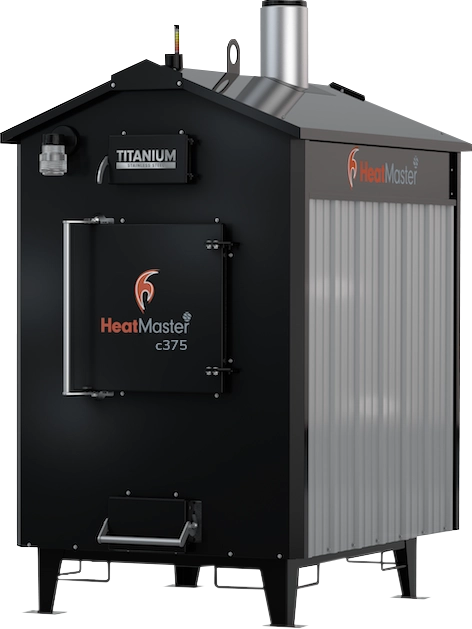
Are any of you fans of outdoor wood / coal burners like the Heat Master that can heat the entire home and hot water ? Are there any advantages to them? Are they worth it? They are expensive upfront...

 
I am a cynic here and I would get somewhere near the grid as well as near some services--off the grid sounds well and good but it is a huge learning curve for my brother built one of those package deal log cabin and had it shipped to him and it was beautiful but it lasted about two years and then he sold it and moved back to where he had services--this was in the same climate that you are discussing. I say get near electricity and have a back up generator to where you could be fuel-LP--etc under the ground and have it filled when needed and continue your leaning curve about wood stoves as you do all of this as well as coal fired ones..bless you and good fortune...clancey
 
Are any of you fans of outdoor wood / coal burners like the Heat Master that can heat the entire home and hot water ? Are there any advantages to them? Are they worth it? They are expensive upfront...

Many, in the boilers section (not the stoves section) here.
 
I'd say...........
:)

All in good fun


[Hearth.com] Woodstove for interior Alaska cabin
 
  • Like
Reactions: AILDWarrior
If solar is not an option for winter months in interior Alaska, what are the options to power kitchen appliances and a well pump during winter months off grid? Run everything off a diesel generator? If so, how much will have to be spent on diesel fuel and the size of the diesel fuel tank ? I'm open to all suggestions.

There are lots of RVs in the country, I have one myself. It can be offgrid just as long as I have fuel to burn. Fossil fuels for anything that will burn them and then battery power for the rest. Charge up the batteries when needed with the generator. Food, water, sewer, trash, are all important issues that we haven't been discussing in this thread.

Cost for the fuel is insignificant or should be if you are anticipating this lifestyle. Size of the fuel tank depends on how often you want to and are able to refill it. Up at ski resorts the fuel tanks are huge! Tank cost is again insignificant or should be if you are anticipating this lifestyle. Fuel oil can get old if your tank is too big so you'll want to research the various chemicals and filters to keep it fresh if that is an issue.
 
  • Like
Reactions: Log Home
There are lots of RVs in the country, I have one myself. It can be offgrid just as long as I have fuel to burn. Fossil fuels for anything that will burn them and then battery power for the rest. Charge up the batteries when needed with the generator. Food, water, sewer, trash, are all important issues that we haven't been discussing in this thread.

Cost for the fuel is insignificant or should be if you are anticipating this lifestyle. Size of the fuel tank depends on how often you want to and are able to refill it. Up at ski resorts the fuel tanks are huge! Tank cost is again insignificant or should be if you are anticipating this lifestyle. Fuel oil can get old if your tank is too big so you'll want to research the various chemicals and filters to keep it fresh if that is an issue.
Diesel fuel will be the fuel of choice for a backup generator over propane due to propane not vaporizing at roughly around negative -44 /40 F below zero.

Battery autonomy - how long batteries can remain above 15% to 20% before the diesel generator turns on to recharge the batteries means a lot on fuel costs. A 3 day battery autonomy vs 30+ day battery autonomy before recharging batteries can save thousands per year. It will be expensive upfront with the larger solar array and battery storage though.

One of my goals is being able to get as much from the free solar power as possible when it comes to long term savings over a 10 to 20 year period.
 
Remember most PV in the (much stronger solar intensity) lower 48 takes 8-15 years to reach break even, depending on kWh pricing.

Your avoided cost is high, which helps, but the kWh production per $ invested will be dismal. So I'm not sure you'll reach any savings in 10-20 years.
 
  • Like
Reactions: Log Home
Diesel fuel will be the fuel of choice for a backup generator over propane due to propane not vaporizing at roughly around negative -44 /40 F below zero.

Battery autonomy - how long batteries can remain above 15% to 20% before the diesel generator turns on to recharge the batteries means a lot on fuel costs. A 3 day battery autonomy vs 30+ day battery autonomy before recharging batteries can save thousands per year. It will be expensive upfront with the larger solar array and battery storage though.

One of my goals is being able to get as much from the free solar power as possible when it comes to long term savings over a 10 to 20 year period.

Thousands per year is just a rounding error. You're in the big leagues now. If you are fretting about a few thousand then you aren't financially prepared for this way of life quite yet.

You do realize that you can heat a propane tank right? It doesn't matter how cold it is outside that way. I'd prefer a diesel genset too.
 
Those little Chinese diesel heaters pack a pretty good punch for their size. For a hundred bucks and change they throw a lot of heat in an emergency. And the run time on 1 gallon of fuel is impressive
 
Some stoves / furnaces have the feature that can integrate with a hydronic system to provide radiant heat, radiant floor heating or support baseboard heating. The DS Stoves Energy Max 160 has that option. Is it worth it financially with the upfront cost and does it truly make a big enough noticeable difference in warmth and comfort in the winter ? Is the initial installation going to be very complex ?
 
@Log Home, that's an anthracite coal stove, this is a wood stove thread. There are places on the internet devoted to this topic.

Additionally, I believe we only have bituminous and subbituminous coal in AK, and I don't think it's available for wholesale residential use. I don't know who got you started on the coal train, but I don't think it was anyone here.

Finally, here's a page on AK's Burnwise program. School up. A lot of your questions are answered in this directory. https://dec.alaska.gov/air/burnwise/
 
@Log Home, that's an anthracite coal stove, this is a wood stove thread. There are places on the internet devoted to this topic.

Additionally, I believe we only have bituminous and subbituminous coal in AK, and I don't think it's available for wholesale residential use. I don't know who got you started on the coal train, but I don't think it was anyone here.

Finally, here's a page on AK's Burnwise program. School up. A lot of your questions are answered in this directory. https://dec.alaska.gov/air/burnwise/
I contacted DS Stoves, you can burn sub-bituminous coal in it, and the YouTubers "Simple Living Alaska" are doing it. Coal is not allowed around the Fairbanks area, I won't be living there or the areas that are restricted from coal burning...

To view this content we will need your consent to set third party cookies.
For more detailed information, see our cookies page.
 
Right on. And now that you're an expert on coal furnaces in Interior AK, take it up with another group of experts on coal furnaces to discuss the finer details.

We're all here to discuss wood burning stoves because we find that they're cleaner, more sustainable, and offer a renewable fuel source.
 
  • Like
Reactions: bholler
Oh cool! I bet they bring them up on the barges from Seattle. That's a healthy price haha
In my neck of the woods a 240 log pallet goes for $ 574.00.It's suppose to provide the heat of 1.5 - 2 cords of hardwood.How well does your Jotul work for you in Alaska ? Would that be a good fit for our homesteader ?
 
Right on. And now that you're an expert on coal furnaces in Interior AK, take it up with another group of experts on coal furnaces to discuss the finer details.

We're all here to discuss wood burning stoves because we find that they're cleaner, more sustainable, and offer a renewable fuel source.
The DS Stoves Energy Max 160 is a dual fuel wood stove and coal stove, it burns both wood logs and coal. It's appropriate here and this is the thread I created. I contacted DS stoves and I spoke to the rep there over the phone about it.

I never said I was an expert on anything, I asked a question about the stove above and hydronic heating, which it offers, it can create hydronic heating by burning wood logs for heat too. You're also quick to turn on people and attack people, just yesterday you were DM'ing me with private messages sending me tips and advice.

This is my thread I created.

DS Stoves Energy Max 160 burning wood logs...

To view this content we will need your consent to set third party cookies.
For more detailed information, see our cookies page.
 
Last edited:
The wood boiler forum here on hearth.com has folks that know hydronic stuff, mostly boilers but a wood stove base would not be much different.
Questions about hydronics are better posed there I suggest, rather than the wood stove forum.

It's ok to start another thread there for this aspect.
 
In my neck of the woods a 240 log pallet goes for $ 574.00.It's suppose to provide the heat of 1.5 - 2 cords of hardwood.How well does your Jotul work for you in Alaska ? Would that be a good fit for our homesteader ?
I have 700 sqft, blown in insulation with 2x6 walls, 24 O.C.

I heat about 8-10 hours a day with the Jotul and I'll use about 2 cords of spruce this winter. If I heated with just the Jotul, I would be at 6 cords which is what I keep stored.

I love the Jotul, but I can't stand refueling it every two hours. Plus it gets too hot in the house when temps are above 20F or so. I've posted on the Blaze King section, but I'm patiently awaiting the BK Sentry 14. I think it's going to be a much better solution for my home, and hopefully I'll get overnight burns :)

I mentioned this to Log Home separately, but my primary heat source is a Toyotomi Laser 301. On an annual basis, I average 0.75 gpd. I almost spend more money buying logs and processing them myself than I do on fuel oil. The margin is about $0.05/day in savings. But I like burning wood so I keep doing it.

The only homes in my area that are more efficient have large windows facing directly south and get lots of p-solar. Mine's nothing fancy, no fancy engineering, and just dual pane windows. But it's small, and I think that's the key to success.
 
You're also quick to turn on people and attack people, just yesterday you were DM'ing me with private messages sending me tips and advice.
Not attacking you, friend. But perhaps I'm being a bit abrasive, my apologies. I'm trying to direct you to sources that might offer the most help for the questions you are asking.

The DS has already been discussed on Hearth before, this a great link with a perspective from someone who owned/owns one.

 
  • Like
Reactions: Log Home