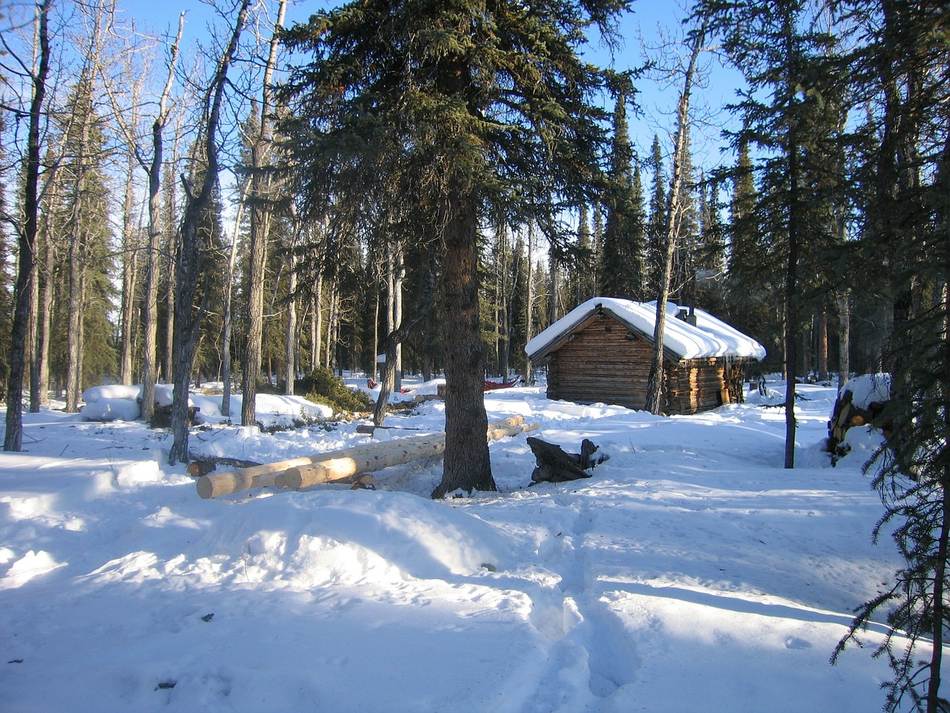
Woodstove for interior Alaska cabin

  • Active since 1995, Hearth.com is THE place on the internet for free information and advice about wood stoves, pellet stoves and other energy saving equipment.

    We strive to provide opinions, articles, discussions and history related to Hearth Products and in a more general sense, energy issues.

    We promote the EFFICIENT, RESPONSIBLE, CLEAN and SAFE use of all fuels, whether renewable or fossil.
Why are these people burning coal ? Also, there are stoves that burn coal and wood. If coal is banned, just burn wood in the stove...

To view this content we will need your consent to set third party cookies.
For more detailed information, see our cookies page.


Only one small part of alaska is in that burn ban area. It's a big state and you're not in a city. They jerk you around on wood burning too. As a regulated wood burner myself that has been victimized by burn bans in the past, I would choose not to live in that Firbanks non-attainment area.

This has been an interesting thread, that's why it's 8 pages long.
 
The family in the video is not in the Fairbanks area.
 
If you notice the trend of all these homesteaders, they all have smaller places. It makes the wood load manageable.
 
Why are these people burning coal ? Also, there are stoves that burn coal and wood. If coal is banned, just burn wood in the stove...

To view this content we will need your consent to set third party cookies.
For more detailed information, see our cookies page.

Those guys seem nice but they very clearly are Extreme Amateurs. I would look to much more seasoned residents for better info.
 
Those guys seem nice but they very clearly are Extreme Amateurs. I would look to much more seasoned residents for better info.

They are more experienced and documented than anybody else on this site. Also of anyone I could find. Do you have a better resource?
 
  • Like
Reactions: Todd and stoveliker

 
Last edited:
I just watched a video of it, the narrator explained the system well, and it looks somewhat beneficial. He did not discuss the investment cost, nor the cost of running the pump that circulates the "substantial amount" of warmed air. I'll listen to results, but probably am not going to end-use it. Good luck and please update your findings with it.
They did say the cost in the video I watched.It wasn't much.Not a deal breaker.I also got instructions on how to run the blower on a car battery when the power is out.Now this thing makes me very happy.Once my fire is going well the recoheat is throwing heat well before the stove is up to temps.It pushes heat into the room way to the back side of the house.When the stove is up to temps you can't keep your hand in front of the little nozzle due to the heat.This thing is blowing good heat even when I'm down to the coals.This item is adding several more hours of heat into my home on one load of wood.I using less wood and getting more heat.I'm very excited about this deal.I'll be holding my old stove for many more years to come.
 
  • Like
Reactions: stovelark and Todd
I don't like the idea of a regular standard wood stove in the utility shed for constant feeding with wood logs every 2 to 4 hours which drains my wood supply and takes logs away from the main cabin Blaze King 40. Feeding multiple wood stoves at once with the same cord pile makes me apprehensive if I can't get seasoned wood delivered at a remote property in the middle of winter and the roads are out. I can't just start cutting down trees or use dead trees as that wood is not seasoned. I also have been thinking about having a second wood stove installed in the cabin upstairs on the second floor, a much smaller one.

If pellets are not the best alternative for the utility shed, how about a wood stove that is multi-fuel compatible that can also burn Anthracite coal which can burn for 24+ hours? The Salamander The Hobbit wood stove can burn wood logs, eco-logs, anthracite coal and I believe also regular coal and lump charcoal so it gives me at least 5 different fuel options and are easily available which is much more versatile, practical and dependable for survival. It's also over $1000+ dollars cheaper than the Liberator Rocket pellet stove...


Any other small wood stoves available that are multi-fuel compatible that are not over $1500+ dollars?
I had a Hearthstone 2 years ago which burned wood and coal.I burned coal and that coal burns long and hot and would work in your shed.Once the coal fire is up and running the coal when wet still burns well.The fire turns that coal's dampness into oxygen which helps the fire burn very hot.
 
  • Like
Reactions: Log Home and Todd
Which option below would be the better choice you think for maintaining consistent warmth at around 70 degrees F through out winter ?

Option 1: Large log wood stove centralized in cabin as main heat source, with anthracite coal stove in family room corner.

vs,..

Option 2: Large anthracite coal stove centralized in cabin as main heat source, with wood log stove in family room corner. ?
What do you have to keep the water lines from freezing ? I would also get a good sized coal stove.Don't go small.Two stoves in your home up there is a must.
 
  • Like
Reactions: Log Home
Wow, you guys have been busy!

@Log Home, I'm sorry this is a long post but I want to give you some relevant info and my own personal experience to help you out. My current home is in South-Central AK and we often see temps down to -5F but usually hang out around 15-25F during the winter.

I attended the University of Alaska Fairbanks for five years and fell in love with the place. Eventually I want to move back there, probably when I'm an old man who can spend more time on forums like this. I'll list my dream setup below, but it reflects what I have seen in one of the best-constructed and most efficient homes I found there.

My "money-is-not-an-issue" Dream Setup in Fairbanks:
- Off Grid, 700 sqft home with attached/heated shop/garage, 2x8 walls using staggered studs and closed-cell spray foamed, ICF foundation, concrete pad for garage heated by radiant from Oil Miser
- 70 kWh battery bank charged by 10kVA diesel generator with gasoline genny as a backup
- Toyotomi Laser 301, they are just wonderful. At the lowest setting, they only use 25 W after the ignition phase.
- Wood stove with catalyst for longer burns
- Hot water from Toyotomi Oil Miser so I only needed to store one type of fuel

That being said, most young college students looking to save a buck live in "dry cabins" and I've been in my fair share of these as well. They are generally 300-600 sqft, on-grid, heated by a Toyotomi Laser 301/Wood Stove and have no running water (outhouse required). IMHO, this is the way for simple living in the interior. However, I've only met a handful of people who were up to, and actually enjoyed the experience.

Here's my two cents on what you've presented so far, I won't get offended if you don't like it:
- Larger homes and off-grid don't play well together in Interior AK. Money will solve most of your problems here though, so hopefully you have a lot of it.
- Everybody loves log cabins because they look cool and are rustic. I've been in a few of them in cold weather and they suck. I would do modern construction with a log facade if that's really what you're going for.
- You say you need to hire a diesel mechanic if your genny breaks. No, you don't. YOU are the diesel mechanic. If you can't fix it, or are unwilling to learn, this might not be the lifestyle for you. Every single person I've met who lives off-grid in the Interior has a can-do attitude and most are masters of many trades through years of DIY learning.
- Solar is mostly just a novelty. Your best sun is in the summer when temps are 80F+, not worried about heating the home here. Going back to the first bullet, if you've got lots of money, you can probably build yourself a large enough solar farm to run a fully-furnished home. Did anyone mention that lithium batteries cost twice as much here because we have to ship them up on trucks via Canada or water routes? Better bring your own batteries, I'm not saying that sarcastically, I really mean it. I think you've already beat around the bush here on the thread, but you really are going to have to rely on a generator for a majority of your load. Get yourself a nice one like a Yanmar or Cummins and install it in a sound-insulated shed heated with an off-grid Nordic Stove or another Toyotomi. You only need to keep the shed temp above 40F or so to keep your water from freezing as well, fuel consumption will be at a minimum.
- Hauling fuel. EVERYBODY hauls fuel and water in pickup trucks. Get a nice 3/4 ton pickup, put a 100 gallon fuel tank in the bed with a pump powered off the alternator and get to work. You'll be hauling your water in a poly tank as well if you can't drill good clean water in your well. Plan to buy a plow for the truck, or a tractor with a snowblower for your driveway. Get a chainsaw to cut down fallen trees that might be in your way. You are your own fuel-delivery person, get that order filled!

Bottom Line: this is a wood stove forum and you asked about wood stoves. I don't think I answered that very well, but I also want to give you a more personal perspective so that you can have a realistic observation of your situation to better decide on a wood stove. I would absolutely do a wood stove over a pellet stove, especially in the Interior, like others have suggested. Interior Alaskans have the great fortune to access lots of birch (I'm stuck with spruce where I live). Picking the stove should actually be one of the easiest pieces to the puzzle you are currently facing. Start with heating oil as your primary/reliable source of heat for the home size you want to build. Then, pick out a wood stove that will heat your space and stick it in the middle of the house. If money is no object, I would 100% have a professional build a masonry furnace in the middle of your home. They have a really cool one at the Cold Climate Housing Research Center that is absolutely worth checking out.

Again sorry for the long post, it would be much shorter if I didn't care about you or your dream. I wish you the best on your journey; you're going to learn a lot regardless of what happens, in that there is immense value.

 
"......masonry furnace in the middle of your home. They have a really cool one at the Cold Climate Housing Research Center...." Dan Givens built that Masonry Heater. He worked out of Fairbanks but has passed on - accident? I met him once and learned some about masonry heater construction from him/observing him. I like the looks of his heaters - the gray/white hued Alaska river rocks he used and how he orientated them.

To view this content we will need your consent to set third party cookies.
For more detailed information, see our cookies page.
 
Thanks for the thoughtful post AILDWarrior. You have summarized well. Go for a smaller, super-insulated space to start with. As noted earlier, I too would heat with a wood stove and an oil-fired backup. I listed some passive oil units earlier.
 
Hi, I have some questions about which wood stove would be best for a 1,800 square foot off grid log home in interior Alaska where temps on some days can drop to negative -58 below zero Fahrenheit.

This will be my first house and fully off grid. I want to get it done right the first time. The house will be a prefab cabin kit and I'd like to get ideas from those who have lived experience with wood stoves in cold climates before I fully sign on with the contractor with the building process. I'm trying to decide the best place for the woodstove for optimum heat distribution throughout the cabin whether the woodstove should be placed central in the center of the cabin similar to a Blaze King style stove or a corner style wood stove? Heat rises but, will there be enough heat to reach the second floor or will I most likely have to put a wood stove in upstairs?

The house will be a 1,800 square foot log home with 3 bedrooms, 2 bathrooms, 2 floors. What would you recommend for company/brand of woodstove and which size for my specific home and location of the stove? A stove that requires the fewest number of logs to be burnt over the winter months that will save money daily, monthly and annually. Fewest cords possible. Long burn times, fewest cords per year, saving money and effective heat distribution are my top priority. I do not want a stove that I have to feed quite often and cools off quickly. Do catalytic stoves produce the longest burn times?

Are the Woodstock Soapstone Progress Hybrid and Blaze King King 40 and Hearthstone Manchester the top performers for longest burn times or are there others out there that outperform them?

Is there anything I should know about and to let the contractor know about? All your lived experiences and what you learned along the way would be greatly appreciated.
Sir if you can't find a good coal source the next best thing for woodstove fuel is Northern Idaho Energy Logs.They burn hotter than cord wood and burn a long time.
 
Thanks for all the great info. I learned a lot.

I think a great option is a large centralized non-electric coal stove furnace in the center of the cabin and a smaller wood stove in the corner of the family room / living room.

The DS Stoves dual fuel coal stove/wood stove can burn both coal and wood logs that is also a water heater for the entire cabin is a top priority for the main heat source. I spoke to DS Stoves over the phone...

DS Stoves EnergyMax DSND160 and integrating a DS Stoves 1" domestic water loop (part #23-7), Use 80-gallon indirect tank (e.g., HTP SSU-80) with solar-powered 2kW backup electric not direct feed, mount tank above stove for thermosiphon, all piping insulated, TPR valve installed, expansion tank installed, check valve installed, use Victron Cerbo GX to activate the tank's solar-powered 2kW backup electric element only when solar surplus exists, installed a manual drain valve to empty loop if stove is unused for long periods. For hot water for showers and sinks.

The DS Stove EnergyMax 160 can heat up to over 3,500 square feet easily if needed. You can also cook on top of the DS Stove 160.

The setup above eliminates the Toyo water heater and propane water heater. It does not require any diesel fuel or propane fuel. It eliminates the extra piping to diesel tanks and propane tanks. It eliminates the solar power battery drainage that powers the Toyo heater or propane heater. It does not cost any money to heat water, it's free hot water heat from the DS stove. You get free hot water when the stove is burning coal or wood and it also uses free solar surplus to heat the water. If you run out of coal or wood to burn, you can activate the Victron Cerbo CX to use excess solar energy from the battery bank to heat the water in tank for hot water through out the cabin.

The DS Stoves EnergyMax DSND160 will be centralized in the cabin and provide the heat and hot water for the cabin. In the family room or living room a smaller wood stove will be there for shoulder seasons when it's less cold and for in case of any emergency if something happens to the main stove for redundancy, and also for ambiance for family and quests who want and expect a wood stove experience. A Blaze King Princess is an option for the family room / living room.

You can also eliminate around 50% of all coal and wood use annually by installing Arctica Solar Air heaters that are completely independent from the main solar battery bank and are directly powered by the sun during the day...


To view this content we will need your consent to set third party cookies.
For more detailed information, see our cookies page.


To view this content we will need your consent to set third party cookies.
For more detailed information, see our cookies page.
 
Last edited:
  • Like
Reactions: Rich L
Wow, you guys have been busy!

@Log Home, I'm sorry this is a long post but I want to give you some relevant info and my own personal experience to help you out. My current home is in South-Central AK and we often see temps down to -5F but usually hang out around 15-25F during the winter.

I attended the University of Alaska Fairbanks for five years and fell in love with the place. Eventually I want to move back there, probably when I'm an old man who can spend more time on forums like this. I'll list my dream setup below, but it reflects what I have seen in one of the best-constructed and most efficient homes I found there.

My "money-is-not-an-issue" Dream Setup in Fairbanks:
- Off Grid, 700 sqft home with attached/heated shop/garage, 2x8 walls using staggered studs and closed-cell spray foamed, ICF foundation, concrete pad for garage heated by radiant from Oil Miser
- 70 kWh battery bank charged by 10kVA diesel generator with gasoline genny as a backup
- Toyotomi Laser 301, they are just wonderful. At the lowest setting, they only use 25 W after the ignition phase.
- Wood stove with catalyst for longer burns
- Hot water from Toyotomi Oil Miser so I only needed to store one type of fuel

That being said, most young college students looking to save a buck live in "dry cabins" and I've been in my fair share of these as well. They are generally 300-600 sqft, on-grid, heated by a Toyotomi Laser 301/Wood Stove and have no running water (outhouse required). IMHO, this is the way for simple living in the interior. However, I've only met a handful of people who were up to, and actually enjoyed the experience.

Here's my two cents on what you've presented so far, I won't get offended if you don't like it:
- Larger homes and off-grid don't play well together in Interior AK. Money will solve most of your problems here though, so hopefully you have a lot of it.
- Everybody loves log cabins because they look cool and are rustic. I've been in a few of them in cold weather and they suck. I would do modern construction with a log facade if that's really what you're going for.
- You say you need to hire a diesel mechanic if your genny breaks. No, you don't. YOU are the diesel mechanic. If you can't fix it, or are unwilling to learn, this might not be the lifestyle for you. Every single person I've met who lives off-grid in the Interior has a can-do attitude and most are masters of many trades through years of DIY learning.
- Solar is mostly just a novelty. Your best sun is in the summer when temps are 80F+, not worried about heating the home here. Going back to the first bullet, if you've got lots of money, you can probably build yourself a large enough solar farm to run a fully-furnished home. Did anyone mention that lithium batteries cost twice as much here because we have to ship them up on trucks via Canada or water routes? Better bring your own batteries, I'm not saying that sarcastically, I really mean it. I think you've already beat around the bush here on the thread, but you really are going to have to rely on a generator for a majority of your load. Get yourself a nice one like a Yanmar or Cummins and install it in a sound-insulated shed heated with an off-grid Nordic Stove or another Toyotomi. You only need to keep the shed temp above 40F or so to keep your water from freezing as well, fuel consumption will be at a minimum.
- Hauling fuel. EVERYBODY hauls fuel and water in pickup trucks. Get a nice 3/4 ton pickup, put a 100 gallon fuel tank in the bed with a pump powered off the alternator and get to work. You'll be hauling your water in a poly tank as well if you can't drill good clean water in your well. Plan to buy a plow for the truck, or a tractor with a snowblower for your driveway. Get a chainsaw to cut down fallen trees that might be in your way. You are your own fuel-delivery person, get that order filled!

Bottom Line: this is a wood stove forum and you asked about wood stoves. I don't think I answered that very well, but I also want to give you a more personal perspective so that you can have a realistic observation of your situation to better decide on a wood stove. I would absolutely do a wood stove over a pellet stove, especially in the Interior, like others have suggested. Interior Alaskans have the great fortune to access lots of birch (I'm stuck with spruce where I live). Picking the stove should actually be one of the easiest pieces to the puzzle you are currently facing. Start with heating oil as your primary/reliable source of heat for the home size you want to build. Then, pick out a wood stove that will heat your space and stick it in the middle of the house. If money is no object, I would 100% have a professional build a masonry furnace in the middle of your home. They have a really cool one at the Cold Climate Housing Research Center that is absolutely worth checking out.

Again sorry for the long post, it would be much shorter if I didn't care about you or your dream. I wish you the best on your journey; you're going to learn a lot regardless of what happens, in that there is immense value.

Good points, lots of good info, much appreciated.

I'm thinking of having built a underground root cellar below the frost line where the well pump will be with the batteries and inverters in there to try to keep above 40 F degrees year round. Over on top of the root cellar will be built a multi-purpose insulated garage / utility space for the pickup truck and backup diesel generator.

I'm trying to decide if the garage should be built out of stick-built vs quonset hut ?
 
You can also eliminate around 50% of all coal and wood use annually by installing Arctica Solar Air heaters that are completely independent from the main solar battery bank and are directly powered by the sun during the day...
This is funny.
In AK, you think?

50% of all coal and wood use (that you use in the darkest months...)?
The largest panel they sell is 11000 BTU/hr or so.

ANd no, it's not independent of batteries; you need a (admittedly very small) fan to circulate the air.

And if you're not careful in the install, you may loose more heat out of your insulated envelope with the holes this requires than you're gaining in the meager AK sun during the heating season.
 
  • Like
Reactions: MRD1985
This is funny.
In AK, you think?
You don't install one panel. Installing 4 to 5 4000 Series Arctica Solar air heaters can reduce coal and wood consumption by roughly around 50% for a 2,000 square foot home in Alaska according to Arctica "IF" there is sun and those heaters are used from sunrise to sundown. They operate with sun. You switch over to the wood or coal stove for evening heat.

On days with no sun, of course you use the wood / coal stove. But, for all the days that do have sun, those Arctica solar air heaters save a lot of wood / coal from being used.

Of course they will be professionally installed with proper insulation.

Arctica has been featured on the Discovery Channel’s Homestead Rescue, where a 1500 Series heater was installed on a cabin in Washington State...

To view this content we will need your consent to set third party cookies.
For more detailed information, see our cookies page.
 
Last edited:
  • Like
Reactions: Rich L
You have no clue how much coal/wood you will be able to save. Why? Because you don't know how much BTUs you need.
Moreover, the far, far majority of those will be in the dark winter season when it's coldest and darkest when these panels don't produce much (and if you're not careful, loose the most BTUs to the outside).

I mean, I like this solution and have looked into it before for my own home.
I don't see it making a meaningful difference in AK.

I note they don't have installers up in AK - that's not a showstopper, but is telling.
 
You don't install one panel. Installing 4 to 5 4000 Series Arctica Solar air heaters can reduce coal and wood consumption by roughly around 50% for a 2,000 square foot home in Alaska according to Arctica "IF" there is sun and those heaters are used from sunrise to sundown. They operate with sun. You switch over to the wood or coal stove for evening heat.

On days with no sun, of course you use the wood / coal stove. But, for all the days that do have sun, those Arctica solar air heaters save a lot of wood / coal from being used.

Of course they will be professionally installed with proper insulation.
Maybe in the shoulder seasons but probably not much help when covered with snow and there is only 3-5 hrs of daylight? It would be good to look at the ROI.

An important thing, especially in extreme climates, is keeping systems simple. If you are injured or sick, can your mate run these systems?
 
They go on walls, and should especially so in AK where the sun is low in the sky.
They are really simple. Tubes in a panel and a 20W fan or so on a thermostat.
 
Arctica has been featured on the Discovery Channel’s Homestead Rescue, where a 1500 Series heater was installed on a cabin in Washington State...
Did you calculate the difference in Watt per square meter (or whatever surface area units imperialists prefer :-) ) for solar energy impinging perpendicular on a surface for Washington state and Alaska??
 
Maybe in the shoulder seasons but probably not much help when covered with snow and there is only 3-5 hrs of daylight? It would be good to look at the ROI.

An important thing, especially in extreme climates, is keeping systems simple. If you are injured or sick, can your mate run these systems?
Just simply remove the snow off the panels...

To view this content we will need your consent to set third party cookies.
For more detailed information, see our cookies page.
 
  • Haha
Reactions: kborndale
Just simply remove the snow off the panels...

To view this content we will need your consent to set third party cookies.
For more detailed information, see our cookies page.

That's like 3' of powder snow. Good luck with deeper or heavy snow. That will break in 2 seconds.


from the comments:
I bought one of these with a 24'' pole. The plastic will break around those small screws and in sub-zero temps the plastic they use in the compression rings will just fall apart. But they replaced the pole at no charge. I drilled 4 holes and used some larger screws and washers and it's worked fine. I've got a few vids using it on my channel as well. I use a leaf blower to get rid of that lingering stuff or all of the snow if it's powdery stuff.