

What is the availability and cost of anthracite in that area?I've been thinking of going with a large centralized stove that burns anthracite coal as the main heat source and a smaller wood stove that burns logs in the corner of the family room/dining room. The anthracite coal stove will do most of the heating. The smaller wood stove as a backup so, fewer cords per year.
Woodstove for interior Alaska cabin
- Thread starter Log Home
- Start date
-
Active since 1995, Hearth.com is THE place on the internet for free information and advice about wood stoves, pellet stoves and other energy saving equipment.
We strive to provide opinions, articles, discussions and history related to Hearth Products and in a more general sense, energy issues.
We promote the EFFICIENT, RESPONSIBLE, CLEAN and SAFE use of all fuels, whether renewable or fossil.
You are using an out of date browser. It may not display this or other websites correctly.
You should upgrade or use an alternative browser.
You should upgrade or use an alternative browser.


Yes, I been doing more reading around about anthracite coal's availability in Alaska, it is limited. You can get it shipped in by tons but, to rely on a fuel source that is thousands of miles away that needs to be shipped in when you're surrounded by free fuel (wood logs) does not make sense. Take advantage of the most abundant free fuel source locally available.Getting one's primary fuel source shipped thousands of miles away does not sound practical or inexpensive. A non-electric oil heater may be more manageable for fuel delivery. This could work in tandem with a wood stove for redundancy.
no power
low power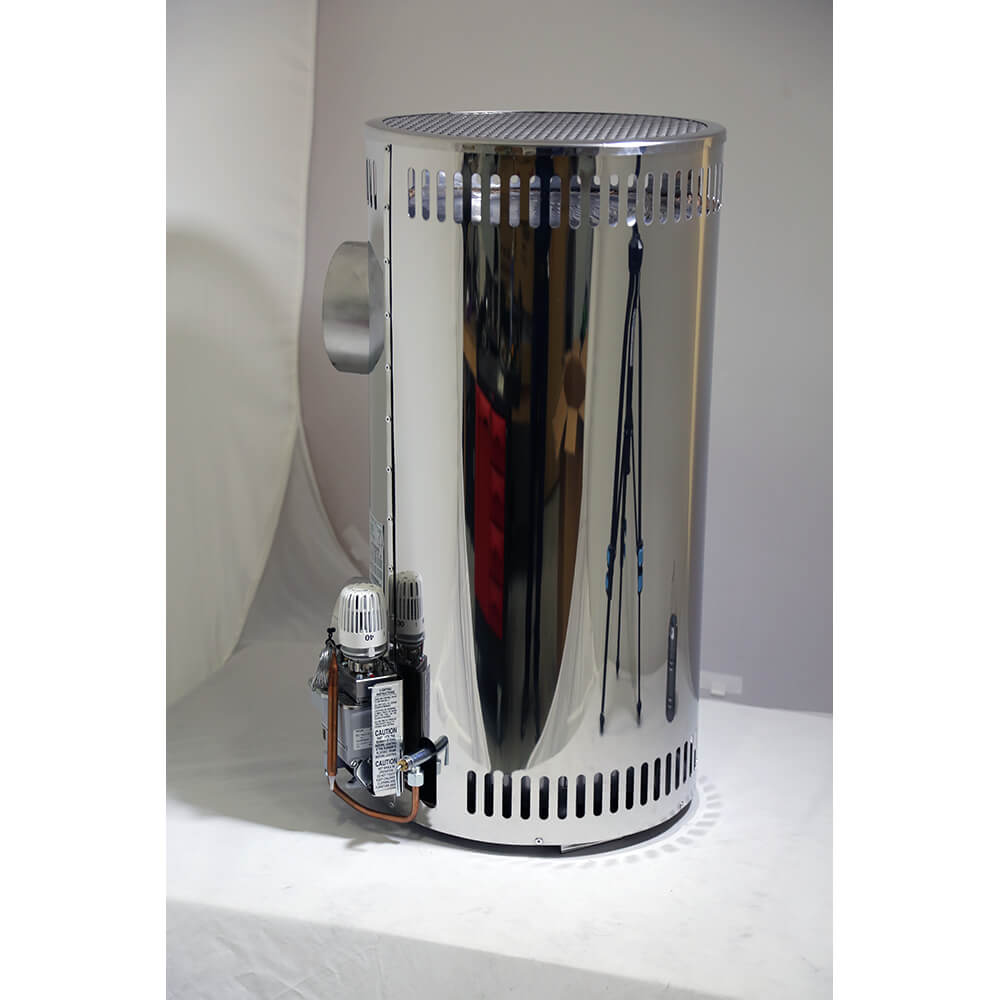
NordicStove Deluxe 400 Thermostat
The NDX400 NordicStove Deluxe Stainless Convector Thermostat. Non-electric oil heating meets sophistication, delivering unparalleled warmth and elegance to your space.www.ruralenergy.com
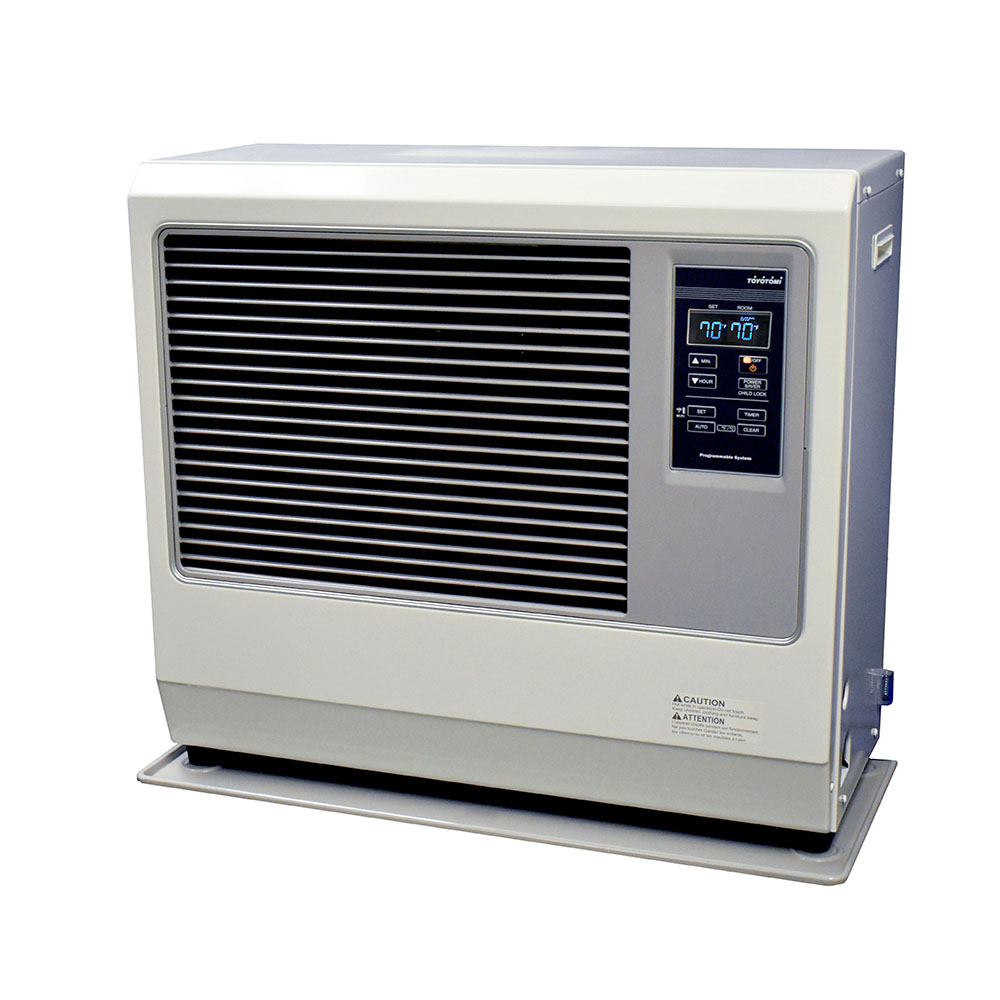
Toyotomi L731 Oil Laser 731 Wi-Fi Model Efficient Heating 2000 Sq Ft
New Wi-Fi compatible , with the safest, cleanest, odorless, most fuel efficient direct vent oil wall furnace that will put money back in your pocket is the Toyotomi Toyostove Laser 731 heating up to 2,000 square feet with heating capacity of 40,000
Definitely get on some Fairbanks forums to network with locals on the most realistic solutions.
I'll be having the cabin built around a centralized Blaze King King 40. If I do have a coal stove installed, that will be a corner stove that compliments the cabin and used more sparingly as a backup.
Question, does the Blaze King King 40 have the longest burn times at 40+ hours ? Any wood stoves that have longer burn times ?


Yes, but that will only be during milder weather. At zero and below burn times will likely drop to 10-12 hrs. unless additional insulation is added to that of the logs and high R value, triple pane windows are installed.Yes, I been doing more reading around about anthracite coal's availability in Alaska, it is limited. You can get it shipped in by tons but, to rely on a fuel source that is thousands of miles away that needs to be shipped in when you're surrounded by free fuel (wood logs) does not make sense. Take advantage of the most abundant free fuel source locally available.
I'll be having the cabin built around a centralized Blaze King King 40. If I do have a coal stove installed, that will be a corner stove that compliments the cabin and used more sparingly as a backup.
Question, does the Blaze King King 40 have the longest burn times at 40+ hours ? Any wood stoves that have longer burn times ?
From October 1st to May 30 is around 241 days.
You'll need at least minimum around 3.6 tons ( 7,239lb pounds) of anthracite coal if used as your primary fuel source daily for those 241 days.
Anthracite coal bought in bulk is usually bought by the ton (2,000lb pounds).
Anthracite coal cost is $300 to $490 per ton. Shipping cost is $100 to $200 per ton. Total cost $400 to $650 per ton.
You'll need at least minimum around 3.6 tons ( 7,239lb pounds) of anthracite coal if used as your primary fuel source daily for those 241 days.
Anthracite coal bought in bulk is usually bought by the ton (2,000lb pounds).
Anthracite coal cost is $300 to $490 per ton. Shipping cost is $100 to $200 per ton. Total cost $400 to $650 per ton.
Price Estimates for Interior Alaska (2025–2026)
Fuel prices in rural and interior Alaska are generally higher due to transportation costs.Anthracite Coal:
- Price range: $300–$450 per ton delivered (Alaska premium due to shipping)
- 3.6 tons cost:
- At $300/ton → $1,080
- At $450/ton → $1,620
Some users report paying up to $650/ton at retail (e.g., Tractor Supply), but bulk delivery is cheaper. In remote areas, bituminous or imported anthracite may be the only option.
Cord Wood (Seasoned Hardwood):
- Price range: $400–$700 per cord in Interior Alaska (higher than continental US)
- 6 cords cost:
- At $400/cord → $2,400
- At $700/cord → $4,200
Many residents cut their own wood, which reduces monetary cost but involves significant labor, equipment maintenance, and time—factors that increase the effective "cost" if valued monetarily.
Final Verdict
📌 Monetary Cost:- If buying wood at $500+/cord, 6 cords ($3,000+) is much more expensive than 3.6 tons of coal ($1,080–$1,620).
- Only if wood is self-harvested or very cheap (<$200/cord) does it become cheaper monetarily.
- Coal wins for hands-off heating, consistent output, and compact storage—critical in extreme cold.
- Wood wins only when sourced for free and labor is not valued.
✅ Conclusion:
In Interior Alaska, 6 cords of wood are significantly more expensive than 3.6 tons of anthracite coal, both in direct cost and labor investment. Unless you have free access to wood and ample time to process it, anthracite coal is the more economical and practical choice for home heating.I'm really thinking of a hybrid dual fuel source cabin, have a wood stove for logs and a coal stove too put in.
I think I can save a lot of money by using coal for part of the winter and other days the wood stove reducing the number of cords of wood needed from 6 to 8 to maybe around 3 cords for those 241 days from October 1 to May 30.
Plus, to have two different fuel sources and two different stoves so I don't get completely sick of using just one stove all winter long year after year, the variety will be good psychologically.
I think I can save a lot of money by using coal for part of the winter and other days the wood stove reducing the number of cords of wood needed from 6 to 8 to maybe around 3 cords for those 241 days from October 1 to May 30.
Plus, to have two different fuel sources and two different stoves so I don't get completely sick of using just one stove all winter long year after year, the variety will be good psychologically.
If I were you, I would double the amount of fuel you stock from what you think that you need. It's a matter of life and death up there.
Would it be best to use the anthracite coal stove for the coldest days when temps go below 10 degrees Fahrenheit, and use the Blaze King 40 on all other days above 10 degrees to 55 degrees ?Yes, but that will only be during milder weather. At zero and below burn times will likely drop to 10-12 hrs. unless additional insulation is added to that of the logs and high R value, triple pane windows are installed.
Use the wood stove from October 1st to part of December. From middle of December to March 1st use the coal stove. Wood stove from March through early May.
So, wood stove in fall and early winter and also in part of spring.
Last edited:
Do you know how many heat degree days you have on average in a year?
Really I don't know how you are estimating how much fuel (BTUs) you need.
Really I don't know how you are estimating how much fuel (BTUs) you need.
Something like that could work. The BK40 might even run continuously during the very cold weather, but still with a long burn time due to the coal heat supplementation.
I'm not sure on the math/data on heat degree days and BTUs but, I got these numbers below from each specific stove...Do you know how many heat degree days you have on average in a year?
Really I don't know how you are estimating how much fuel (BTUs) you need.
Hitzer 50-93 EZ Flo Hopper Coal Stove: BTU/Hr Input up to 100,000 BTU/hr
Blaze King King 40: Constant Heat output on High: 47,809 BTU's/hr up to 12 hours. Constant Heat output on Low: 14,313 BTU's/hr up to 40 hours
Read up on heat degree days.
The numbers the stove can provide are nice, but what does that mean for you?
If you have a plane hangar to heat it doesn't mean anything and you freeze to death.
What does your building need?
That is the life and death question you need to answer before making any choices.
The numbers the stove can provide are nice, but what does that mean for you?
If you have a plane hangar to heat it doesn't mean anything and you freeze to death.
What does your building need?
That is the life and death question you need to answer before making any choices.
Which option below would be the better choice you think for maintaining consistent warmth at around 70 degrees F through out winter ?Something like that could work. The BK40 might even run continuously during the very cold weather, but still with a long burn time due to the coal heat supplementation.
Option 1: Large log wood stove centralized in cabin as main heat source, with anthracite coal stove in family room corner.
vs,..
Option 2: Large anthracite coal stove centralized in cabin as main heat source, with wood log stove in family room corner. ?
From doing some reading for interior Alaska...Read up on heat degree days.
The numbers the stove can provide are nice, but what does that mean for you?
If you have a plane hangar to heat it doesn't mean anything and you freeze to death.
What does your building need?
That is the life and death question you need to answer before making any choices.
For interior Alaska, particularly around Fairbanks—the primary climatic reference point—average annual heating degree days (HDD), using a base temperature of 65°F, range between 10,000 and 11,057 HDD per year.
- A 2018 Chegg reference cites 5,817 HDD/year for Anchorage, which is milder.
- A government document titled Heating Degree Days by State lists Alaska’s average at 11,057 HDD, reflecting colder interior regions.
Climate Zone
Interior Alaska falls into Climate Zone 7 (very cold), which requires 50–60 BTU per square foot per heating degree day (BTU/sq ft/HDD).Step 2: Home Size and Insulation
You have a 1,500 sq ft, off-grid, likely well-insulated log cabin. Assuming average to good insulation (typical for modern off-grid builds), use 55 BTU/sq ft/HDD as a conservative estimate.BTU/year=HDD×BTU/sq ft/HDD×Square Footage
=10,750×55×1,500=886,875,000 BTU/year
So, your cabin will require approximately 887 million BTUs per year for heating.
The numbers above are from A.I., so take it for what it's worth.
Last edited:
Well, that’s double the HDD that you’ll see in the NE. So you’re back to around 10 cords. *rolls eyes*
I personally wouldn’t use coal for environmental reasons. Mostly ash disposal.
I personally wouldn’t use coal for environmental reasons. Mostly ash disposal.
Yes, I was thinking of using a wood stove as a supplemental corner stove for days at least 20 degrees F and above.Well, that’s double the HDD that you’ll see in the NE. So you’re back to around 10 cords. *rolls eyes*
I personally wouldn’t use coal for environmental reasons. Mostly ash disposal.
Wood stove from October 1 to Dec 1.
Coal stove from December towards end of March.
Wood stove from end of March to middle of May.
If I use the wood stove for October, November, end of March to middle of May = about 4 months of wood.
4 months of wood. 4 months of coal.
I might be able to get by on 3.5 cords of wood ?
Last edited:
@Poindexter had more than 12000 HDDs. 65 F

Are these metric heating degree days? I would have thought a lot more than 5500 for as far north as you are.
In Farenheit, base 65dF, my trailing 30 year average is 12,285 HDD from Oct 1 to Apr 30. Haven't collected data for current season yet, it seems kinda mild.
In Farenheit, base 65dF, my trailing 30 year average is 12,285 HDD from Oct 1 to Apr 30. Haven't collected data for current season yet, it seems kinda mild.
Is there a way to convert specific HDD and BTUs of one's home to cords of wood used and anthracite coal used ?@Poindexter had more than 12000 HDDs. 65 F
Are these metric heating degree days? I would have thought a lot more than 5500 for as far north as you are.
In Farenheit, base 65dF, my trailing 30 year average is 12,285 HDD from Oct 1 to Apr 30. Haven't collected data for current season yet, it seems kinda mild.
2400 sqft, 55MBTU.
I believe well-insulated stick built
I believe well-insulated stick built
I am tagging two of the usual suspects from the "green room" area at hearth dot com into this thread.
@woodgeek and @peakbagger . I am not convinced any wood stove is the best option here, given the efficiency of the home.
Should the OP consider perhaps a heat pump (perhaps ground source?) with some solar panels to help offset ongoing operational cost?
@ironglen what are your goals?
Is your wife's around the house wardrobe suitable to your role as husband and master of the house, or do you need more BTUs in your insulation envelope to step fully into God's plan...
@woodgeek and @peakbagger . I am not convinced any wood stove is the best option here, given the efficiency of the home.
Should the OP consider perhaps a heat pump (perhaps ground source?) with some solar panels to help offset ongoing operational cost?
@ironglen what are your goals?
Is your wife's around the house wardrobe suitable to your role as husband and master of the house, or do you need more BTUs in your insulation envelope to step fully into God's plan...
Last edited:
Yes, with a manual J.Is there a way to convert specific HDD and BTUs of one's home to cords of wood used and anthracite coal used ?
You need the heat.loss.of your home.
BTUs in cords of wood and lbs of coal are available.
I presume you will be around 16 MBTU per cord. (4*4*8 ft).
I've updated my plans for heating the cabin after weighing the costs of wood logs vs anthracite coal...
I could have the cabin built around a very large wood stove (Blaze King 40) that is centralized in the cabin burning wood logs straight through October to middle of May and just use wood logs as the only heat source. I've been thinking about it and I don't think financially and physically it's the best option for a few reasons...
Where do I put 9 to 12 cords of wood ?
I either have to cut and chop all that wood or buy it and have it delivered in a massive pile and then stack it some where.
I think a better option is a dual fuel cabin where two different heat sources at different times of the season where each specific heat source excels and also saves money.
Have the cabin built around a large centralized anthracite coal stove (Hitzer 50-93 EZ Flo or The Chubby) and a wood stove in the corner of the family room/living room (Hearthstone Green Mountain 40 or 60).
Wood stove used from October 1st to November 30th.
Coal stove used from December 1st to March 31st.
Wood stove used from April 1st to May.
That's roughly around 1 to 2 cords of wood.
The anthracite coal is pretty affordable when bought in bulk by the ton. It will be my responsibility to have it shipped and I will either pick it up myself or have it delivered. I have no problem picking up the bags of coal and bringing it home.
I could have the cabin built around a very large wood stove (Blaze King 40) that is centralized in the cabin burning wood logs straight through October to middle of May and just use wood logs as the only heat source. I've been thinking about it and I don't think financially and physically it's the best option for a few reasons...
Where do I put 9 to 12 cords of wood ?
I either have to cut and chop all that wood or buy it and have it delivered in a massive pile and then stack it some where.
I think a better option is a dual fuel cabin where two different heat sources at different times of the season where each specific heat source excels and also saves money.
Have the cabin built around a large centralized anthracite coal stove (Hitzer 50-93 EZ Flo or The Chubby) and a wood stove in the corner of the family room/living room (Hearthstone Green Mountain 40 or 60).
Wood stove used from October 1st to November 30th.
Coal stove used from December 1st to March 31st.
Wood stove used from April 1st to May.
That's roughly around 1 to 2 cords of wood.
The anthracite coal is pretty affordable when bought in bulk by the ton. It will be my responsibility to have it shipped and I will either pick it up myself or have it delivered. I have no problem picking up the bags of coal and bringing it home.
Last edited:
Is there a way to convert specific HDD and BTUs of one's home to cords of wood used and anthracite coal used ?
No. Cords and tons would refer to the amount of heat needed on a specific building. The agencies that calculate and publish HDD have no idea how well insulated your home is, what microclimate you may be in, or the skill of the person operating the stove.
Personal skill may be the most important factor. There are people who have run a stove for years that still have no clue how to do it.
There really is a learning curve to this activity. I don’t care how much reading you do, experience is going to determine your survival here. Going into this without any is deadly.
Similar threads
- Replies
- 23
- Views
- 1K

- Replies
- 1
- Views
- 3K

- Replies
- 10
- Views
- 402

- Replies
- 23
- Views
- 381

