
We’re installing a Blaze King Boxer 24 with DuraTech chimney. Space is tight in the house, so the stove has to sit close to the ridgeline, and our installers added two 45° elbows to jog the pipe away from the ridge.
Those elbows adds 4 ft to Blaze King’s recommended chimney height (19 ft vs. 15 ft straight). With a short house and a 3/12 roof, the extra height means the chimney needs a roof brace.
The wild card is the roof. It’s 50-year-old masonry tile that’s brittle and no longer made. We don’t want to screw brace feet into tiles we can’t replace, and flashing on the slope is its own problem: the lead flashing we’ve found is expensive, hard to source, and not big enough to skirt these large tiles with good overlap. (Yes, we need a new roof. No, we can’t afford one right now.)
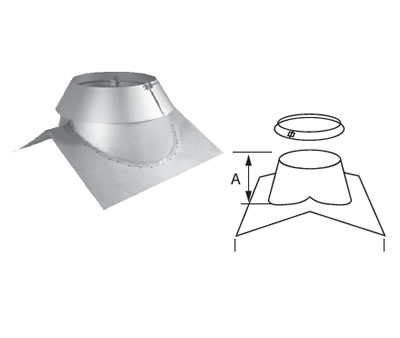
Going straight up through the peak seems to sidestep both problems. Dropping the 45s cuts the height requirement by 4 ft, so we wouldn’t need a brace. Structurally it seems fine: we have Fink trusses and only a nailer board at the ridge, so the chimney could pass between two trusses without cutting anything structural. Peak flashings exist too, such as DuraVent’s 6DTP-FP7 (1/12–7/12) for its DuraTech Premium line.
However, a tile roofer with 30+ years of experience told us he’s never seen a chimney go through the peak of a tile roof and that he wouldn't be able to flash it. He didn’t give any other reasons, and our stove installers never suggested it either.
What are we missing: is there a real reason not to run the chimney straight up through the ridge with a peak flashing on a tile roof, or is it just uncommon?