
Jotul F45 or F500

  • Active since 1995, Hearth.com is THE place on the internet for free information and advice about wood stoves, pellet stoves and other energy saving equipment.

    We strive to provide opinions, articles, discussions and history related to Hearth Products and in a more general sense, energy issues.

    We promote the EFFICIENT, RESPONSIBLE, CLEAN and SAFE use of all fuels, whether renewable or fossil.

1870farmhouse

New Member
Feb 4, 2025
82
Kennett Square, Pa
So my local Jotul dealer confirm this week the F45 Greenville is about to ship out as the EPA testing was passed and Jotul is waiting on final paperwork to ship out of Maine and should be this coming week.

I have a deposit on a F500 v3 but the shop said I could change my purchase to the F45 if I decided.

So I’m asking you fine folks for advice. I see the 500 is full cast iron and loads east west and F45 semi steel/cast iron and loads north south. I know Jotul doesn’t have andirons and I’m curious if glass breakage happens on these 500’s from wood rollover?

How’s the performance between the two?

A non cat makes me a bit happier considering a cat is $650. They have a ten year warranty and I understand in 10 years that’s only $65 a year but will the 500 be that much more efficient to save more wood than the non cat F45?

Burn times between these?
 
Doesn’t the new F45 have a cat as well? I think that’s why the F45 V2 was discontinued so Jotul could add their Fusion technology to it basically changing it to a hybrid like the F500 V3?

As far as which stove the F500 will be more radiant and may be better for a more open floor plan or larger space. The F45 will be a softer gentle heat with more convection heat that would work well in a less open space.
Not a cat. The dealer said the Jotul regional rep confirmed it’s not a cat.

Can you explain your suggestion of 500 for an open space and 45 for less open space?

Any thoughts on blowers?
 
Not a cat. The dealer said the Jotul regional rep confirmed it’s not a cat.

Can you explain your suggestion of 500 for an open space and 45 for less open space?

Any thoughts on blowers?
Ah ok I wonder what changes they made then?

The F500 is a strong radiant heat type stove so in my opinion it’s better suited for a wide open space. In a smaller space it may cook you out.

The F45 has a cast iron jacket around a steel firebox that blocks most of that radiant heat and it creates some convection through that space inbetween. This makes the radiant heat less intense and feels a little softer so it shouldn’t cook you out of a smaller space.

I’m not a big fan on blowers, they are mostly noisy and costly. I prefer a ceiling fan or a small cheap fan on the floor blowing the cooler denser air towards the stove.
 
  • Like
Reactions: bigealta
Can you explain your suggestion of 500 for an open space and 45 for less open space?

Any thoughts on blowers?
Highly radiant stoves like the F500 are best in larger spaces where the radiant heat is felt in the space around the stove. This is less of an advantage in smaller spaces where furniture and walls are closer to the stove. A jacketed convective stove like the F45 works better in smaller areas where clearances are at a premium and intense heat radiating from the sides is not always desirable.

We had this situation in our 16 x 20 living room. In 2006 I put in a beautiful F400 in a corner install. Even though the clearances were exceeded, I found the walls getting too hot (~162º) after 24/7 heating, especially in very cold weather when the stove was being pushed for heat. Also, room temperature swung a lot with the stove output. The F400 was replaced with the larger Alderlea T6 a couple of years later when Tom Oyen made me an offer on a floor model that I couldn't refuse. The Alderlea has a cast iron jacket too. The difference with the T6 was immediately noticeable. The heating was much more even with a lot less room and house temperature swings. And the wall temp has never gone up above around 130º, even when the stove is being pushed.

The other thing to consider with the F500 is that you won't be able to fill it to capacity due to the E/W loading, so it is at best a 2 cu ft or less stove. Also, it is primarily a side-loader, so the hearth needs to be 16" wider on the left side. The F45 can be loaded full when desired.

A blower's value depends on the house floor plan and stove location. We have one on the T6 but it's only used during very cold weather to help convect heat to the far areas of the first floor or to cool down a hot stove top. In milder weather above 30º it's generally not needed for our situation. YMMV.
 
  • Like
Reactions: Todd
I’ve seen some pretty full loads in the F500 but they are using 20”+ long splits. The wood will lay up on the iron on either side of the glass to prevent rolling down on the glass.
 
Highly radiant stoves like the F500 are best in larger spaces where the radiant heat is felt in the space around the stove. This is less of an advantage in smaller spaces where furniture and walls are closer to the stove. A jacketed convective stove like the F45 works better in smaller areas where clearances are at a premium and intense heat radiating from the sides is not always desirable.

We had this situation in our 16 x 20 living room. In 2006 I put in a beautiful F400 in a corner install. Even though the clearances were exceeded, I found the walls getting too hot (~162º) after 24/7 heating, especially in very cold weather when the stove was being pushed for heat. Also, room temperature swung a lot with the stove output. The F400 was replaced with the larger Alderlea T6 a couple of years later when Tom Oyen made me an offer on a floor model that I couldn't refuse. The Alderlea has a cast iron jacket too. The difference with the T6 was immediately noticeable. The heating was much more even with a lot less room and house temperature swings. And the wall temp has never gone up above around 130º, even when the stove is being pushed.

The other thing to consider with the F500 is that you won't be able to fill it to capacity due to the E/W loading, so it is at best a 2 cu ft or less stove. Also, it is primarily a side-loader, so the hearth needs to be 16" wider on the left side. The F45 can be loaded full when desired.

A blower's value depends on the house floor plan and stove location. We have one on the T6 but it's only used during very cold weather to help convect heat to the far areas of the first floor or to cool down a hot stove top. In milder weather above 30º it's generally not needed for our situation. YMMV.
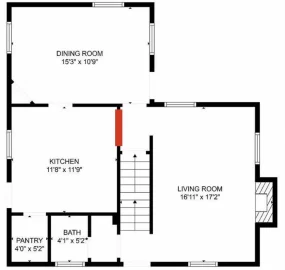
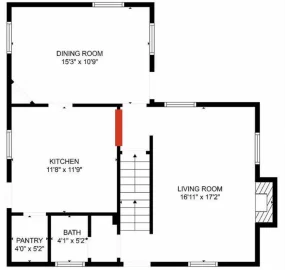
Stove is in the living room you can see the firebox space. Red mark is where I’ll be cutting the wall to create a doorway as you currently have to walk through the dining room to get to the kitchen and the new doorway should help airflow.

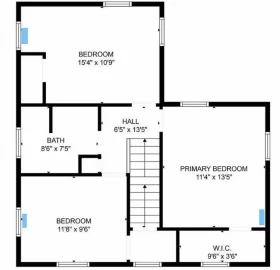
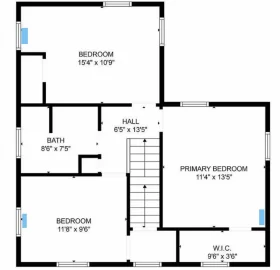
The blue marks on the second level are where I plan to cut out 6x14” gravity heat vents to allow heat to rise and hopefully create a vortex bringing cooler air downstairs via the stairs.

My good friend who has a home 50% bigger than mine, around 1600sf compared to my 1100sf she has an alderlea T5 and similar non open floor plan like mine and their house is WARM when running their blower on low. They claim they crack their windows to cool down.

So now green you have me thinking I should go with the F45. North South loading, bigger loads for long burns and convection heating.

Do you have any thoughts on comparing my current stove a Lopi Sheffield and the Jotul F45?
I’m not rich and this is a huge purchase for me and green I know you have such a wealth of knowledge.

Also what do you think of the gravity vents and possibly using the vent fans?
 

Attachments

  • [Hearth.com] Jotul F45 or F500
    IMG_0706.webp
    24.8 KB · Views: 22
  • [Hearth.com] Jotul F45 or F500
    IMG_0705.webp
    26.1 KB · Views: 20
  • [Hearth.com] Jotul F45 or F500
    IMG_0708.webp
    95.6 KB · Views: 31
Highly radiant stoves like the F500 are best in larger spaces where the radiant heat is felt in the space around the stove. This is less of an advantage in smaller spaces where furniture and walls are closer to the stove. A jacketed convective stove like the F45 works better in smaller areas where clearances are at a premium and intense heat radiating from the sides is not always desirable.

We had this situation in our 16 x 20 living room. In 2006 I put in a beautiful F400 in a corner install. Even though the clearances were exceeded, I found the walls getting too hot (~162º) after 24/7 heating, especially in very cold weather when the stove was being pushed for heat. Also, room temperature swung a lot with the stove output. The F400 was replaced with the larger Alderlea T6 a couple of years later when Tom Oyen made me an offer on a floor model that I couldn't refuse. The Alderlea has a cast iron jacket too. The difference with the T6 was immediately noticeable. The heating was much more even with a lot less room and house temperature swings. And the wall temp has never gone up above around 130º, even when the stove is being pushed.

The other thing to consider with the F500 is that you won't be able to fill it to capacity due to the E/W loading, so it is at best a 2 cu ft or less stove. Also, it is primarily a side-loader, so the hearth needs to be 16" wider on the left side. The F45 can be loaded full when desired.

A blower's value depends on the house floor plan and stove location. We have one on the T6 but it's only used during very cold weather to help convect heat to the far areas of the first floor or to cool down a hot stove top. In milder weather above 30º it's generally not needed for our situation. YMMV.
Stove is in the living room you can see the firebox space. Red mark is where I’ll be cutting the wall to create a doorway as you currently have to walk through the dining room to get to the kitchen and the new doorway should help airflow.

The blue marks on the second level are where I plan to cut out 6x14” gravity heat vents to allow heat to rise and hopefully create a vortex bringing cooler air downstairs via the stairs.

My good friend who has a home 50% bigger than mine, around 1600sf compared to my 1100sf she has an alderlea T5 and similar non open floor plan like mine and their house is WARM when running their blower on low. They claim they crack their windows to cool down.

So now green you have me thinking I should go with the F45. North South loading, bigger loads for long burns and convection heating.

Do you have any thoughts on comparing my current stove a Lopi Sheffield and the Jotul F45?
I’m not rich and this is a huge purchase for me and green I know you have such a wealth of knowledge.

Also what do you think of the gravity vents and possibly using the vent fans
I’ve seen some pretty full loads in the F500 but they are using 20”+ long splits. The wood will lay up on the iron on either side of the glass to prevent rolling down on the glass.
yes but you have to either cut wood to length or order specific lengths and my wood guy cuts at 18-20” and isn’t going to cut wood specifically at a certain length to me.

I do think it’s a big sore spot that Jotul doesn’t have andirons. Vermont castings have andirons you can simply remove if you don’t want them and a simple thing they could add to the design.
 
This discussion is sprawling over 2 threads. Some of these questions have already been answered. It's a challenging space to heat evenly. As previously noted, a fan on the floor blowing into the stove room will help establish a convection loop.

I would not cut any holes in the floors until trying things out in the winter for a month or two. That will establish how well heat convects upstairs. If holes are cut, be sure to review local ordinances. Usually they are required to have thermally fused fire dampers.

So you’re saying for my layout the F45 would do a better job?

Is the F45 a whole different level of heat creation compared to the Lopi Sheffield I currently have?
 
I would go with the F45 over the F500 with that layout. You should get longer burn times with the F45 over the Lopi since it’s larger firebox and N/S loading. I had no problem with 12 hour reload schedule with my F45 V2.
 
I would go with the F45 over the F500 with that layout. You should get longer burn times with the F45 over the Lopi since it’s larger firebox and N/S loading. I had no problem with 12 hour reload schedule with my F45 V2.
And you’re saying the F45 radiates heat farther in distance than he F500 because it’s steel and cast iron?
 
So you’re saying for my layout the F45 would do a better job?

Is the F45 a whole different level of heat creation compared to the Lopi Sheffield I currently have?
The Sheffield is a convective stove that has a similar cast iron wrap around a steel firebox. The F45 is 1 cu ft larger and able to load fuller N/S. That will translate into longer burn time and more top end heat output (if desired) for very cold weather.

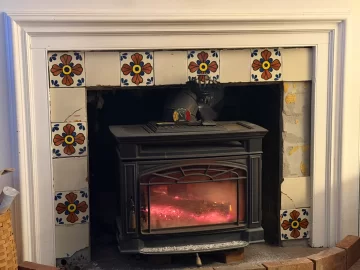
Can you post a picture of the current Sheffield installed in the fireplace?

And you’re saying the F45 radiates heat farther in distance than he F500 because it’s steel and cast iron?
The F45 is less radiant than the F500, due to the cast iron outer jacket on the core steel firebox. It is more convective than the F500 which is what looks best for this floorplan. Also, is the fireplace wide enough to use the side door of the F500 for loading?
 
  • Like
Reactions: Todd
The Sheffield is a convective stove that has a similar cast iron wrap around a steel firebox. The F45 is 1 cu ft larger and able to load fuller N/S. That will translate into longer burn time and more top end heat output (if desired) for very cold weather.

Can you post a picture of the current Sheffield installed in the fireplace?


The F45 is less radiant than the F500, due to the cast iron outer jacket on the core steel firebox. It is more convective than the F500.
Ok I think I don’t understand what convective means in the realm of woodstoves. Can you help me understand?

For my type of floor plan which would you choose the F500 or F45?
 
  • Like
Reactions: Todd
Your initial choice of the Alderlea T5 was a good one. It is convective. In lieu of that, the F45. Posting a picture of the fireplace would help spot other possible reasons.
 
Your initial choice of the Alderlea T5 was a good one. It is convective. In lieu of that, the F45. Posting a picture of the fireplace would help spot other possible reasons.
The Alderlea was my first choice but it’s top vent only and I need a rear vent as my firebox is only 31-32 from the ground.
So the F45 is convective like the Alderlea?
 

Attachments

  • [Hearth.com] Jotul F45 or F500
    IMG_0710.webp
    169.5 KB · Views: 22
  • 81526202368__5F79FD47-54E5-4A62-B680-2FB89B1F9B9F.MOV
    2.2 MB
  • Like
Reactions: Todd
Thanks for the picture, it helps. Yes, the F45 is convective like the Alderlea T5.

It looks like the height was also an issue for the Sheffield that was addressed with an off-label leg adjustment. In this case, the 28.75" Alderlea T5 might work unless there is a complication in which case an "adjustment" to the leg length might be needed. The Jotul F45 is a little taller at 29.75" high, but it can be ordered with the short leg kit which reduces the height by 3.25" to 26.5".
I can’t use a top venting stove it must be a rear venting. I don’t want to tuck an Alderlea completely inside the firebox I want the stove to be at least 50% outside the firebox so it’s heat more easily radiates off it not stuffed into the fire box heating the close off plate like crazy

So you’re saying a convective stove would be better choice for my non open spaced house?

Was the video available to watch?

I keep seeing these complaints about the F500 ash pan leaking air.
 
The Alderlea or other convective stove would be about 1/3d in the fireplace and 2/3ds out. The sides and rear do not generate much heat.

Is there a block-off plate sealing off the damper area around the liner? If so, most of the heat will stay in the room. A blower would make it even more convective.
no block off plate but it’s on the list to install along with the double stainless steel walled insulated liner when the new stove comes.

I’m going over to my friend’s house tonight I mentioned had a T5 in a house 50% larger than mine and heats their whole home easily. I’m going to sit there and have her run the blower on low as that’s all she runs it at to heat the whole house and see if it’s something I can live with. In silence, tv running, sitting upstairs.
I’ll ask how often they load, how much they load. They get their hardwood from the same guy I do so it’s a decent comparison. I’ll measure the front of the stove to the front lip of the top vent and front to center of the top vent.

My hearth is 5” of concrete with 1/4” heat tiles made in 1902. The house was built in 1870 and by then homes had metal stoves for heat/cooking and originally no fireplace. A fireplace was added in 1902 with 2 flues, 1 (11”)for the fireplace and a second (5”) for a furnace in the basement and the original stove was removed, electricity had been already added in 1896

Is there any differences comparing the T5 and F45? I see the T5 has a higher btu rating of 70k and F45 58k
 
The F45 has a slightly larger firebox so it will hold slightly more BTU’s. You probably won’t notice a difference, manufactures spec numbers can be skewed.
 
no block off plate but it’s on the list to install along with the double stainless steel walled insulated liner when the new stove comes.
That will make a difference, even with the Sheffield. Once it is in place, the heat will stay in the room much better.
 
  • Like
Reactions: 1870farmhouse
Thanks for the picture, it helps. Yes, the F45 is convective like the Alderlea T5.

It looks like the height was also an issue for the Sheffield that was addressed with an off-label leg adjustment. In this case, the 28.75" Alderlea T5 might work unless there is a complication in which case an "adjustment" to the leg length might be needed. The Jotul F45 is a little taller at 29.75" high, but it can be ordered with the short leg kit which reduces the height by 3.25" to 26.5".
So I just got off the phone and talked to my salesman about switching my deposit from the F500 to an F45 and he said the F45 isn’t a convective stove because “it doesn’t have Void space between the steel and the cast iron”

so including the floor plan once again if my Sheffield without insulated liner, no blower, no proper block off plate is heating the living room to 70 on the coldest days. And the dining room and kitchen in the mid 50’s

How much more effective would a F500 with cold air intake, double stainless insulated liner and blower be?

I went over to my friends house with the T5 and the blower was super quiet on low and medium I couldn’t hear with normal TV going.
 

Attachments

  • [Hearth.com] Jotul F45 or F500
    IMG_0706.webp
    24.8 KB · Views: 13
  • [Hearth.com] Jotul F45 or F500
    IMG_0705.webp
    26.1 KB · Views: 10
I beg to differ with the sales person. The cast iron panels do have a gap between the steel inner body and outer panel. And, IIRC, there is a vent slot at the top of the side panels. @Todd, your thoughts?

Yes, the PE blower is pretty quiet.
 
  • Like
Reactions: Todd