What is "seasoned firewood"?

  • Active since 1995, Hearth.com is THE place on the internet for free information and advice about wood stoves, pellet stoves and other energy saving equipment.

    We strive to provide opinions, articles, discussions and history related to Hearth Products and in a more general sense, energy issues.

    We promote the EFFICIENT, RESPONSIBLE, CLEAN and SAFE use of all fuels, whether renewable or fossil.

Woodstove Newbie

New Member
Jun 23, 2026
8
Northeast
First burning season, so trying to learn what's what.... Just bought a "cord of seasoned hardwood" from a local guy and he delivered it today. Everywhere I look, seasoned is <20% moisture content. So (after he left) I split a few of the logs and of course they were all in the 20-23% moisture range. I can't use this stuff in my catalytic woodstove. Should I ask for some of my money back? Or is this par for the course?
 
  • Like
Reactions: Burnin Since 1991
20-23% is actually not that bad for bought wood.
Seasoned is often "seasoned on the truck to you".

Better to ask how long it's been split and how it was stored after splitting. A big pile on the ground won't help.

Buy now for next year, store it off the ground, top covered, and you'll be good next year. Best to buy 2 more years worth of wood now and have it dry.

I'd buy a bunch of sawdust bricks (without any additions, so pure sawdust), and mix with the 20-23% wood and you may be okay. Marginal but possibly ok.
 
Last edited:
You actually lucked out. Delivered wood is usuallly a lot wetter than that. Stack that wood off the ground ( pallets) and top cover. The wood will continue to dry in next couple of months before you really need it. I think you’ll be ok for this burning season. Maybe check on the catalyst during burning season. I don’t have a cat stove but those that do can tell you how it’s doing ( with pics).
Do you only have only the one cord for this season?
 
Last edited:
  • Like
Reactions: Burnin Since 1991
Test several of the thicker splits. If they are all in the 20-23% range it'll be ok. If the wood is in a shed it will dry out a bit more over time. Do you know what species of wood this is? To accelerate drying, bring fill some large totes full of wood and bring into the house for a couple of weeks.
 
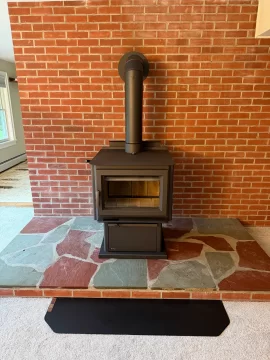
Thanks for your replies friends. Sounds like "seasoned" is more of a relative term, and I actually lucked out with this moisture content. I fortunately already have about 2 cords of wood that is at 10-15% by this point. This was because I purchased them when I first moved into this home and then discovered that my clay flue was cracked and I needed to get a new liner, and I also ended up getting a new stove too. Because of all that work that had to be done I've got a decent amount of wood already saved up in my woodshed that I didn't burn last year.

@begreen—not sure what species it is, I will check with the seller. And I appreciate that tip. By the way, you and others helped me with the decision to get my regency. Can't thank you enough.
 

Attachments

  • [Hearth.com] What is "seasoned firewood"?
    Regency.webp
    483 KB · Views: 76
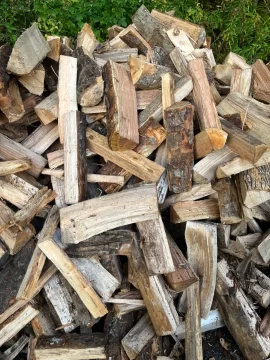
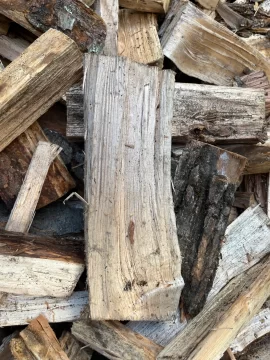
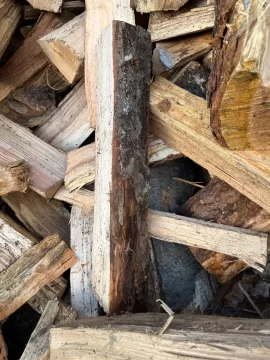
Feel free to post some pics of the delivered firewood. We can probably tell you what species from the pics.
 
  • Like
Reactions: Burnin Since 1991
It’s a good idea to get next years, and even the following years wood now if you have the area to keep it. Stack it on pallets, Top cover it, and keep getting what you used each winter to replenish it. 3 years ahead is a great plan in our area with the dense hardwoods we have available.
 
Test several of the thicker splits. If they are all in the 20-23% range it'll be ok. If the wood is in a shed it will dry out a bit more over time. Do you know what species of wood this is? To accelerate drying, bring fill some large totes full of wood and bring into the house for a couple of weeks.
fortunately already have about 2 cords of wood that is at 10-15% by this point.
I keep a rack next to the woodstove and it helps dry the bit a tad more before it goes into the stove. Buy another cord and you'll have two for next year. It's good to be ahead as much as you can
 
  • Like
Reactions: stoveliker
You are well ahead of the curve, and your stove setup looks fabulous. Remember to burn good dry wood, at the correct stovetop temps (450-600 or so), and respect fire, you are inviting it into your home. Looks like you'll be toasty. Species of wood is always good to note, but it being seasoned to burn is most important. Stay warm.
 
Does this mean the wood isn't split? If so, splitting it now will accelerate the drying process a bunch. If you don't have time, do some whenever you get the time.

You have to resplit wood to get an accurate moisture reading. I highly doubt they were sold a cord of unsplit firewood. Buying wood at less than 25% moisture is rare, OP better not loose that guy's number!
 
At 20-23% mc I would mix this wood with some of the drier wood, on reloads.
I asked about the wood species because that will affect the drying time. For example, ash will dry our much quicker than oak.

Congrats on the new setup. It looks great.
 
You can "cross stack" or i call it "speed dry" stack. Just criss-cross the splits rather than normal stacking. The greatly improved airflow will help speed up the drying of the 20-23% splits.
 
"Seasoned" is a term much used and abused by many of the firewood sellers...nobody can seem to nail down an exact definition for it...the uneducated public seems to think that it means dry, ready to burn...but in reality to most sellers it means it just got split, and then got a "blow dry" on the ride over.
Whenever buying wood you need to tell them that you will be splitting/testing a few splits before you let him dump it, and before you pay for it...wet wood will either be discounted, or sale cancelled, if they have a problem with that, then no need to do business with them.
The guys selling truly dry ready to burn firewood just smile when you say things like that.
Depending on the wood species, you may be 20% and lower by the time you burn it...if its oak then it'll need another year to be really right...and 15% wood does burn a lot different than 20%, and totally different than 25%.
Which if you think about what 25% moisture content means....if you load 32 lbs of 25% wood into your stove, you just loaded roughly a gallon of water...sounds like that'd make a nice fire, huh?! _g
 
Seasoned is what I make in the kitchen.

Not only does 8 lbs of water not burn very well, you also have to expend all that energy to boil it off so you can push it out of the flue as a gas. That means a LOT of your BTUs get used up for that, rather than pushed into your home. Boiling water takes a lot of BTUs.
And all that water is not great in. your chimney pipe if you don't keep it hot enough (if it condenses, it'll capture smoke particles, creating the bad kind of creosote).

Now we can't avoid all water, but minimizing it to well below 20% does make a huge difference in burning and heat output.
 
Boiling water takes a lot of BTUs
Yeah, to boil a gallon of water from room temperature (70°F) to boiling point (212°F), it takes approximately 120,000 BTU...more if your firewood/water was outside and its 32*, or whatever temp.
Then the creosote issue that is caused is insult to injury too!
 
"Seasoned" is a term much used and abused by many of the firewood sellers...nobody can seem to nail down an exact definition for it...the uneducated public seems to think that it means dry, ready to burn...but in reality to most sellers it means it just got split, and then got a "blow dry" on the ride over.
Whenever buying wood you need to tell them that you will be splitting/testing a few splits before you let him dump it, and before you pay for it...wet wood will either be discounted, or sale cancelled, if they have a problem with that, then no need to do business with them.
The guys selling truly dry ready to burn firewood just smile when you say things like that.
Depending on the wood species, you may be 20% and lower by the time you burn it...if its oak then it'll need another year to be really right...and 15% wood does burn a lot different than 20%, and totally different than 25%.
Which if you think about what 25% moisture content means....if you load 32 lbs of 25% wood into your stove, you just loaded roughly a gallon of water...sounds like that'd make a nice fire, huh?! _g

Seasoned is what I make in the kitchen.

Not only does 8 lbs of water not burn very well, you also have to expend all that energy to boil it off so you can push it out of the flue as a gas. That means a LOT of your BTUs get used up for that, rather than pushed into your home. Boiling water takes a lot of BTUs.
And all that water is not great in. your chimney pipe if you don't keep it hot enough (if it condenses, it'll capture smoke particles, creating the bad kind of creosote).

Now we can't avoid all water, but minimizing it to well below 20% does make a huge difference in burning and heat output.

This math is mind boggling and really illustrates the problem with burning above 20%. Thanks so much for sharing.

Fortunately I have 2 cords of dried 15% or less wood stored up in the shed and an oil boiler as back up for this year. Don't want to be relying on that though these days....
 
I see (at least) cherry and maple in the splits.
 
This math is mind boggling and really illustrates the problem with burning above 20%. Thanks so much for sharing.

Fortunately I have 2 cords of dried 15% or less wood stored up in the shed and an oil boiler as back up for this year. Don't want to be relying on that though these days....

This new wood mixed in with your 15% would burn just fine.
 
  • Like
Reactions: brenndatomu
FWIW, some of the EPA test wood has been reported to be in the 20-23% range.
 
  • Like
Reactions: stoveliker
FWIW, some of the EPA test wood has been reported to be in the 20-23% range.
Yes, but many here can testify to the fact that burning behavior (of most modern stoves) changes dramatically for the better once one gets from 20-23% to <20%.
The EPA results pertain mostly to cleanliness of the exhaust, not to burning/operational satisfaction.
 
  • Like
Reactions: Burnin Since 1991
I'm not much of a boater, so not too familiar with those bumpers, but I see Wally World has the exact brand pictured above, and they run about $14 each...cheap enough to justify buying it even if it was just for a one-time chimney repair!
 
Yes, but many here can testify to the fact that burning behavior (of most modern stoves) changes dramatically for the better once one gets from 20-23% to <20%.
The EPA results pertain mostly to cleanliness of the exhaust, not to burning/operational satisfaction.
No doubt one is better off burning wood with 5% lower mc. The point being, if the OP needs to burn it to stay warm, then he shouldn't angst about this. It will not destroy his cat stove.